We can't wait to see you
Join us this Sunday at 10:00 a.m. for our morning worship!

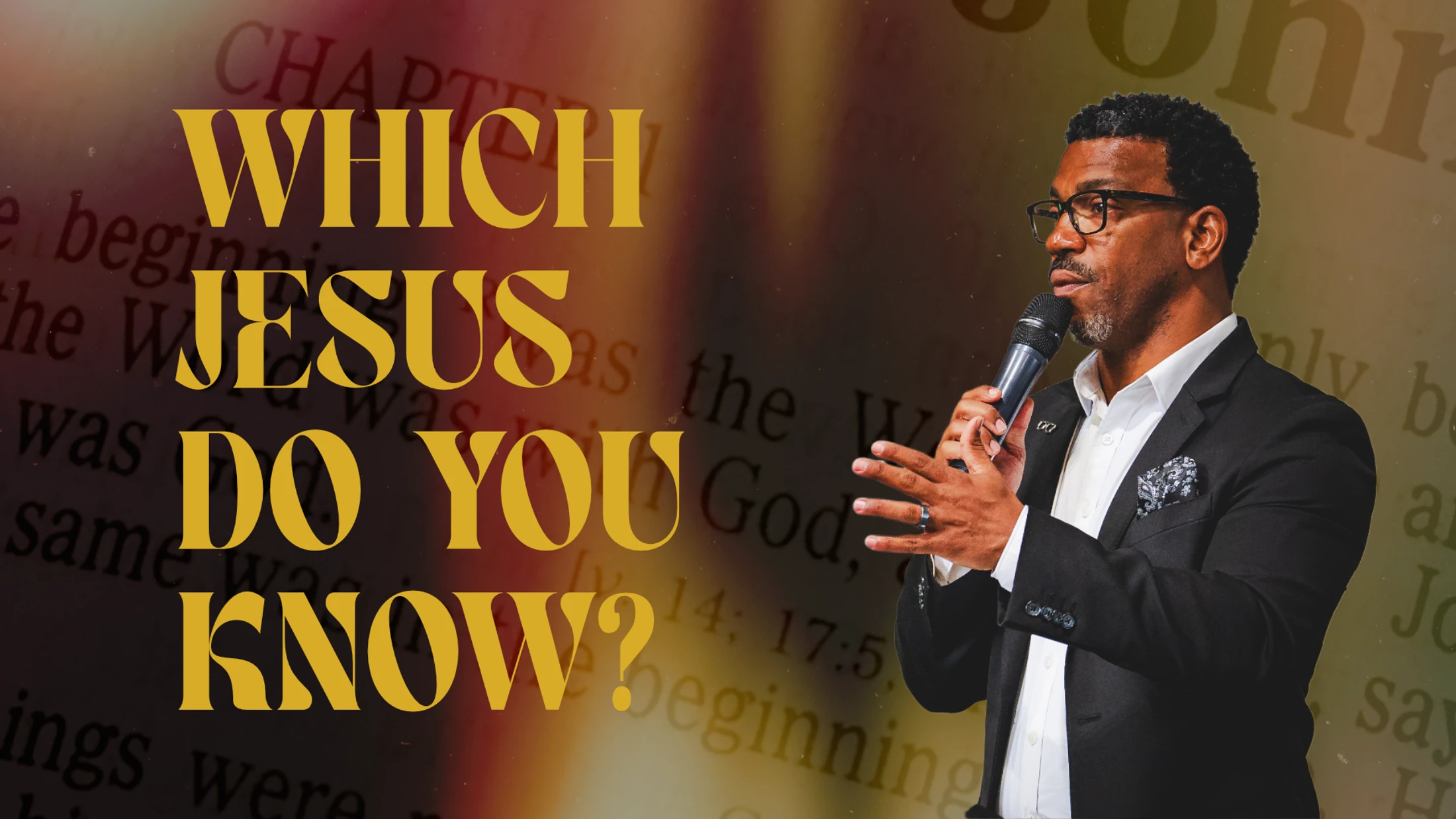
Everyone has an opinion about Jesus. The Jesus of the left. The Jesus of the right. The Jesus of the people who've left the church and the Jesus of the people who never will. The Jesus of your upbringing. The Jesus of your culture. The Jesus of your worst religious experience.
But here's the question John chapter 7 forces us to ask: are we seeing Jesus clearly — or are we seeing what we came in primed to see?
In this message, Pastor Rich Johnson takes us into one of the most tension-filled chapters in all of John's Gospel — where Jesus shows up in the middle of the Feast of Tabernacles and walks straight into a firestorm of competing opinions. Some say he's a good man. Others say he's a fraud. Some say he's the Prophet. Others say he's dangerous. And the crowd goes silent — not because they don't have an opinion, but because they're afraid of what it will cost them to say it out loud.
Sound familiar?
Through four kinds of bias — character, credibility, religious, and cultural — and three tests Jesus gives to challenge them all, this message asks the question we all need to sit with: is the Jesus you're following pointing to the Father? Or is he pointing to you?
In this message you'll learn:
Whether you grew up in church and were handed a version of Jesus before you ever read him for yourself, or you've walked away from faith because the Jesus you were given didn't hold up — this message is an invitation to get reintroduced. Not to the Jesus of your tradition, your politics, your culture, or your bad experience. But to the Jesus who speaks for himself.
📖 Scripture: John 7:10-20, 40-46
We are taking our time, working our way through this gospel. Um, my father, who was a pastor, whenever someone would come to faith in Christ, he would direct them to start with the Gospel of John because it has this beautiful picture in how it depicts Jesus, how it describes, how it, uh, shows who Jesus is, to help us get to know the person and the power of Jesus Christ. And as I was looking at John chapter 7 this week, I already had something in mind, but I couldn't come up with like an introduction. And then I kept getting these Instagram videos of the same video. You might have got it this past week too. It was about this woman, her name is Katie, and she gets on and she says, y'all, I've been pulled over and now I'm gonna be going to court because I was pulled over for a traffic violation. And then she shows you the video because they released the video footage of the officer who pulled her over. And the officer comes to her window and says, hey, I'm pulling you over. And she says, well, what are you pulling me over for? I'm paraphrasing, of course. And the officer says, you were driving and texting at the same time. I saw you. 'with a phone in your right hand.' And then she holds up her right hand. She literally had no hand. She said, 'Are you sure?' He said, 'Yeah, I saw you.' She's like, 'Here it is again. I have no right hand.' And he doubled down. 'I saw you. I saw you with the phone in your right hand.' She's like, it's not possible, I don't have a right hand. He's like, do you swear to God? She said, yes, I swear. He said, how about with your other hand? She was like, okay, yes, or whatever. All on video, all the evidence right there, and he refused to accept the evidence that was in front of him. Friends, there's a word for this. It's called bias. Or confirmation bias, even more particular. I saw you, and even though I have the evidence that suggests otherwise, I am going to hold on to what I believe I saw. Truth of the matter is, we all carry this kind of bias framework. A framework that says, I am entering into a conversation, I'm entering into a relationship with a set of assumptions that set how we believe and perceive that person. It's not a— well, maybe it is. It's not a character flaw. It's really just our human perception. It's how our brain works. And it also has some major consequences. And nowhere is that more true than what we see in John chapter 7. There's some folks who have pulled Jesus over and they said, 'I saw you. I know you to be this kind of person.' He's like, 'No, you got me mixed up with somebody else.' Because in our scripture reading, throughout the gospels in fact, everyone has an opinion and a bias of Jesus. But that has not stopped Since you closed reading the book of the Bible, it didn't stop in the first century. We still have multiple opinions and biases about Jesus. Jesus's name is in various podcasts. His name is in various campaign speeches. He's the Jesus of the left, and he's the Jesus of the right, and the Jesus of the people who've left the church, and the Jesus of the people who have remained and who never will leave. And when I read this chapter 7, it asks me the question: are we seeing Jesus clearly, or are we seeing what we came in primed to see? Am I seeing Jesus clearly? Open the eyes of my heart, Lord, the worship team saying this morning. I want to see you. But do you want to see Jesus the way Jesus wants to be seen, or do you want to see Jesus the way you perceive him to be seen? In your image versus the image of the Godhead. We're not going to read chapter 7 in its entire— we're going to read it in part. John chapter 7, verse 10 through 20, and then skip to 40 to 46.
If you're able, could you please stand with me as we read this all together?
Read it all together out loud. However, after his brothers had left for the festival He went also, not publicly but in secret. Now at the festival, the Jewish leaders were watching for Jesus and asking, 'Where is he?' Among the crowds there was widespread whispering about him. Some said, 'He is a good man.' Others replied, 'No, he deceives the people.' But no one would say anything publicly about him for fear of the leaders. Not until halfway through the festival did Jesus go up to the temple courts and begin to teach. The Jews there were amazed and asked, 'How did this man get such learning without having been taught?' Jesus answered, my teaching is not my own. It comes from the one who sent me. Anyone who chooses to do the will of God will find out whether my teaching comes from God or whether I speak on my own. Whoever speaks on their own does so to gain personal glory, but he who seeks the glory of the one who sent him is a man of truth. There is nothing false about him. Has not Moses given you the law, yet not one of you keeps the law? Why are you trying to kill me? You are demon-possessed, the crowd answered. Who is trying to kill you? On hearing his words, some of the people said 'Surely this man is the Prophet.' Others said, 'He is the Messiah.' Still others asked, 'How can the Messiah come from Galilee? Does not Scripture say that the Messiah will come from David's descendants and from Bethlehem, the town where David lived?' Thus the people were divided because of Jesus. Some wanted to seize him, but no one laid a hand on him. Finally, the temple guards went back to the chief priests and the Pharisees, who asked them, 'Why didn't you bring him in? No one ever spoke the way this man does,' the guards replied. This is the word of the Lord. The people said, 'Thanks be to God.' Let this word fill our minds, flow from our mouths, and free our hearts to live as the beloved children of God. You can take your seat. Would you turn to somebody and ask them, which Jesus do you know? Which Jesus do you know? Turn to somebody else and ask them, hey, hey, hey, for real, what Jesus do you know? What Jesus do you know? The answer is everyone has a bias about Jesus that has been handed to them. Everyone has a bias about Jesus that has been handed to them. The text tells us some said Jesus was this, others said Jesus was that. In all of this, the background scene is called the Feast of Tabernacles. It took place once a year in the fall as a reminder of the children of Israel's passage through the Passover and their entrance into the wilderness and how God had provided for them water and food and shelter. And so this Feast of Tabernacles took place over the course of about 7, uh, or 8 days, and Jesus didn't show up right on time. He shows up a little bit later on. And when he shows up a little bit later on, immediately the murmuring starts. Others say he's this, others say he's that, and everyone has a bias about Jesus that has been handed to them. And all of their biases, as they come out, here are 3 in particular about Jesus that are murmured. The first is the character bias. Before he even says a word publicly, the verdict is already forming. One camp over here, another camp over there, no camp in the middle. He's a good man. Nah, he leads people astray. He all right with me. I ain't got time for him today. There were all of the two different camps based on his character, and the speed of judgment by which they came to that conclusion wasn't based on anything Jesus said, but how they perceived him to be. That is the speed and fingerprint of bias, that when you don't know nothing You just make something up. "I don't know nothing about him, but I think I know." Like, really? How do you think? You know, you don't know anything about him or the subject matter, but everybody has an opinion. And today, what that looks like is that people still have opinions about Jesus as a moral example, or they have an opinion that he is too dangerously radical, and there's no real in-between because you gotta choose one side or the other, right? There's a character bias. The second kind of bias you see here in the text is a credibility bias. They question his, uh, resume, if you will. Where did he come from? You know, I mean, uh, everybody has a teacher, but this guy, he doesn't have a teacher at all. Is he really credible? Can we truly believe what he has to say? And the crowd openly challenges him. How does this man know letters without having studied? He comes from no rabbinic lineage. He has no institutional backing. And their framework that says you have to have a lineage and you have to have an institution doesn't fit. And so they cut him down. They cut him down. And today we dismiss Jesus as well because Jesus doesn't fit particularly comfortable in our profile of who we believe the Savior of the world should be. The Savior of the world should look like this, should come from here, should do this. And when the Savior of the world doesn't, we have our own bias that we bring to it to discredit Jesus. And then there's a religious bias. There's a character bias, there's a credibility bias, and then there's this religious bias. The moment— the text, the part I didn't read— that Jesus is going to push back on this establishment by calling out their hypocrisy on the Sabbath, that they wouldn't take care of this on the Sabbath, but they would do that on the Sabbath. You wouldn't heal or take care of somebody in need of care on the Sabbath, but, but you would take care of yourselves on the Sabbath. And when he starts to challenge the religious establishment, then they start calling them names. Oh, you got a demon. You, you got a demon. When you start challenging the religious establishment, when you start challenging the structure, when you start challenging the system then people, in their defense, say, "You got a demon. You can't be challenging the church. You got a demon. A demon must be in you. You can't challenge our structure and our establishment. You are the one that's wrong. We are right." And this bias works its way not just for people on the outside of religion, it particularly works its way for the people who are inside of it. Today we label people who follow Jesus with our own religious bias. We use curse words like this: liberal. You're such a liberal. Or we use other cuss words. You're such a conservative. Ah, you're so extreme. You really take Jesus literally. You're so naive. Your understanding is so limited. You're dangerous. If you really believe that, if you follow that, you're a dangerous, unhealthy person. And we label people, and it brings out our own religious bias. But as these things were said, there was a crowd of people, folks who were on the outskirts, who were listening and watching the character bias, the credibility bias, the religious bias, and they felt silent. Verse 13. No one would say anything publicly about him. Why? For fear of the leaders. Is anybody making any connections to what we're experiencing today in America, in American religion, in American politics, that few people are willing to say something for fear of the religious leaders? When you feel or you sense otherwise, like, "No, that's not— you've mischaracterized Jesus," we fall silent instead of speaking up for fear of the leaders. When their credibility and the religious biases come out, instead of saying, "Did y'all see the video or the tape, or am I the only one that's got my eyes open?" The woman didn't have a hand. Stevie Wonder could see that the woman didn't have a hand. How is it that you don't see this? And social pressures cause us to turn a blind eye against what we see and the honest inquiry that should come in both directions. Whether you consider yourself a conservative or a liberal, you ought to be looking carefully at the person of Jesus, not on your particular camp, whether you consider yourself spiritual or not spiritual. It ought to push you towards inquiry about who Jesus really is so that you could get to know Jesus for yourself. We've all been handed an opinion and a belief and a bias about who Jesus is, and at some point we got to find out who Jesus is for ourselves. Anybody raised in a Christian home? Yes, you were handed an idea and a belief about Jesus, and some of those things were very good. Some of those things were very accurate. Some of those things warmed your heart. They drew you to the person of Jesus. They made you a more Christ-like person. But other things didn't. No, no, no, other things did not make you more Christ-like. They made you more you-like. They didn't make you more more Christ-like. They made you more institutional-like. They didn't make you more Christ-like. They made you more culturally-like. They didn't make you more Christ-like. And at some point, we have to ask ourselves the question: what did someone hand us about Jesus before we ever read him for ourselves? I'm not saying parents, adults, nieces— I mean, aunties and uncles— don't hand anything to your children. About Jesus, I'm saying we gotta be mindful now that we know, hey, that looking down the road, this might have an impact on the kind of biases they adopt of the Savior of the world. So we ought to, yes, teach our children about Jesus. And by the grace of God, may we teach them about Jesus and not our cultural adaptations of Jesus. Not our cultural pictures of Jesus that have been handed to us. Not the false Jesus, but the real Jesus. The real Jesus who came to save the world, by whom all knee will bow, all tongues will confess, everyone will acknowledge that he's Lord over all. He's Lord over my life, and he's Lord over y'all's, whether you realize it or not. So we bring a framework into our religious experience, we bring a framework into the church based on what somebody handed us about Jesus before we ever had an opportunity to read him. But Jesus challenges our biases by speaking for himself. How do you handle bias? Speak for yourself. Let the video show. He says in verse 14 through 18, hey, my teaching is not my own. He shows up in the middle of the Feast of Tabernacles, not at the beginning when his brothers are saying, hey, come on, Jesus, the Feast of Tabernacles is coming, this is the time for you to teach. This is the time for you to show up. And he says, nah, I ain't got time for that. I'll come when I'm ready. Because Jesus isn't showing up or operating on anyone else's timeline or agenda. Jesus operates on his own. He cannot be managed by the expectations and the biases of others. He does not choose to be categorized by the way in which they categorize him. He reverses all of that by giving us 3 tests. 3 tests that challenges our bias of Jesus. The first is the spokesman test. He says, 'My teaching is not mine, but it is the one who sent me.' My teaching is not even mine. Jesus shows us that he is a part of a more powerful lineage, not a rabbinic lineage, but a lineage that comes straight from the divine. And the crowd has already named him as a rabbi, they've already named him as a prophet. They've already named him as a revolutionary, a heretic, and a fraud. Pick one and then move on. Jesus says, no, no, no, I come from the Father and I'm not speaking on my own behalf. And that one sentence will disqualify every movement that has tried to make Jesus their mascot. Oh, you want Jesus to be your mascot for your brand, right? You want Jesus to be mascot for your beliefs. You want Jesus to be mascot for your habits and your habitual way in which you can choose for yourself. But Jesus says, no, I don't even come from my own authority. I come from the authority of the Father who sent me, whose agenda I'm following. And he challenges us to ask, whose agenda are we serving? Whose institution are we trying to protect? Again, the officer who pulled that woman Katie over— what you trying to protect, bruh? I mean, the actual decency to, uh, say, "I was wrong, obviously. Obviously I was wrong. My bad. Let's just go ahead and let this go." There was another case this past week where, uh, an officer, uh, reported to a scene where a woman was caught shoplifting, and instead of arresting her, he bought her groceries. Instead of arresting her, he bought her food and told her to go on your way. And the city DA prosecuted the police officer. You didn't do your job. Your job was to protect our community against this shoplifter. We trying to protect the institution, or we trying to protect humanity? And when people refuse to protect the institution and choose humanity, you always choose a better way. Even though I got a job to do, we're going to find out later on how that works out. So whose agenda are we serving in the version that we hold? The second test is the conformation test. Not confirmation, conformation. He says if anyone's will is to do God's will, he will know whether God's teaching is from God. In other words, is your will conformed to the will of God, or is it conformed to your own will? Are you following God's way, or are you following your own? He says, hey, you want to understand how you can pull out your bias? Ask yourself, whose voice, whose will, whose way are you following? He doesn't say study harder. He doesn't say win the argument. He doesn't say find the right podcast to follow. He doesn't say, uh, find the right theologian that agrees with you. He says conform your will to the will of God. Point yourself towards the dependence on God, greater dependence on God. Take one step in the direction of doing what God asks and the rest will follow. We live in a world that chooses its own way rather than the way of God. The last test he gives is the integrity test. He says, the one who speaks on his own authority seeks his own glory, but the one who seeks the glory of him who sent him, he is true. I almost call it the glory test, but I call it the integrity test. You can change the word if you want. Jesus offers this diagnosis to say, listen, There is a glory at the center, and that glory belongs to God. There is a glory at the center, and that glory belongs to God. It is not based on all of the theological convictions that one might have. Jesus didn't come to solve theological convictions. He came to solve a pull of the heart away from God with his very own presence. The one who speaks on his own authority, he's already got his own glory. But those who speak to the glory of him who sent him, they understand where that glory remains. That glory remains on him. Do you know that you can invoke the name of Jesus constantly in a sermon and still miss out on who Jesus is? Do you know that you can tweet all kinds of things or Instagram posts and reel about your belief about Jesus and still, while you're building your own platform, miss the glory and the message of Jesus? The story of the gospel is always unfolding the glory of God, and this should cut across everyone in the room today. It ought to cut across the progressive who uses Jesus to validate their politics. It ought to cut across the conservative who uses Jesus to sanctify their power. It ought to cut across the pastor who's building a brand for others to follow. The activist who's building a following so that others will know their virtue. It ought to cut across every single one of us and pull us to the center. Because underneath these 3 tests is this: is the Jesus we're holding onto pointing to the Father? Or is he pointing to us? The Jesus you're following, does he point to the Father or does he point to you? You look— does he make you look good or does he make the Father look good? Is he about making you look flashy and, and you the center of the attention, or is he pointing to the Father and the Father is maintained that glorious position of the center of attention. Some of us, beloved, we are told about Jesus before we ever read him for ourselves. We're told by parents, we're told by, uh, pastor, we're told by a church, we're told by even our own bad experience that have shaped what we believe about Jesus. And John 7 suggests whatever version we've been handed may not be the right one. He walks into the middle of this controversy of the Feast of Tabernacles and he says If anyone thirsts, come to me and I will make them thirst no more. And they would understand what Jesus was talking about because in the Feast of Tabernacles there was a tradition where they would gather buckets of water from the Pool of Siloam and they would come up to the temple and they would pour it out at the temple as a sign and demonstration that God is refreshing our spirits. He said, no, no, no, that water at the pool is not going to satisfy you like me. You think you know me, but you don't. And here's one more bias. I said there was 3, here's number 4, is the cultural bias. After all of that, even that great teaching, they say, uh, ain't this brother from Galilee? Uh, ain't he from Nazareth? 'Can any good thing come from Nazareth?' I mean, they put their character bias aside, their credibility bias aside, their religious bias aside, and it comes down to cultural bias. Where is he from? Who's his mama? And they respond in such a way, not as to be curious. Oh, remember like at the beginning of John chapter 1, where the two disciples were following Jesus? They were curious about where he Laid his head? Where is his home? They weren't approaching it with that level of curiosity. They were approaching it with confrontation. And people started saying all kinds of things again. He's a prophet. No, he's the Messiah. Wait a minute, can the Messiah come from Galilee? And when the evidence of who Jesus is faces them, they go right into their biased perspective again. Because when the evidence gets uncomfortable We look for a procedural reason to dismiss it. Again, Katie, the officer sees the evidence, but the evidence is uncomfortable. I don't know what to do with it. I'm still going to write you a ticket and we're going to let the court settle this. And she said to everybody on the screen, can y'all believe they gonna send me to court? For this? They're gonna maintain their institutional belief for this? They're gonna look at the evidence and still conclude otherwise for this? For what? Thankfully, the end of the story is they threw out the case before she even had to show up. Somebody was smart enough to say, This is dumb. This don't make no daggone sense at all. I ain't wasting my time or nobody else's time to even bring this ahead of this courtroom. Case dismissed. And in a case dismissed kind of way, somebody has to have sense to say, I see the cultural bias, I see the character bias, I see the religious bias, I see the credibility bias, I see it all. And it doesn't measure up because I see something different. And what the difference was, the Pharisees, they looked at the situation. The Feast of Tabernacles is going on. They see Jesus, they hear Jesus teaching, and they finally go to the officers and say, why didn't y'all bring him to us? We have all this evidence, we have our biases that prove that he needs to be thrown in jail or dismissed or far worse, crucified. And the officers who were sent to bring Jesus, they said, "No one ever spoke like this man." That canceled every bias. When Jesus spoke for himself, even to some folks who didn't believe fully, even some folks who didn't know, even some folks who were handed a version of Jesus that that others had followed and believed, when they heard Jesus for themselves, they said, "Nah, nobody ever spoke like this before. No one ever spoke so powerfully before into our lives. No one has ever changed the way I see the world like this man." My dad would tell people to start with the Gospel of John because that's where Jesus speaks for himself. And for some of us who are wrestling with all kinds of biases out in the world, in the church, in themselves, we need to go back to the gospels. I know you committed to read the Bible in a year and you started at Genesis and quit at Lamentations. It's— if you even got that far, you know what I'm saying? Numbers is probably where a lot of people just give up. Like, numbers, I'm out. I am out. Instead of starting with Genesis, could you start with the Gospel of John? And not just for the new believer, but for the person who wants to get to know Jesus afresh. Could you start or restart with the Gospel of John? If you want to know who Jesus is for yourself, young people, read the Gospel of John. If you want to get reintroduced to Jesus, old people, start with the Gospel of John. Read John as you would read any other kind of letter or book, but understand this. This is not just a historical fiction. This is God in the flesh who who is speaking to you and speaking to us.
So which version of Aini from Galilee have you brought into church with you today?
Which framework of bias have you brought into worship this morning? Because all of us come in here with a version of Jesus that we already have in mind. And even for someone who is in a leadership position, We never can grow out of getting to know Jesus personally. So beloved, can you adopt this practice of reading the Gospels? I know you got a lot you're reading today, but could you change or add in a Gospel reading from the book of John?
So that your biases can be confronted and that you can be conformed into the image of Christ.
Not the image of the institution, not the image of the church, not the image of a denomination, not the image of what your past religious experience has been, but to know Jesus afresh. I'm inviting us into a a practice of meditation on the person of Jesus. No image of Jesus, no words. And I want you to invite the Holy Spirit to show you Jesus and to give you a word from Jesus to you, a picture a word or phrase. So in a comfortable position, I invite us to take 3 deep breaths first. I'll lead us, then I want you to invite Holy Spirit to show you, speak to you, to give you Jesus. Prepare yourself now.
Take a deep breath in through your nose and hold it for 3, 2, 1, and release it in that same time. 3, 2, 1. Deep breath in. 3, 2, 1, and release. 3, 2, 1. One more deep breath in and hold it there and release. And ask Holy Spirit first to show you a place, a place that feels like comfort to you, a place that feels like joy. And in that place, I invite you to see where you are. For some, you might be at a beach, others at a lake, others in a comfortable chair. And as you see yourself there, I invite you to ask Holy Spirit to show you Jesus. And imagine Jesus there in this scene with you. Not the Jesus you've been handed, but a Jesus that is fresh. And if you can, and Jesus would like to, hear a word from Jesus to you. Hear a word of Jesus to you. Holy Spirit, may Jesus show up in our place of need. The Jesus we've been handed be confronted and challenged with the true Jesus, one who speaks in his own words and who causes us to say, we've never heard anyone Speak like this. May it have the presence and authority to change the way we live, speak, feel, relate. First to our divine creator, to the humanity divine creator, has made in his image, Father, Son, and Holy Spirit. For the nature of created things, we were made to be in partnership with and in fellowship. It is in that presence we do thank you. Keep showing us who you are. Keep speaking words that give life to the real person of Jesus. It's in your name we pray.
Amen.