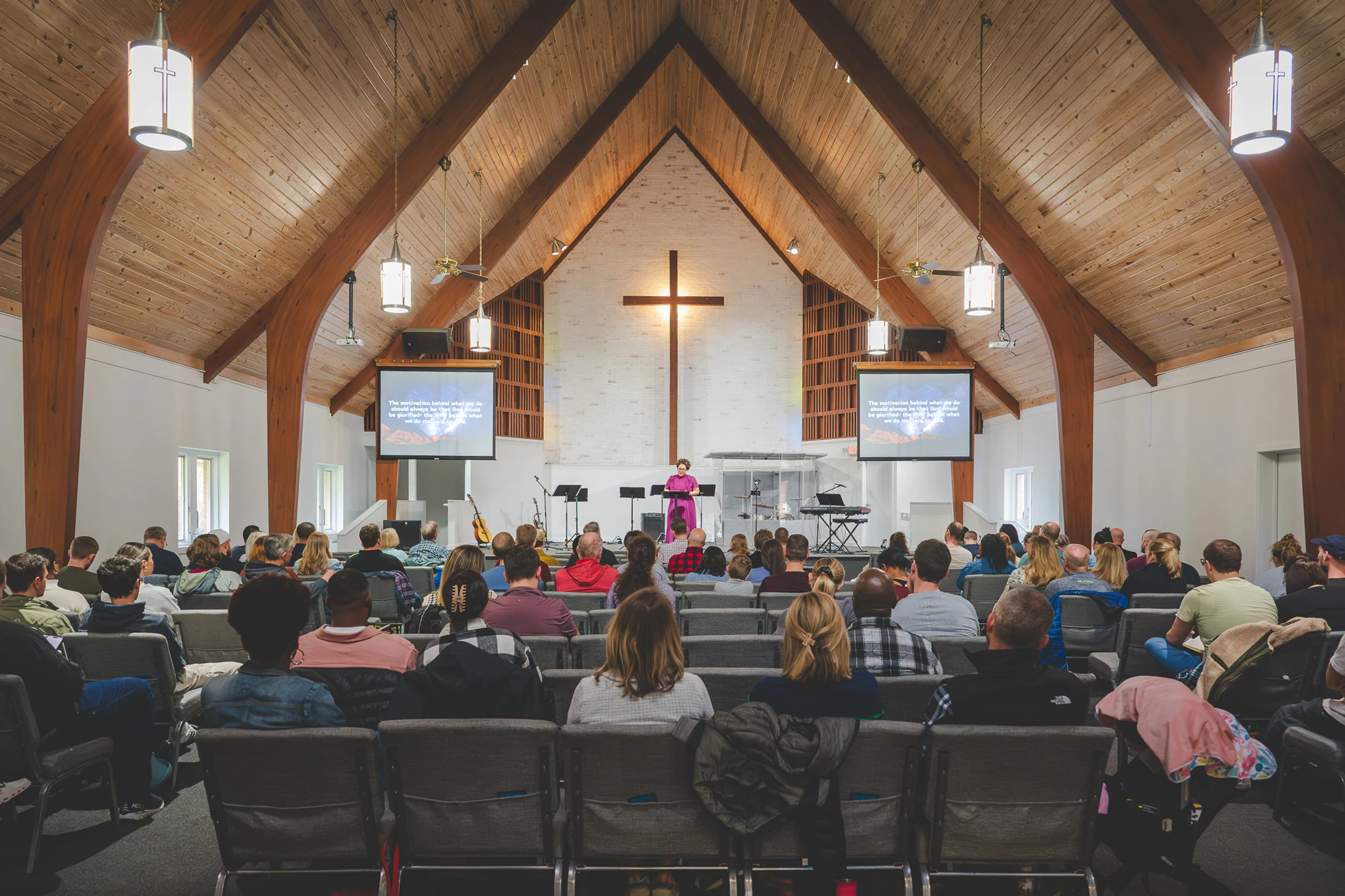
We can't wait to see you
Join us this Sunday at 10:00 a.m. for our morning worship!

Have you ever had a moment where everything you planned, everything you believed, everything you were counting on — just collapsed? No warning. No explanation. No word from God.
In this message, we follow Joseph into one of the darkest moments of his story — stripped of his robe, thrown into a pit by his own brothers, and sold into slavery. And yet, Scripture chooses this moment to show us how the human soul is truly formed.
Through Joseph's descent, we discover that God is not absent when the bottom falls out — He is working deeper. And that the path to spiritual maturity doesn't always go up. Sometimes it goes down first.
In this message you'll learn:
Whether you're in a pit right now or walking alongside someone who is, this message will remind you that descent is not punishment — it's preparation.
📖 Scripture: Genesis 37:12-24 | Genesis 32 | Psalm 46
So last week, Pastor Micah, I kicked off this, sermon series on the journey of holiness, which we're taking from Pete Scazzero Conversation Ministry of Emotionally Healthy Spirituality, which simply says this. You cannot be spiritually mature and emotionally immature. We have a lot of churches, a lot of spirituality that celebrates the maturity of one's spiritual life, what they're able to do for the kingdom of God and divorce it from the emotions, the unhealthy emotions that really cause damage.
A lot of the challenges we're seeing, you know, in church today, is because spiritual maturity is celebrated at the expense of emotional immaturity. And so this journey of wholeness is really, about all of us becoming whole in Christ Jesus. And we're looking at the life of Joseph as our example. If you missed last week, you really want to tune in to it, go back to YouTube or our, sanctuary website page so you can hear this message that was directed around how families, the families we're born into, have a lot of impact on our spiritual and emotional health and life.
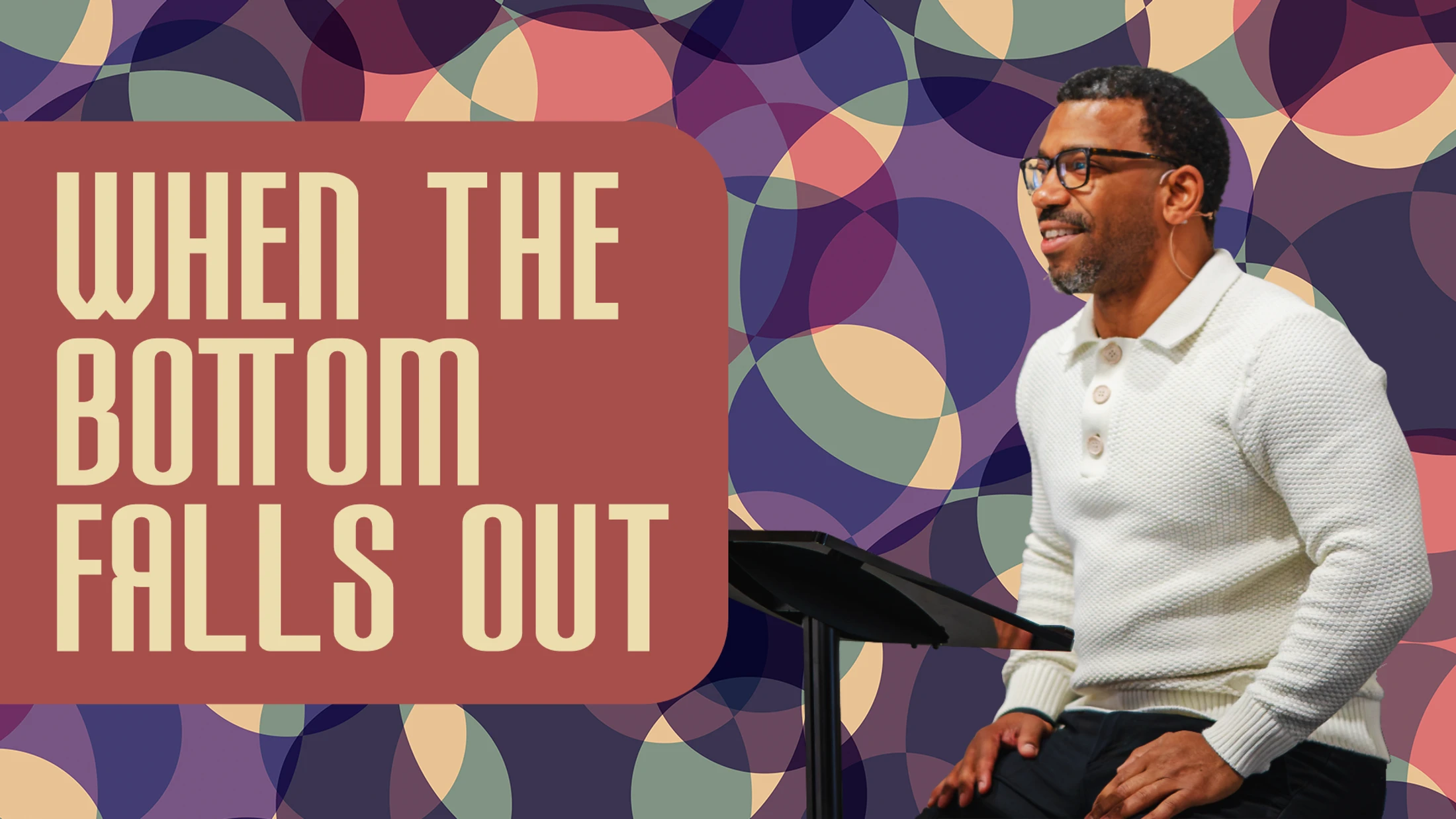
Today, the sermon is called When the Bottom Falls Out. We're following the life of Jesus. Joseph and most of us are familiar with this part of his story where everything is going fine, or at least fine enough. Or at least you faking it til you make it. You had a plan for your life. You had people that you could rely on.
You even had some sense of where things were going. And then all of a sudden, without warning, something shifts. A phone call, a conversation that goes wrong, a door that is closed and silence where there used to be sound and the ground underneath you becomes now unstable. We have language for this, don't we, Mandy? I'm just going through a tough season right now.
You know what? It's been really hard. But we'll be all right. And if we're really, really being honest, this place is disorienting to our spiritual lives. We didn't plan to be here. And yet here we are. And what we mean by that is, I don't really recognize my life right now. I don't know what this is. I don't know where God is in this right now.
I have prayed, I have circled the prayer wagons and nothing has happened. I believe things were going to be right and they didn't hold. And this is not just a crisis of circumstance, Sean. This is a crisis of the soul. And what I want you to know today, beyond any shadow of a doubt, Phil, is that the Bible doesn't avoid this experience.
It doesn't gloss over it. It doesn't paper over it or explain it away with tidy answers. Scripture is full of people like Joseph, who found themselves at the bottom of something called a pit, a wilderness experience, a cave, a cross with no clear word from God and no obvious way forward. Everything was going right for Joseph. And yet, by the end of Genesis chapter 37, he's at the bottom of the pit.
And this is the story that Scripture chooses to tell us about how the human soul is formed. It is formed in the places of descent before the places of us ascent. Our spiritual journey of wholeness must go through some kind of period of descent before it goes through a period of ascent. And Scripture tells us this. When the bottom falls out.
God is not absent. God is working deeper. When the bottom falls out. God is not absent. God is working deeper. Hear the word of the Lord from Genesis chapter 37, verses 12 through 24. You can read it along with me if you like, in the CSB version. His brothers had gone to pasture, their father's flock at him. Israel said to Joseph, your brothers, you know, are pasturing the flocks at check.
Get ready. I'm sending you to them. I'm ready. Joseph replied. Then Israel said to him, go and see how your brothers and the flocks are doing, and bring word back to me. So he sent him from the Hebron valley, and he went to shake him. A man found him there wandering in the field, and asked him, what are you looking for?
I'm looking for my brothers. Joseph said, can you tell me where they are pasturing their flocks? Oh, they moved on from here. The man said. I heard them say, let's go to Dothan. So Joseph set out after his brothers and found them at Dothan. They saw him in the distance, and before he had reached him, they plotted to kill him.
Some good brothers. They said to one another, oh, look, here comes that dream expert. So now come on, let's kill him and throw him into one of them pits. We can say that a vicious animal ate him, and we'll see what becomes of his little dreams. When Reuben heard this, he tried to save him from them. He said, let's not take his life.
Reuben also said to them, don't shed his blood. Throw him in the pit in the wilderness. Don't lay a hand on him, intending to rescue him from them and return him to his father. When Joseph came to his brothers, they stripped off Joseph's robe, the long sleeve one that he had on just then. They took him and threw him into the pit.
The pit was empty and without water. This is the word of the Lord. The people said, thanks be to God. Let this word fill our minds, flow from our mouths, and fill our hearts to live as the beloved children of God. This first scene I'm going to call this the collapse is when life stops making sense. The day started off great.
Joseph and his dad Israel were hanging out and Israel had this great idea. Hey, why don't you go check in on your brothers? The youngest or the second to the last? Youngest of all them. Why don't you go check on all of your brothers after you've shared this wonderful dream with them, where they're all going to be bowing down to you?
Yeah, that seems like a great idea, dad. So Joseph does. He says I'm ready. And he goes out to find them, only to find that they've moved to another place. And when he gets there, off in the distance, they say, here's our opportunity to get rid of this dreamer. You know, sometimes you got to be careful about who you share your dreams with.
You got to be mindful of the folks you share your dream with. One of the ways we we were just saying it this week, me and Shyla, all skin folk ain't kinfolk. Just because they're related to you or they look like you. Are they from the same group as you? Don't mean they have your best interest at heart.
Some dreams need to stay in an incubator before they are released. Everybody can't handle your dream. Everybody can't support your dream. Everybody don't understand your dream. And so sometimes you can share your dreams prematurely. It's just like if you and your beloved were expecting a child and everybody wanted to know the name, and you told them, we're going to go with the name Sterling.
And they say, what kind of white name is Sterling that you're going to give your black child? And all of a sudden nobody likes the name Sterling because you shared it so quickly. And now no one wants you to call your little child named Sterling. But now we know there's some real famous black children named Sterling, like Sterling K Brown.
That guy is all right right now. Now we can share. You get what I'm saying? Sometimes you can't share your dreams with everybody because they can't support it. And that is the case with Joseph and his brothers. They plotted to kill him. And Reuben, perhaps in some small way, is able to spare his life. The real interesting part is that after they throw him into the pit, they go sit down and eat.
They just go right on about their business and and the way even this section ends is that the pit? They want you to know how bad the pit was. How bad was the pit? It was empty. And it didn't even have any water in it. It was bad. But this is more than geography that we're reading about here, Ross.
This is a spiritual description where the pit represents emotional emptiness. It represents spiritual dryness, a loss of control, a death of the story you thought your life was telling you. And as Joseph is down in that pit, his dreams of whatever he had imagined before then are sinking down in the pit right with him. There's no ladder for him to climb out, Tammy.
He can only cry out to his brothers who are within earshot, and they are ignoring every cry. And some of us know that place where we've been in a spiritual pit and we're crying out, and no one is there to hear us. The experience of the pit is drying out of the soul. Charlotte and I moved here from Hampton, Virginia, in 2003 on the dream of building and starting a multiracial church.
We both had a really nice condo in, Newport News. And, you know, we were both educators and masters degree. It's going to be easy for us to get a teaching job here in Columbus, Ohio. Little did we know that Ohio State produces the largest number of teachers in the country. They go back and forth with, with the University of Texas.
And so the waiting list was long. I'm like, hold up. I'm a black man with a master's degree in education. Surely I can get a teaching job, and I couldn't. We had to move into my in-laws pit. They're not even here to town. We had to move into the basement. Don. It was dark. Anybody ever have to move into the in-laws basement?
Lord have mercy. God, we we need to start a special club just for us. It was dark, and I thought my dream had died in that pit.
What's the name of that street? Five something cypress caught. Some of the DNA in the pit was dying right there. We've all been there in some place where we're in a metaphorical pit where relationship ends, a diagnosis arrives. Lord have mercy. A job disappears, and the people around you just sin. Seem to keep moving on while your life stays still.
Those are the times. And we ask, Where is God right now? There's a name for this season that Pete Scalzo calls The Wall. In his book Emotionally Healthy Spirituality, he says the wall is a season where God brings us in a crisis, where our old ways of relating to God are no longer working. You hit the wall, and this crisis brings you face to face with what you believed about God, what you believed about Scripture were you believed about God's witness for you?
And if you walk for any length or amount of time, you have been there before. Beloved. And if you didn't, you're going to. But I want you to understand.
This wall is not doubt. It is not backsliding. It is not evidence that your faith is failing. The wall is what happens when the version of faith that you have been living stops working. And this is where most or a lot of people deconstruct and get all the way off the bus. They get all the way off the bus right here.
They deconstruct to there's nothing left before the wall. They could relate to God through a set of quiet assumptions. If I pray faithfully, things will turn around. If I just be obedient. God will bless me. If I trust that God is going to be taking care of my future, then I'll have no anxiety and nothing to worry about.
But when the bottom falls out, when you're thrown into the pit that is the wall. Confronting your faith journey. Those assumptions you held on to before the wall. They weren't completely wrong. They were just incomplete. And some of us in our faith, we don't mature beyond that point is something wonderful when you begin your relationship with God. Salvation seems like just the most amazing thing on a planet.
You pray and by the end of the day, it's already answered. You come in church and they are singing your song. Every Sunday you turn on the radio and that is a word just for you. You are floating on cloud nine when you first get saved, aren't you? You're like, man, God is good. Nothing can happen to me.
Nothing is wrong, nothing is wrong. And then life,
Life. Be life and great. And it catches you off guard. And you try to apply the same things you apply. When salvation was brand new and sweet and it ain't working. You came into church and they're not singing your song. They sing in the song you don't like. As a matter of fact. What is this? I don't came to the wrong church.
Maybe God is leading me to go somewhere else. I feel, the Lord is leading me elsewhere.
Beloved, this is where a lot of people give up on God. It is a natural disorientation to meet the wall, and Scalzo is careful to say it's not a problem to be solved. It is a passage to be entered. We must go through the wall, not stop at the wall, because the wall is where things we would never choose.
Betrayal from loved ones, loss of, hope and expectations, failure, transitions we didn't ask for. There is the wall, and the wall begins, beloved, where control ends the wall. Y'all like that? The wall begins where control ends. And that's where Joseph notices himself. But just when you thought it couldn't get worse, let's pick up verse 25. Just when you thought the bottom of the pit with no water was the worse, they.
The brothers sat down to eat a meal, and when they looked up they said there was a caravan of Ishmaelites coming from Gilead. The camels were carrying aromatic gum, balsam and resin going down to Egypt. So many details, Judah said to his brothers, what do we gain if we kill our brother and cover up his blood? Let's make some money.
Let's sell him to the Ishmaelites and not lay a hand on him, for he is our brother. Hey, come on now. God's. He's our own flesh. And all of his brothers agreed. Even Reuben. When the Midianite traders pass by, his brothers pulled up Joseph out of the pit and sold them for 20 pieces of silver. That ought to bring something to mind to you, to the Ishmaelites who took Joseph to Egypt.
When Reuben returned to the pit and saw Joseph was not there, he tore his clothes. Y'all. Y'all agreed to this without me. And he went back to his brothers and said, the boy is gone. What am I going to do? So they took Joseph's robe and they slaughtered a male goat, and they dipped the robe in his blood, and they sent the long sleeve robe to their father and said, we found this.
Examine it. Is this your son's robe or. No.
His father. Recognize it? It is my son's robe. A vicious animal devoured him. Joseph has been torn to pieces. And then Jacob tore his clothes, put sackcloth around his waist, and mourned for his son. Many days all his sons and daughters tried to comfort him, but he refused to be comforted. No, I will go down to Sheol. That's Hades to my son mourning, and his father wept for him.
Meanwhile, the Midianites sold Joseph in Egypt. It went from bad to worse, to worser, to potter for an officer of Pharaoh and the captain of the guards. Joseph. Situation, beloved, did not improve. It got worser. I don't know my English.
His brothers pull him from the pit, not to free him, but to sell him for 20 pieces of silver. Y'all know where that's referencing a little bit later on, What is it? Jesus, right? Jesus, who was sold for 50 pieces of silver. So here is this, a foreshadowing even earlier on of, like Christ. Back to the text.
The single most brutal line in that whole passage I just read to you is meanwhile, meanwhile, life has moved on. Meanwhile, the transaction is complete. Meanwhile, there is no angel in this story. There is no voice from heaven assuring Joseph that he going to be all right. There is no mention of God. The text refuses every spiritual cliché that we might cling to or reach for, and asks us to do this very difficult thing.
Sit with it. Sit with the darkness. Because sometimes faithfulness looks like darkness. Sometimes faithfulness looks like science. Silence. Sometimes obedience leads us into emptiness rather than out of it. And this is where Franciscan teacher Richard Ward's insight becomes essential. He says transformation does not come through addition. It comes through subtraction. Spiritual transformation doesn't come from keep adding on things.
It comes from subtracting things that often looks like loss and through descent. And we are deeply conditioned to believe that our spiritual lives have an upward journey. Richard Moore writes this in his book Falling Upward, that we believe we have an upward journey, that everything about our life is supposed to go upward and to the right, and that growth means accumulating more, more faith, more blessing, more riches, more clarity, more confidence.
But maturity actually shows up on the way down that there's something the Lord teaches us. On the way down Stoney the road we tried Stoney the road we trod. It said in that black national anthem to understand and notice and pay attention that there was something in the depths of the deep of the darkness, of the despair that God is revealing to us, to help us notice and pay attention.
And every major leader in the Bible experienced it. Moses was in the wilderness for 40 years. David hid in a cave running from the person who was supposed to be his mentor. Elijah met God after being totally exhausted in despair on his own. Jesus himself went through the Garden of Gethsemane and bore the cross. This pattern of descent is not incidental.
It is necessary. And raw goes on to say that what happens in this dissension is we meet the false self that is built on performance and image, and control the false self that says, I got this under control. I got me a colorful robe. I got this under control. I had me a dream on top of a dream I got this under control.
I got five degrees. I got this under control because I've been making it on my own ever since I came out the womb. I got this under control. And what happens in the descent is it. Notice is that the false self cannot carry what God intends to give to us, for us to receive, and that false self has to be dismantled.
So those who are in their deconstruction phase, what is truly being deconstructed that God has an invitation for you to deconstruct the false self that has been trying to hold on to an imperfect God that you've made in your image. Wow. You've made an imperfect God in your image, and God is trying to strip away all of those parts that you believe God to be that weren't true, and those parts that you thought were true of yourself that were really false.
This is the language of spiritual formation, beloved. And this is what happens from Joe to Joseph when he goes from being down in the pit to soul, to the Ishmaelites, to being sold to somebody else in Egypt, that God is not simply relocating him. God is doing something in his soul that could not have happened on his own, and Canaan could not have happened on his own under his father's roof, could not have happened on his own.
While he was clothed in the comfort of the long sleeved, colorful robe, he had to be stripped of it all. And this descent is not punishment is preparation. Let me pivot a little bit. Anybody ever heard of the dark night of the soul? Yes, yes. 600 years before Pete star zero. Saint John of the cross writes of the dark night of the soul.
When silence comes into your life, your first instinct, he says, is to assume that you've done something wrong. And so you search within yourself. Where is the sin that caused it? Where is the spiritual inactivity? So I need to pray harder. I need to read more. I need to beat myself in order to find out what I need to do.
Right. And in this dark night of the soul, what Saint John of the cross first notices is that he was betrayed by his own people. And these goes into this dark night of the soul. And he says, there's two parts to this dark night of the soul. The first part is called the dark night of the senses. The dark night of the senses is the stripping away of spiritual consolation, the comforts, the feelings, the experiences, the emotional warmth that often marks your early faith that I spoke about earlier.
We begin our spiritual lives with that joy and that belief, that closeness with God. Prayer, life, worship, feels natural, but then it dries up. That's the dark night of the senses. And then the second thing of the dark night of the soul is called the dark night of the spirit. And the dark night of the spirit is the stripping, not just of the emotional comforts or consolation, but of the actual framework through which you've understood God.
You built a framework in your Baptist tradition. You built a framework in your Methodist tradition. You built a framework in your Lutheran, Catholic, Pentecostal tradition that doesn't fit because you can't fit God into a denomination. That right, you cannot fit God into that Baptist box. You can't fit God into that Assemblies of God box. You can't fit God into that Lutheran framework.
God is bigger than every single denomination that you have ever heard about. All 800, whatever number there is. And when God is stripping you away, when you are deconstructing, God is trying to pull you away from those religious, crutches that you've been holding on to for your whole life so that you can learn how to live by the Holy Spirit so that you can learn how to walk by faith and not by sight, so that you can learn how to depend on God at all times, and not just the times when it feels like you really, really need him.
God wants to lead you how to depend on him at all times so that you have a faith that is not hollow, a faith that is empty, dried up with no water. But you have a faith that is thriving, that is flourishing, that is overflowing from the inside out. God, I want that kind of faith. And if I gotta go into the pit in order to get it, God, let me get it all.
Don't let me get a little bit of it. Let me get all of it. And with Saint John of the cross says, what you do when you're in this paint, this place is you need to stop striving and you need to stand still. Stand still and know that the Lord is good. Stand still and know that God is with you.
Stand still, stand still, stand still. Actually, he gives you some other, options. Let me give you these four real quick and move on, because the service is already at 1016. Number one, first you got to name the darkness. Honestly, I think we are accustomed to this as sanctuary. But if you're not accustomed to it, get accustomed to it.
Name the darkness. Honestly, stop trying to perform before God who who knows everything. Stop trying to pretend like you like like God. Don't know what's already going on. God sees everything he sees when the lights are on, and he sees when the lights are off. He sees when you're by yourself and when you're with the crowd. He sees when you got it all together.
And when you don't got it all together. So stop putting on in Jesus name. 40% of the Psalms are called laments crying out to God. And if you need some help crying out to God, the name, the darkness. Honestly, one of the sure places you can begin is to read the Psalms. They will speak for you. The second thing Saint John says is to practice small faithfulness in the dark night of the soul.
You keep reaching big God, deliver me from this whole thing. God in Jesus name. I know you can do it. Versus what is the next small step I need to take? What is the small thing that I can offer to God? Perhaps it is to serve. Perhaps it is to give. Perhaps it is to pray somebody else's prayer.
Perhaps it is to pray. Just one word. Lord have mercy, Lord have mercy. I got no other words to say, but Lord have mercy. Start with small faithfulness. Number three receive community. One of the beautiful things about Saint John on the cross is he's a contemporary of this other spiritual giant, Saint Teresa of Avila. And Saint Teresa of Avila becomes his spiritual director, who we she talks about this castle of the soul with all of these rooms that you can go into and find where God is not hiding, but is waiting for him to be found, that that you can go into these places and notice and pay attention that you are not on your
own. And and I'm so delighted that we have spiritual companions here and spiritual directors here and counselors here, and people who are strong in the faith and mothers of the faith and and people who have walked the path that you're seeking to walk. Beloved, you don't have to go on your own when you're in the dark night of the soul.
The one thing the devil wants to do to you is to isolate you. But I'm in a dark pit. But you're not by yourself. But I'm in a dark place. But you're not by yourself. But I'm in a lonely place. But you're not by yourself. And the evil one wants to convince you. You are alone and you are by yourself.
No, nobody knows the trouble I see. Nobody knows. But Jesus will let somebody else know. Please. Number four, trust in this Hiddenness Joseph story in Genesis 37 ends with no resolution. He's far from home in Egypt in fact, God is nowhere named in Egypt. And yet we know the story is going to continue. We know even though God has not mentioned, that God is present.
We know that even though the name of Jesus and the Holy Spirit are not written in the text, they are all over it. In this hidden wholeness, as Parker Palmer calls it, is not a place of absence from God. It is presence with God that God believes it most intimately. We are found in this dark night where our faith goes to die.
No where our faith becomes alive here, that the dark night is not where your faith goes to die. It's where your faith comes alive. I always wonder when I read this text what was happening in Joseph's mind. How did he persevere when he is sold into slavery by his brothers? When he is resold into Egypt, into a palace in a place that he is unfamiliar with what is happening in his mind?
What is it that sustained him? And Scripture doesn't tell us specifically. Mom. Celeste, this is where I have to use my Pentecostal imagination. Or maybe it's the Baptist one. You like Baptist, right? You like Baptist? When I use my Baptist imagination, what I learned is that Joseph recognizes that he is not alone, either. In Genesis 32, his father Jacob, finds himself in his own dark night of the soul all night.
Genesis 32 says that he he is alone in a dark place, and he is fearful because his brother is coming after him. He doesn't found out he stole the blessing, and he is coming with an entourage and he is going to take him out. Jacob sends his family away because he doesn't want them to catch any consequences.
He doesn't want them to catch any strays. He's like, listen, I got to be all on my own. This got to be me and God. And while he is alone with God and angel of the Lord, it says, appears to him. And the angel of the Lord asks him, what he's doing there. He's. And you ain't got it.
Ain't none of your business what I'm doing here. Who are you? He's. I'm an angel of the Lord. And they start wrestling each other and as Jacob is wrestling this angel, the angel says, what is your name? And he says, my name is Jacob. You know what the name Jacob means? Come on. Bible people. Swindler, trickster. He says, listen, your name is no longer swindler or trickster.
Your name will be Israel. Because you have wrestled with God. Did you notice in Genesis 37 that he kept calling Jacob's name Israel? Did y'all pick that up? Israel is the one who wrestled with God and when he wrestled with God, he said, I am not going to let you go until you do what. Bless me. I feel the preacher coming on right now.
I am not going to let you go in this dark pit, in this dark night, in this dark place of the soul, until you bless me. And maybe Joseph was in his deep, dark pit, and he was wrestling with God. And he said, Lord, while I've been so by my own brothers, while I've been delivered into the hands of Israelites and been brought into this place of Egypt, I'm not going to let go until you bless me.
When I go from this pit into the next one, I'm not going to let go until you bless me. When that woman turns her back on me and tries to trick me, I'm not going to let go until you bless me. When they forget about me. God, I'm not going to let go until you bless me while I am being deconstructed and everything I thought about you.
God, one thing I know for sure you are Emmanuel, the God who is with me, who has not forsaken me, who will not leave me at any point in my life. I will not let go of you. I believe Joseph started thinking back to some stories his daddy told him. Daddy, why are you walking with that limp? Why are you walking like you?
Is your sciatica acting up? Did you turn your back again, messing with them heavy sheep?
That's why I got all you boys. I don't mess with sheep no more. I don't, son, let me tell you a story. I wrestled with God all night, and there's going to come a time in your life where you meet difficulty. There's going to come a time in your life where you meet darkness. There's going to come a time in your life where you hit the wall and you got to understand and know that you know this is not the end.
Look back on somebody else's story to give you some encouragement. Somebody who wrestled with God and made it through. And they got the limp to prove it. Yeah, I came out of this thing and and I'm wearing the scars. I'm wearing the pain because I want you to understand and know that God is the one who brought me through it.
God is the one who delivered me. Beloved, this is the end of Genesis 37, where Joseph hit the wall and where the bottom fell out. And one thing I don't want you to ask when you're bottom falls out is why? Don't ask the question why ask the question, what? God? What is it that you have for me? Because the whys are always held in God's hands.
But the what is what he gives as a gift? Let us pray. God this wall. Some of us have encountered it in the past. Some of us are encountering it right now. Some of us, Lord God, are in the pit right now.
But Israel story reminds us that God meets people who refuse to let go. The same God who wrestled with Jacob in the dark and who sustained Joseph in a foreign land, who met Elijah in his lowest moment, who walked with Moses for 40 years in his wilderness, who sat with David in his cave, who was with Jesus on his cross, is the same God who was with us right now.
We come before you, Lord, thanking you for your presence and where we are at the wall. Give us the strength not to give up, but to give in to you. In the strong name of Jesus. We pray. Amen.