
We can't wait to see you
Join us this Sunday at 9 a.m. or 11 a.m. for our morning worship!

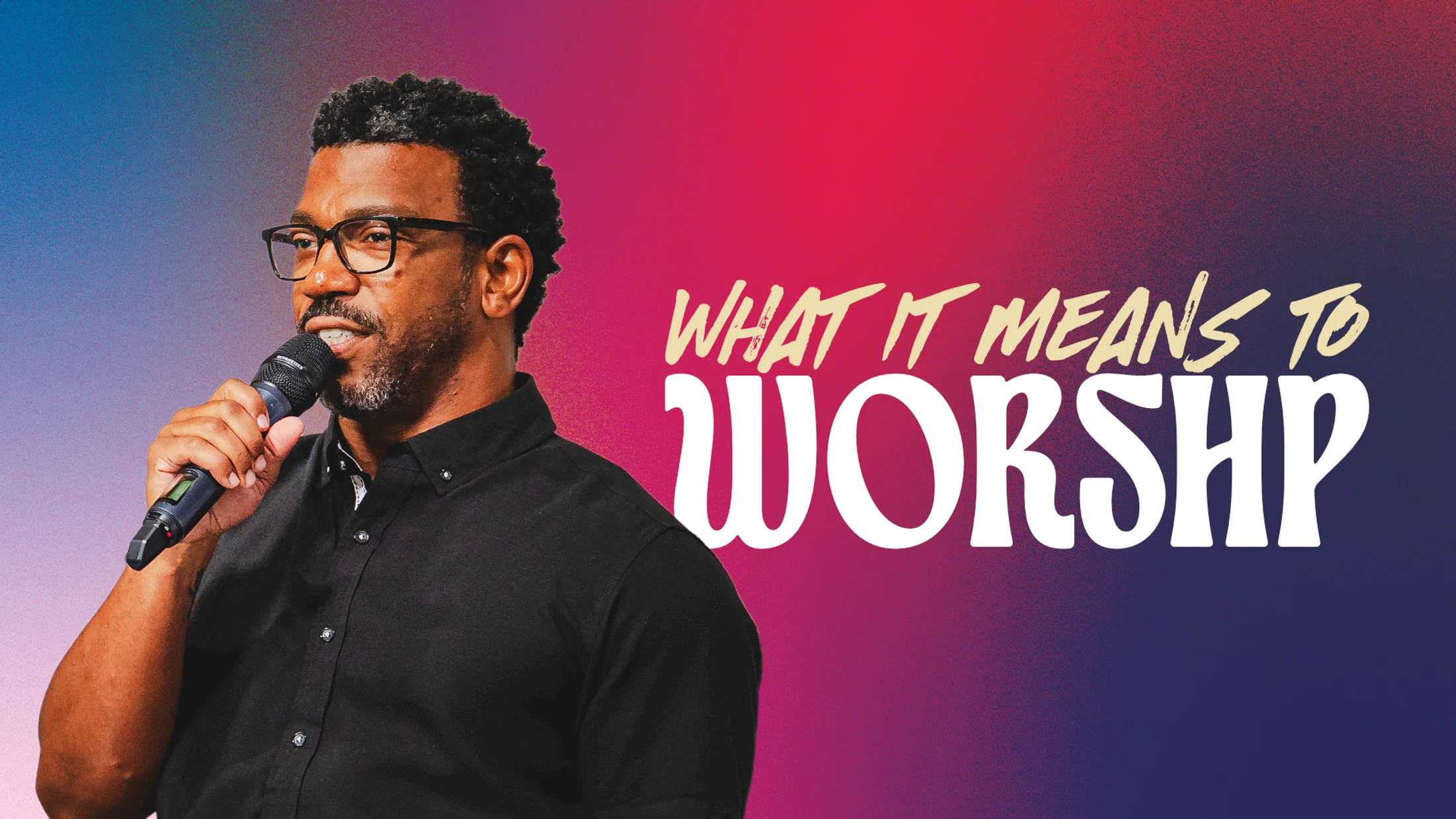
Have you ever lost your voice cheering for something? Screamed until you couldn't speak? Felt something rise up inside you that you couldn't hold back?
That's worship. And it was happening long before you walked into a church.
In this message, Pastor Rich Johnson takes a break from the Gospel of John series to open a new summer series called "The Reason Why We Sing" — an exploration of the Psalms of Worship. And he starts with a question that cuts right to the heart: what were we actually made for?
Because worship, as Psalm 29 reveals it, is not just something you do on a Sunday morning. It is not a song you sing or a service you attend. It is a whole-person, lifelong response to the God who made you — and it begins with one Hebrew word that changes everything.
Ascribe.
Not just to notice. Not just to recognize. But to actively give back to God the weighty glory that already belongs to him.
In this message you'll learn:
Whether you're in a season of exuberant praise or a season where your only worship is a question — do you even care, God? — this message is a reminder that worship is not about performing for God. It's about turning toward the voice that outweighs everything surrounding you.
Scripture: Psalm 29 | Romans 8:19-23 | Luke 19:40
You're probably wondering, like, where did my voice go? Well, Aaron Efting talked me into going to a watch party for the United States World Cup at the Crew Stadium. And so I have never been so excited and disappointed in my life because you go out there and you cheer for the goal and it's like, yeah, they made the goal! You're losing your voice. And then the referee comes out and does some square thing. And it's like, nope, that goal is actually taken back. And it's like, man, what did I do all that yelling for? Twice I did that. And then when they gave the red card on the one guy for no reason at all, you know, I was yelling and screaming too. And this World Cup, you know, it gives us all an opportunity to cheer, right? Fans from across the six continents coming together here in North America to watch and root for their favorite country, their favorite player, and all of the stadiums are filled to capacity. Outside of the stadiums, they're filled to capacity. People are shoulder to shoulder. And even the most exciting match so far, that many people agree, Argentina versus Cape Verde, you know, a really, really exciting match. Again, you're like, "Yes, no, yes, no!" And everybody's cheering from Argentina. Even if they're not from Argentina, they're cheering for them. The stadium, you know— no, not this crew. Okay, look at y'all. All right, but the stadium seemed like everybody was rooting for them. We're going to give glory to the best player in the World Cup, Lionel Messi. You know, we're going to give him all of the credit and we're gonna Cheer him out! In Cape Verde, relatively unknown, the underdogs, the guy who was the goalkeeper drives a bus and an engineer or something like that by day, is giving it his all, and we are shouting to the top of our lungs, ascribing to them some kind of glory. The glory that's all there on the pitch, if you will. Learning these terms, Naomi. There's something distinctly moving about the World Cup or any kind of sporting event, really, that brings out our worship. It brings out our excitement. It brings out our anticipation. The way we look at the individuals on the field or the court. Or the chorus. We look at them with such admiration and we cheer to the top of our lungs because that's what we are built to do. We're taking a break from our John Gospel series to look at these Psalms of worship called "The Reason Why We Sing." What is the reason why we sing? What are we built for? What are we made for? That when you decided to follow Jesus, you were invited into a lifelong journey as a worshiper. Not just something you put on and take off here and there, but that it is a way of life. Something that you are called into. Something that you're not called to just on a Sunday morning or a midweek worship or when you decide to turn on your favorite worship album. But as a part of your everyday life. Beyond the singing. Beyond the praying. That what we do here on Sunday morning is real and it is an important part of our worship, but it is not the holistic part of our worship. Because worship begins underneath what we see here when we gather together. To ascribe our worth to God. To be at awe in what God is doing in our lives, but also in the lives of others. So over the next several weeks, we're going to break down the mechanics of worship, not because worship is a formula, but because it is a whole person and a lifelong response to the Creator who made us to worship. Today we look at what it means to worship from Psalm 29. What it means to worship. Psalm 29, verses 1 through 9. Read like this. You can stay seated, but let's read it all together. Ascribe to the Lord, you heavenly beings, ascribe to the Lord glory and strength. Ascribe to the Lord the glory due his name. Worship the Lord in the splendor of his holiness. The voice of the Lord is over the waters. The glory of glory thunders. The Lord thunders over the mighty waters. The voice of the Lord is powerful. The voice of the Lord is majestic. The voice of the Lord breaks the cedars. The Lord breaks in pieces the cedars of Lebanon. He makes Lebanon Leap like a calf, Sirion, like a young wild ox. The voice of the Lord strikes with flashes of lightning. The voice of the Lord shakes the desert. The Lord shakes the desert of Kadesh. The voice of the Lord twists the oaks and strips the forest bare. And in his temple All cry glory! This is the word of the Lord. Thanks be to God. Let this word fill our minds, flow from our mouths, and free our hearts to live as the beloved children of God. I want to draw us attention, Joseph, to one word before we go anywhere else, and that word is ascribe. Everybody say ascribe. And now it's not a word that we use often James. We don't go around talking about ascribing. How often do you come home to Darby and just ascribe to her the glory that she is? Not very often, but after today you might. We could slide past that word 'ascribe' and replace it with some other substitute like praise or worship, but underneath, the Hebrew word 'yehab' doesn't just mean to notice or to recognize or to pay attention. It literally means to give. Give God. Give God that is yours. Give God all that already belongs to God. The same word that you would use for handing somebody something. You were given some communion cups this morning. That was Yehad, to ascribe this gift to you. Except it has something even more deep. David is telling us that even the heavenly hosts are commanded to ascribe to God, actively give something to the Lord, their glory, their strength, and to do this out loud and on purpose and intentionally as an act of their worship. He says 3 times, ascribe, ascribe, ascribe. And that's the way in which whenever you read the Hebrew, in the Psalms in particular, When that repetition happens over and over again, it's pay attention. Don't lose this.
Don't miss this.
Don't let this escape you. And we do know that the Psalms were actually songs of worship. So this was put to music and this was actually sung together. The ascribe, ascribe, ascribe is like the drummer saying, let's stay in rhythm.
Let's stay in beat.
Let's not lose this. We are to ascribe to God all that belongs to him. But ascribe what in particular?
Glory.
That other Hebrew word, kavod, it literally means heaviness. It doesn't really get, uh, at the essence of it, does it, Pastor Tim? When we look at to ascribe God glory, it literally means something that is heavy. Give God something that is heavy and of substance.— not just mere decoration, not just something casual, Jason, but something that is heavy, something that actually costs you something. And it's a command to hand it over in the midst of the crowd of people that are already there, the crowd of beings, the whole of all creation. To put it simply, to ascribe is to actively give back to God— in word and action, the weighty glory that already belongs to the Trinity. Father, Son, Spirit. To give back to God, in your words, the things that you say. In your actions, the things that you do. To the weight of glory that already belongs to the Father, the Son, and the spirit. C.S. Lewis put it this way: Why would God command all beings to do such a thing? Not out of need, though, but out of love. In commanding us to glorify him, to ascribe to him, God is actually inviting us to enjoy him. Enjoy the presence of God just because God is God. Not just for what God has done for you, not just because of what you want God to do for you, but simply because God is in God's self altogether lovely, right? Mama Hines. When Mama Hines prays, she prays to the altogether lovely God. Just who God is in God's essence, in God's presence, in God's being. Understanding and knowing that what we ascribe to, we hope to become ourselves. There's something about ascribing and giving that glory to something you're the biggest fan of. Because there's something it does inside of you. We cheer so loudly for Cape Verde because there's something of a fight in them that we want to see in us too. There's something of a strength in them that we want to see in us too. There's something of a perseverance in them that we want to see in us too. And to what we ascribe, beloved, that is what we inevitably want to become. Which raises the obvious questions. If the ones closest to God's throne, the heavenly beings, are commanded to ascribe What about everything else that God made? You do know that the Psalms, in its breakdown as a book of worship, the second or the third part of the Psalms is really dedicated to the exuberant worship that happens throughout all creation. Finding its culmination in Psalm 148, 149, and Psalm 50. In Psalm 148:1-4, the Lord describes the sun and the moon and the shining stars. Have worshiped God. Look at what God has done. The heavens above, praise God, the stars, the sun, and the moon. You ever go outside and just look at the moon and just be like, wow, man, this is beautiful? And in that beauty, it is giving God its own glory because it was made to give that shine. And throughout 149, The sea creatures in the ocean, the fire and the hail, the snow and the clouds, the stormy wind, the mountains, the fruit, the tree, the wild animals. He doesn't leave anything out of question. It was all made and built to give worship to God. And even in the New Testament, uh, when some Pharisees try to hush Jesus's disciples He tells them in Luke 19:40, if they keep quiet, then the very rocks are going to shout out because that's what they were made to do. If you keep quiet, trust and believe that God is still going to get glory. If you keep silent, trust and believe that God is still in what God has created, got enough But God isn't just satisfied with enough, because God wants our worship too. The very rocks will cry out, which is a claim that all creation, all creation, all creation was made to worship God. And the rocks do it, and the trees do it, and the clouds, and the sun, and the moon, and the stars. Which just puts in mind, Simeon, the diversity of what God desires in worship. What God desires, even in a multiracial church, a multicultural, multigenerational church like this, is that there would be difference of our worship expression. That there would be something that we see in one another and from one another that reflects the beauty and the worship of God. So when you sit there quietly and give praise to God, praise the Lord. When somebody shouts, "Hallelujah!" Yes, I'm waiting, Michelle. That was a cue. Like, I was given permission for those extroverted worshipers, George. When some dance, when some put their hands together, when some raise their hands, when some spin around, when some worship in another language, their own given birth origin language or a heavenly spiritual language, they are all different registers by which we join in with all of creation to give our diverse worship back to God. Let it all come out. Let me give permission. I think sometimes when people come to a multiracial church, they expect worship to be, I don't know, you fill in the blank. But those exuberant worshipers, look at all of the silent worshipers and they say, I guess I can't really lift my hands here because the silent worshipers aren't.
I can't really shout here because the silent worshipers aren't shouting.
And we default to whatever we think or believe is the majority. But you know who doesn't default to what they think or believe is the majority?
All of creation. The rocks aren't saying, because the trees are waving, We maybe should not shout out our praise in this rocky position. The stars don't say, let's not twinkle, let's not twinkle twinkle little star because the clouds are moving slowly. So exuberant worshipers don't allow somebody else's pattern or way of worship dictate how you give your very best to God. If you know what God has done for you, don't let anything hold you back. Whether you come here on Sunday morning or you're at your home, in your place, or you're on the job, don't let somebody else hold back your worship, your praise, your glory, your ascribing to God. Because nobody knows what God has done for you and in you and through you except you. Nobody knows where you come from. Nobody knows what you've been through. Nobody knows what your heart and your prayer and your desire is You.
But why does it take an active choice and command for us to, to ascribe to the Lord 3 times? Because the truth is, what we think about creation is that it just does it automatically and it's effortless is actually not the whole picture. When you turn to Romans chapter 8, verse 19 through, uh, 23, Paul says that all creation was subjected to futility. Here it is. For the creation— go back. For the creation waits in eager expectation for the children of God to be revealed. For the creation was subjected to frustration, not by its own choice, but by the will of the one who subjected it, in hope that the creation itself will be liberated from its bondage to decay and brought into the freedom and glory of the children of God. We know that the whole creation has been groaning as in the pains of childbirth right up to the present time. Not only so, but we ourselves who have the firstfruits of the Spirit groan inwardly as we wait eagerly for our adoption to sonship, the redemption of our bodies. In other words, the creation that you look out the window and you see, it's just, it's just naturally made to worship God, and it's already doing that. At the same time, it is also grieving because decay is its end in this life. It's also groaning out. It also has to fight through the hardship of thunderstorms. And dryness. It also has to fight through the decay and the pruning. It has to fight through the hardships of their life in order to do what it was made to do, which was to ascribe. Which brings us to the scene of Jesus and his disciples in a boat on the Sea of Galilee. I don't know if your mind went there as you were reading that Psalm 29, but mine certainly went there. Jesus is in the boat with his disciples. The best picture of this, you can't see it real clearly, is, is Rembrandt. This is Rembrandt's depiction, and it's dark. It's dark because of the storms over the Sea of Galilee had gotten dark, and the wind had pushed the waves up over and into the boat. And all of the disciples, the whole 12 of them, are fighting for their lives, pulling and hoisting the mast and rowing the oars and wondering, when is this storm going to end? And where is Jesus? Anybody know the story? Where's Jesus in the boat? That brother asleep. He is knocked out. Reminds me of my first son. We could take him anywhere as an infant. We could go to the movies and he would just be asleep, knocked out. We can go out to eat, the restaurant, don't matter. Bring him to church, he sleep through the whole service. Sometimes it lasts up until the age of 21, but at the first start— he's not here to defend himself— at the first start of his life, the brother would just be sleep. Hey, wake up! The disciples are like, bruh, you sleep. And you hear their question: do you not care if we drowned? Some of us, in the midst of our lives, we're facing storms of all kinds. And our worship of ascribing is not giving God our very worship.
We're just giving God our questions and our anxieties and our doubts. And that's okay. That's okay. Jesus is right there in the boat with you. He wants to hear your anxiety, your question, and your doubt. Lord, do you care? Do you care that I drown in the midst of this storm?
Do you care that I drown in the midst of this turmoil? And this brings back Romans 8, because the, the storm was not something that they chose for themselves, Jennifer.
They just happened to be caught up in it. Sometimes we're just caught up in life. Sometimes we're just caught up in difficulty. You didn't choose the sickness. You didn't choose the, the work struggle. You didn't choose the relational strain. You didn't choose the path that you were on. But because you were caught up in the fallenness of life and the storm of life and the decay of life just wrapped you right into it. It is pulling you into the same kind of chaos and anxiety that it is describing.
The problem is not that the disciples didn't believe. It was the reality of what they felt. And the tension in Psalm 29 is that God's voice carries more weight than the cedars of Lebanon, the strongest of all wood. It carries more weight than the mountains, the mountains of Kadesh. It carries more weight than the seas. But for some reason, it feels like and looks like the voice is asleep in the back of the boat. Beloved, what do you do when the voice feels like it's asleep? What do you do when you're caught up in a storm and it feels like the voice isn't speaking? What happens next is that Jesus wakes up. He doesn't pray to the storm to stop in Mark 4. He doesn't speak in a way that he's not confident. He simply says, 'Peace, be still.' Not gradually. The storm doesn't stop Overnight or over time, Noah, it stops instantly. And then the disciples respond this way: Who is this? Who is this that even the wind and the waves obey him? That's an act of worship right there, Lauren. That's an act of worship that when, when you see God's power and voice and authority When you see God, it is an act of worship. What kind of God is this that would hold us in the midst of the storm? What kind of God is this that would not allow us to perish when it looks like all around us is perishing? What kind of God is this who gives peace and strength in the midst of the storm? And that's where we wrap up Psalm 29. Delicia. Verses 10 and 11. Let's read this together. Psalm 29:10 and 11. The Lord sits enthroned over the flood. The Lord is enthroned as King forever. The Lord gives strength to his people. The Lord blesses his people with peace. What do you notice there in the ascribing, in the midst of the creation doing what it's commanded to do and ought to do. Where is the people of God? They are in the temple. They are in the presence of God, which represents God's presence. They are in the very place where the storm and the floods of life are beneath the voice of God. And there is no better place in our worship than to be in the presence of God. But we understand and know this, that God is Emmanuel, who is always with us.
Right, Julie?
Isn't that right? God is always with us. Amanda, God is always with us. Not sometimes, but at all times. Not just in the storm, but outside of the storm as well. That God is always with you, Vanessa, when you wake up in the morning and when you go to sleep and in between those waking hours, that God has not left you. And that peace and that strength is available to you when you call out to him like the disciples in the boat. Jesus gives what Jesus desires to give because that's what you were made to receive. Here's where I want to end this morning, is that worship is turning towards the voice of God that outweighs everything surrounding you, everything surrounding you. To find true peace and true strength. Take a pause for a minute and ask yourself, self, self, where is my worship now? What storm do I find myself in where I'm questioning where God is now, that God's voice outweighs everything surrounding me? Do I believe and trust that when I call out and shout out to God, that God hears? I know you believe that, Aiden. Aiden. I know you believe that. I know you believe that in your heart of hearts, Elizabeth. I know you believe that. I know that you, you know in your heart of hearts that the Lord is for you and not against you, Sam. That you carry this presence with you wherever you go. And that what the Lord is inviting you to respond to, Joel, not just when you're up here leading worship, my man, but all the days of your life. That you ascribe to him what he has made you to give. What storm are you in right now? Where have your eyes been fixed on the waves instead of on the one who is in the boat with you? Will you pray with me for just a moment? Lord, to worship is to ascribe to you, to give to you all that you made us to give because of you, with our voices with our lives. There are areas, honestly, Lord, where we do not just feel like, we actually are in a storm. Things that we can't explain. Things that we are caught up in that are well beyond our control. And it's in those times we wonder, God, do you see us? Do you care? Thank you for your gentle, compassionate voice that doesn't condemn us, but speaks to the trouble around us so that we can find peace and strength. So that we can continue to worship as we were made to worship, as we were created to worship. May this not be just for us, Lord, but for all created things, present and future. In the strong name of Jesus, we do pray and we do thank you. Amen.
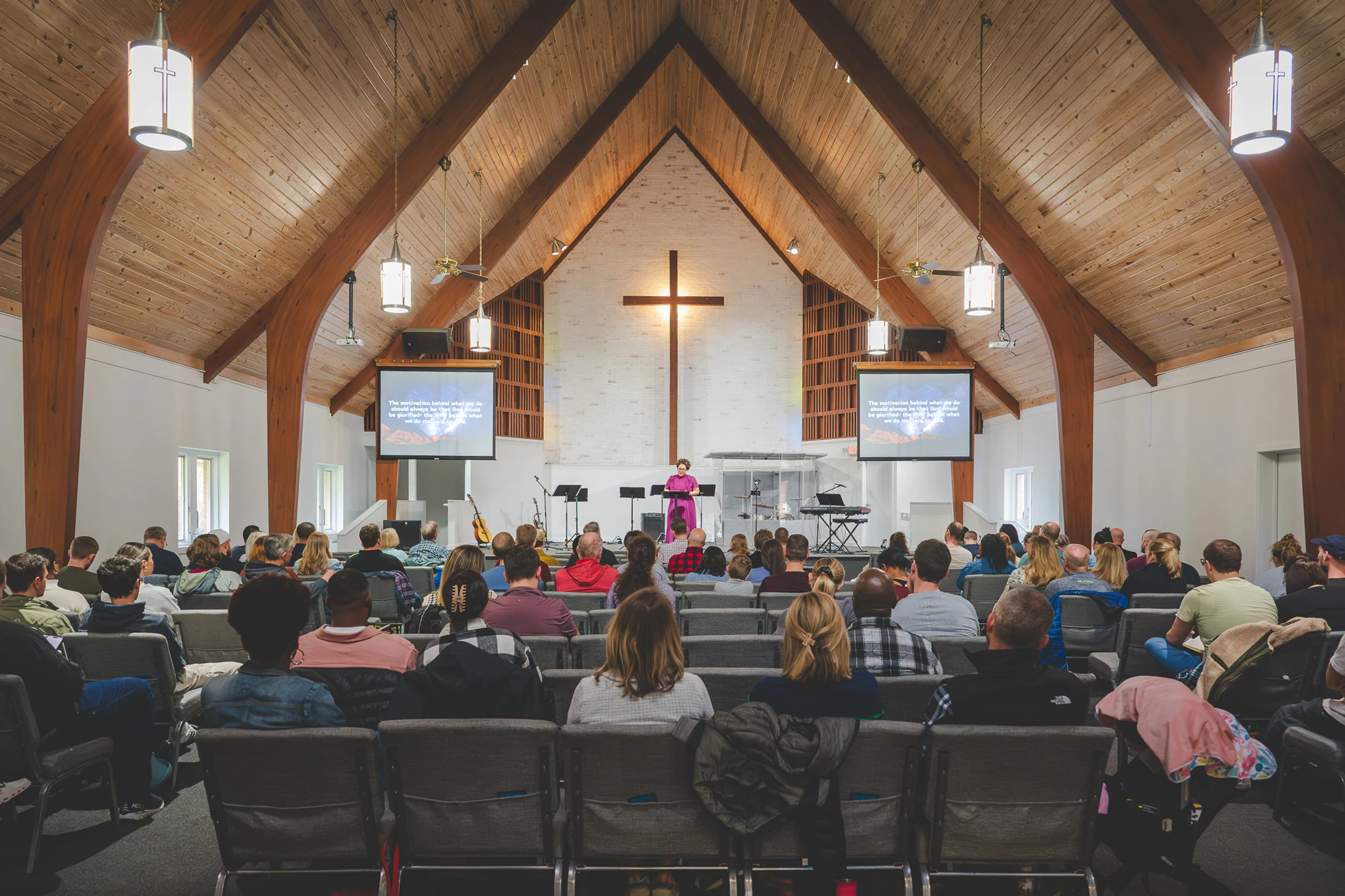
Join us this Sunday at 9 a.m. or 11 a.m. for our morning worship!