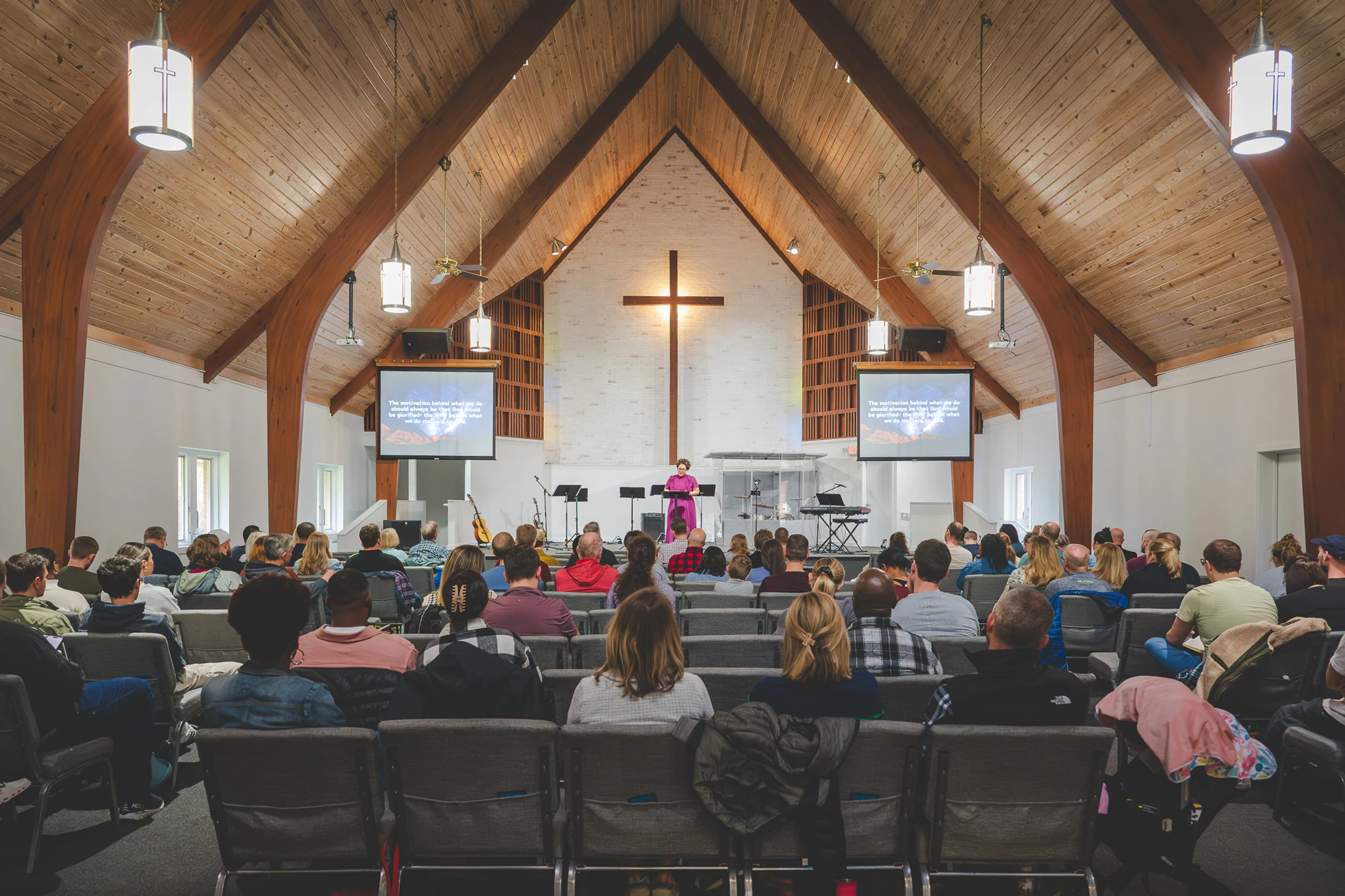
We can't wait to see you
Join us this Sunday at 10:00 a.m. for our morning worship!

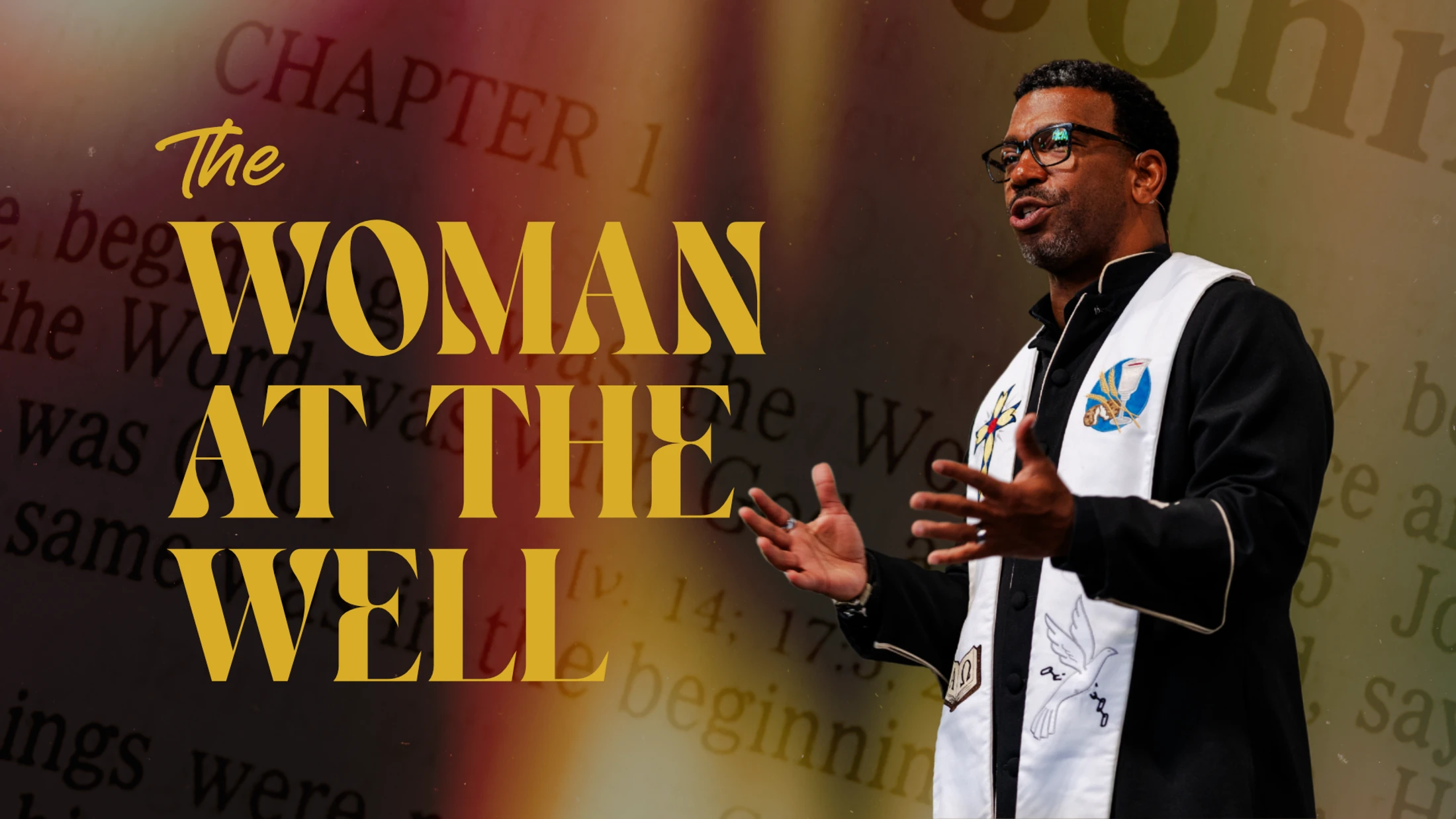
She wasn't supposed to be there. And Jesus wasn't supposed to talk to her. But he went out of his way — through a place no self-respecting Jewish man would travel — just to meet her at a well at noon.
And what happened next changed everything.
In this message, Pastor Rich Johnson takes us into the longest one-on-one conversation Jesus has with anyone in the entire Gospel of John — and challenges everything we think we know about the woman at the well. She wasn't scandalous. She wasn't a cautionary tale. She was lost. And Jesus saw her — all of her — and stepped toward her anyway.
Read alongside John 3 and the story of Nicodemus, this passage shows us something John wants us to feel in our bones: the grace of God has no limits. Not for the religious. Not for the irreligious. Not for the educated or the uneducated. Not for the chosen or the rejected. Jesus goes out of his way for all of them.
In this message you'll learn:
Whether your faith journey looks like Nicodemus — slow, quiet, and full of wrestling — or like the woman at the well — unexpected, unplanned, and completely disorienting — this message is a reminder that Jesus steps toward you. Every single time.
📖 Scripture: John 4:4-10, 25-30 | Galatians 3:28 | Exodus 3
We're in the Gospel of John.
Gospel of John is a record of the life, the character, the work, the sacrifice, the revelation of Jesus Christ. Every gospel has its intended purpose, and the intention of John's Gospel is so that the readers would believe. They would believe that Jesus is God in flesh, that he is, in that ancient Near Eastern way, the Messiah, the one who has come to save the world, the one who's going to right the world from its wrongs, the one who's going to set it all in motion and in place together.
In John chapter 4, where we're going to be today, It's the longest discourse, the longest conversation that Jesus has with one person on record. 42 verses. I'm not going to ask us to read all 42, but we are going to read a portion of them beginning with John 4:4-10 and then 25-30.
So, I'm going to invite you all to stand with me as we read this together this morning. John 4, verse 4. He had to travel through Samaria, so he came to a town of Samaria called Sychar, near the property that Jacob had given his son Joseph. Jacob's well was there, and Jesus, worn out from his journey, sat down at the well. It was about noon. A woman of Samaria came to draw water. Give me a drink, Jesus said to her, because his disciples had gone into town to buy food. How is it that you, a Jew, ask for a drink from me, a Samaritan woman? she asked him. For Jews do not associate with Samaritans. Jesus answered, 'If you knew the gift of God and who is saying to you, "Give me a drink," you would ask him and he would give you living water.' The woman said to him, 'I know that the Messiah is coming who is called Christ. When he comes, he will explain everything to us.' Jesus told her, I, the one speaking to you, am him. Just then his disciples arrived, and they were amazed that he was talking with a woman. Yet no one said, 'What do you want?' or 'Why are you talking with her?' Then the woman left her water jar, went into town, and told the people, 'Come see a man who told me everything I ever did.' 'Could this be the Messiah?' They left the town and made their way to him. This is the word of the Lord. And the people said, 'Thanks be to God.' Let this word fill our minds, flow from our mouths, and free our hearts to live as the beloved children of God. You can take your seat.
Sermon title's not too creative this morning: The Woman at the Well.
Kind of what it says at the stop of your of your page, right, in your Bible. The woman at the well. I want you to think about the last time that you were in a place where you saw someone get special treatment. That place might have been a restaurant, it might have been a spa, where you saw someone who looked like all the attention was given to them. You know, the, the host came out and gave them some extra napkins. They didn't even have to ask for the extra napkins.
The chef came out and personally took their, you know, their order.
Uh, you know, other, other waiters came by and just sort of gave them that special attention. And while you watch all of that happen, you're like, man, I come here all the time, I gotta beg for extra napkins over here.
We've seen places, or we've been places, or we've had that feeling Like, "Everybody else gets the special treatment but me.
Everybody else gets the special attention but me." And what John, the writer of the Gospel of John, gets to in chapter 4, he gets to surprise us by who gets special attention.
In chapter 1, John introduces us to Jesus as "full of grace and full of truth." And then he begins to roll out what that grace and truth looks like. In chapter 2, he turns water into wine, but he also overturns tables.
He's full of grace and full of truth.
In chapter 3, he meets with Nicodemus at night, that Pharisee, that religious ruler, that do-gooder, the one who is seemingly perfect. And Jesus tells him, 'Full of grace, that there is no condemnation, Nicodemus.' But the audience to whom John is writing is not primarily a Jewish audience, it is primarily a Gentile audience. And so when they got to what we now know is chapter 3, they would have said, 'Okay, that's cool. Jesus is full of grace and truth. I can see that there's no condemnation to the wealthy, to the religious, to the righteous. But what does that have to do with us? What does it have to do with us who don't get that special treatment? We aren't the chosen people. We're not the chosen generation. We're not the chosen group. What about us? And a Gentile reading this letter, this gospel, this message, they would have concluded that Jesus is for everyone else But not for us.
He's for the educated, not for the uneducated.
He's for the religious, not the irreligious. He's, he's for everyone else except us.
And then they would turn the page and they would be surprised by what they see in John chapter 4, is that Jesus interacting with someone who's completely not like the other.
You got to read John chapter 3 and John chapter 4 together. Let's compare and contrast Nicodemus with this woman at the well. Nicodemus is this highly religious and devout Jew. He's a priest. The Samaritan woman is of low religion, perhaps. She is othered. In fact, she is a woman and Nicodemus is a man. Let's not excuse or overlook that fact.
She even points it out in the story.
And Jesus, Jesus answers Nicodemus' questions with mystery. He says, "You must be born again." And to this woman at the well, he answers with precision. He says, "I am he." He takes out the mystery. John, the Gospel writer, gives Nicodemus a name. He names him. But the woman at the well, she is unnamed. She doesn't have anything to describe her except her ethnicity. She's Samaritan. Nicodemus comes with all kinds of a perfect character. The woman at the well comes with a past, a history. And Nicodemus, the story ends and he's still wrestling. He continues to wrestle. And the woman at the well Her story ends with being the first missionary that John mentions in the Gospel. John wants us to feel, beloved, the weight of this contrast. He wants us to feel the weight of this contrast of how Nicodemus comes to faith and his journey is different from the woman at the well's faith and her journey. And oftentimes when we're talking about how we came to faith, it's It's generally perhaps like one of these two. We come slowly, at night, and in quiet. Or we come unexpected, not even planning to meet Jesus, and yet Jesus meets us right where we are. And beloved, both journeys are loved, ordained, scripted in this beautiful narrative and story. You don't have to compare yourself like, Oh, I wish I had a story like the woman at the well.
And you've been given a story like Nicodemus.
You know, we do that in Christian conversation, right? Like, how did you come to faith? And like, you hear the person who's had like the worst background, you know, they grew up, the home was terrible, you know, they made terrible choices in their life. And then you're like, you get to you and it's like, what's your story?
And you're like, oh man, it doesn't compare to that. It wasn't really bad. I grew up in a two-person, You know, family, mom and dad, you know, and I went to a great school and, you know, I didn't have any children outside of wedlock or, you know, I didn't shoot anybody or, you know, like, my story is really not that special.
And we could do this comparison thing as if one story is better than the other, forgetting that God is the one that is interwoven into your story, whatever it is, wherever it leads, wherever it's been. It's not about your past, it's not about what you bring, you know, to the table. It's about how you leave changed. How are you leaving changed after the encounter with Jesus? How are you leaving new through this relationship with the Messiah, the King of Kings, the Lord of Lords? I'm leaving different than the way I came in. It's not your perfection, it's not your imperfection that Jesus is concerned about.
He's concerned about you.
And that's what John is bringing up into John chapter 4. When it— when he ends in chapter 3, there's no condemnation. You turn the page and you see that could no condemnation extend to the furthest person? And I love the way he tells the story. I love the way John enters and opens it in John chapter 4, verse 4. He says he had to go through Samaria. Did he really? Did he really have to go through Samaria? Did he really have to, Dewana? Did he have to go through Samara? You know, I think he could have taken some other routes. No, but he had to go through Samaria. And she tells you, Jews do not go through Samaria because land and geography are also theological for the Jewish people. They— that land means something. I, I'm not just going through Samaria, I'm going through an evil place. So I'm not going to be contaminated with evil. I'm not going to be contaminated with something that is so different and and foreign to me, I'm going to go all the way around if I have to to get to my destination. And Jesus certainly surprised the disciples when he's like, "Nah, we're going to go through Samaria and we're going to stop and I'm going to take a rest and I want y'all to go Uber Eats some food and bring it on back." Not only does Jesus go through Samaria, and Jews don't do that, He also sat with a woman. That's two strikes. John points out it wasn't just any kind of woman, it was a Samaritan woman. It wasn't just any kind of Samaritan, it was a woman. And rabbinical law even says this: to those who talk to a woman bring evil on themselves and will inherit Gehenna. That means you will inherit hell, you will inherit the furthest place from heaven, the furthest place from promise, Rabbis don't sit and talk to women, and they certainly don't sit and talk to Samaritan women. And that wasn't all. Not only did he talk, not only did he go through Samaria, not only did he talk to a woman, he asked her for something to drink. And in this small but major detail, John points out the humanity of Jesus. The humility of Jesus, that Jesus got tired, that Jesus got thirsty, and that Jesus would ask and invite someone, someone who was furthest away from him, to give him a drink.
Here's what I want y'all to understand that Gayle O'Day elevates.
Jesus breaks open boundaries in his conversation with the Samaritan woman. The boundary between male and female, The boundary between chosen and rejected. Jesus' journey to Samaria and his conversation with the woman demonstrate that the grace of God that he offers is available to all. It's available to everyone. There's no, uh, there's no limit on God's grace. There's no limit on God's goodness. There's no limit on God's mercy. It extends to everyone. It broke open all of those barriers. It even got to the point where Paul the Apostle, who picks this up, says to the Galatians, there is therefore neither no Jew or Greek, slave or free, male nor female, that they're all one in Christ Jesus. That, that what Jesus has done and has brought in has broken down every barrier that keeps people from God and also keeps people from one another. He had to was John's way of saying this was a divine appointment.
It wasn't just happenstance.
It wasn't just a coincidence. It was a divinely appointed and scripted time for Jesus to meet with this one Samaritan woman. And here's what I want everybody also to know, is that this woman was not loose, she was lost. She wasn't loose. This is where preachers— this is where preachers go, uh, have gotten this thing wrong. They go off script. They turn this woman into a cautionary tale. They say, "Oh, she was scandalous.
She had 5 husbands.
She was a harlot. She was a sinner that was caught in a destitute life. She is far— she's so far from God, and she's so far from Jesus." And if that's the lens that you brought with you today, I want to gently ask you to lay that aside because nowhere in the narrative, nowhere in the narrative does Jesus condemn her. Nowhere in the narrative does he say, "Go and sin no more," like he did to the woman who was caught in adultery. Nowhere are we given the impression that this woman is so loose that nobody will listen to her that she would go back to town and everybody would follow her back. Nowhere does it describe that she was promiscuous. This story is not about morality. It is about Jesus who offers living water to those who feel ostracized, those who feel left out, those who feel that they are condemned already because of how people view their past or because of what they might be bringing to this well. Jesus is revealing himself to this one woman. The first time he reveals himself, by the way, as Messiah, the first time he says, 'I am he, I am he,' he says this to a Samaritan woman. He didn't even reveal it to Nicodemus. He didn't even tell Nicodemus, 'I'm the Savior of the world, buddy.' He didn't lie. He revealed himself in this intimate conversation with a woman because he understood that there is a difference between how the world sees you and how I see you. Jesus saw this woman, and in this world, by the way, this ancient Near Eastern world—
why she has 5 husbands—
women could not initiate divorce.
You do know that, right?
They couldn't say, "Well, I'm tired of you. I'm done with this thing. I'm going to the lawyer and we're getting a divorce and I'm getting half." No, that's not how it worked.
In the ancient Near East.
Women didn't have that right. So the men would have had the responsibility. They would have been the ones who were, in their own way, decided that they were done with her. Or maybe a man died. Maybe he went off to war and was killed. We have no idea what the circumstances were But we do know it wasn't her choice. It wasn't by her choice. And her coming to this well at noon, at midday, is perhaps because of all of the chatter about her past. And that she's coming by herself to avoid all of that chitter chatter. And when she sits down and Jesus says, "Will you give me a drink of water?" She's like, "Bruh, really? I'm a Samaritan woman." And he goes back and forth with her and says, "Listen." If you knew who was in front of you right now, you'd be asking me for a drink. If you knew who you was talking to, you would say, "Brother, Master, can I have a drink of what you have to offer?" And then it just goes, the play back and forth, you know, it's so interesting at this moment that, okay, "Sure, give me a drink of this water so I don't have to come here to this well ever again." And in that, she is opening herself up to the fact that this conversation is no longer about a well and some water.
It's a metaphor for her life.
There is thirst in her life.
There is something empty in her life.
The "so I don't have to keep coming here," is as if she's saying, "I'm tired of repeating the same patterns. I am exhausted from trying to put on a good face. I'm annoyed at being held back because of my past or my gender." Because this well is not just a well, it is a metaphor for every insufficient thing that she's ever returned to, hoping that it would finally be enough. She's tired of returning to a relationship that promised wholeness that left her disappointed. She's tired of trying to apply for another job only to be turned down because she doesn't have the credentials. She's tired of waking up in the morning and wondering, what is the chatter going to be about my life today? I'm tired. I'm restless. Give me a drink. That will fill me up to the point where I'm never thirsty again.
And Jesus is about to meet her with the exact need that blows her away. They go back and forth, and I also want you to notice that this woman is theologically trained.
She's theologically trained. She turns the conversation. Jesus says, "Okay, listen, I can give you, you know, something to drink." And she's like, "Yeah, yeah, all right, whatever, whatever." And then she gets into a theological conversation with him. "By the way, this well belongs to Jacob." That's us.
You know that, that's us.
"And we worship on a mountain, but y'all worship in a temple. And don't worry about it, the Messiah, when he comes, he's going to straighten all of this out." She's a learned woman, y'all. She's not somebody who didn't spend some time in Sunday school. She's somebody who has read, who has listened, who has learned, who has prayed and has longed for the same deliverance that Jesus' people were longing for as well. And that's when Jesus says, "I am he." And I want y'all to understand, when he says, "I am he," he's leaning back to the story of Exodus. He's leaning back to the story of Moses and the burning bush. When Moses is wondering, "Who is it that I should tell the children of Israel has sent me to go let the people free? Who should I tell Pharaoh, the one who's got them all chained up? Who should I tell them is the one that's come to deliver them?" And the voice from the bush says, "I AM. Tell them I AM am sending you, have sent you. Tell them I AM is the one that's coming to deliver you." And Jesus In mentioning this phrase, "I AM," he's linking back to Exodus and the Moses story. He is about to bring in a deliverance from bondage. The I AM is here. The I AM who comes to set people free. The I AM who has come to release people from their bondage. The I AM. And John is building up his gospel message up to this cataclysmic point right here, that everybody can be the recipient of Jesus's deliverance, of Jesus's exodus. The I Am is right here for you and with you.
And he steps back. Light goes off in her.
She's in this back-and-forth sparring And Jesus steps towards her. Barbara Brown Taylor, in her commentary on this passage, says that when she steps back, he steps towards her. When she steps out of the light, he steps into it. And in the first time he has said to another living soul, it's a moment of full disclosure in which the triple outsider, the Samaritan woman and the Messiah of God, stand face to face. And there are times in our lives when we try to step back from Jesus too. We try to use theology to keep ourselves from engaging with the Messiah, the one who has come to save us and deliver us. We use culture as a barrier to say that, "Lord, I don't know that this pathway is the way for me." We use all kinds of excuses and Jesus hears all of them.
And still steps towards us. He's not a man who keeps his distance. Not from people who are intellectual and religious like Nicodemus, and not complicated people who have a history or a past that has been judged that they are unworthy. She's so delivered from that past that she leaves her jar, and goes back to the town and tells people, "Come meet a man who knows everything about me and didn't leave. Come meet a man who has seen me, all parts of me, the good parts and the bad parts, and chooses to still deliver me." Beloved, what jar do you need to leave?
What is the— what is inside of the jar that you came to the well with this morning, with all of your barriers, all of your hardship, all of your stuff that you tried to get filled with all kinds of means that still have left you unfulfilled?
What's in your jar? What needs to be left behind? I love when John tells us the disciples came back with the food.
They see Jesus.
I don't know if they saw him talking to the woman right then or they saw her, you know, scurry off or what have you, but they noticed. They started chitter-chattering among themselves and They bring the food back and, "All right, Jesus, we got the fish and the bread, got some juice." And he says, "I ain't hungry. I'm already full." "Wait a minute, what you mean? We went all the way to Galilee.
We went all the way. You sent us.
And now we're bringing this back?" 'You were thirsty, you were hungry.
How is it that you are satisfied now?' They're scratching their heads.
He's hungry no more because he's been satisfied by another soul becoming free. That's what Jesus is thirsty for. That's what Jesus is hungry for.
And that John the Gospel writer puts in the detail that it was about noon is another detail I don't want you to miss.
Because later on in the Gospel, he's going to tell us another time, the second time when Jesus says, "I'm thirsty," was about noon, the text says. And this time he's hanging on a cross. And this time, instead of water, they give him vinegar.
This time, instead of someone running to let the world know that they saw themselves through the eyes of Jesus and they're set free, no.
They yell out and they mock him, and still he says, "Forgive them, they don't know what they're doing. What I long for, what I thirst for, is their freedom and their deliverance." What a beautiful time then for us to receive communion today, in that we come to Jesus, we come to church, we come to spaces of sacred place, wanting to receive something, and Jesus has so much more for us to get in return. I don't know if you got your little cups. If you, if you need one, we're about to take communion right now. Take communion today. On this holy day. Yes, where we gave a prayer, financial gift, decided to put in some sweat equity, and yet God gives us even more in the person of Jesus. But he didn't just give you Jesus for your salvation, he gave you Jesus for your satisfaction? What is it that you're bringing into this time of communion? What is the unsettled place, the unsatisfied, the misplaced desire in your heart?
What is it, the thing that gives you angst? Jesus says bring that to this time, bring that to the well, bring that, and And say to me, say to me, just like, just like he said to the woman, if you knew who was right in front of you, you would ask him, give me your living water, and you will thirst no more.
I invite you just to bow your heads for just a moment. Bye guys, just a moment, just a moment. Your faith journey is yours. It might look like Nicodemus, it might look like the woman at the well, it might look like some other character we'll meet in John's Gospel. And the invitation to each one of those characters and is to you and me, how will we respond to this encounter? How will we respond to this moment? He invites us to consider the many things that we might bring in our jar, the things that don't leave us satisfied. What is it that we're invited to leave there? Holy Spirit, we thank you for the woman at the well, the Samaritan woman at the well. We thank you for her story, her bravery, Her interaction and her response, an invitation for us to consider how we might respond to— what is the thing that is keeping us from returning to you, to your will? May we have the courage to name it and the courage to ask you to fill it with more of you. In the strong name of Jesus, we pray. Amen. I don't have one of them communion things. Can I get one? Them communion things, the things. Thank you, Pam. Anybody else? On the night that Jesus was betrayed, he peeled back the plastic thing on the top and he grabbed the thinnest wafer that he could find and he broke it and he said, this is my body broken for you, take and eat all of it. And in the same way, he pulled back the little silvery thing covering the juice. He said, this is my blood that is shed for you. It is a new commandment that I give to you, that you would love one another as I have loved you. Take and drink all of it. My dad used to say, after they took of the bread and the cup, that they went out and they sang songs. They encouraged each other, and Jesus taught them even more about the kingdom of God and how the kingdom would satisfy their restless soul. Let us stand together and sing likewise. To declare the Lordship of Jesus over our lives, every part of our lives, we find ourselves at this well to be satisfied.