
We can't wait to see you
Join us this Sunday at 9 a.m. or 11 a.m. for our morning worship!

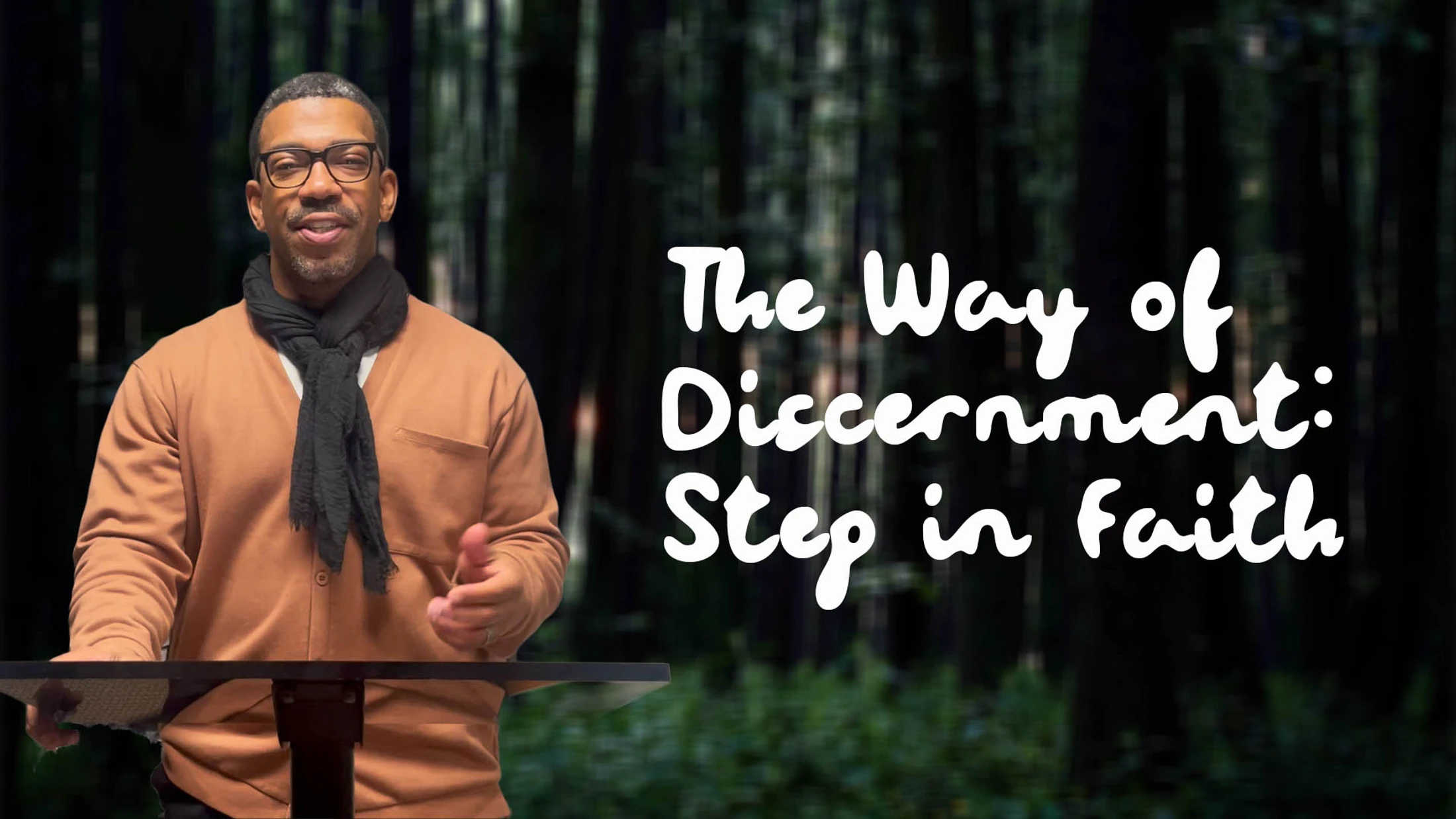
Hello Sanctuary Columbus. My name is Rich Johnson, lead pastor here at Sanctuary and I'm so delighted to bring to you sermon number five in our five part sermon series on discernment. Some of us have gotten to the point in the message series that we can identify with the process of discernment, but we have trouble acting on it. Some of us have been sitting on decisions for a long time, not because we haven't prayed, not because we haven't listened attentively, but because deciding means something has to actually change, something has to actually move. I don't know if you've noticed, but over the last several weeks what we've been doing is outlining a discernment process that begins with, with opening ourselves up to praying to God. Secondly, we look for God's voice from Scripture. We actually read and search the scripture to find wisdom and guidance. In the third week, I invited us to honestly evaluate and search our heart. Where are our desires? What is it that we truly are seeking? We follow that up with message 4 on including community to gain clarity in the discernment process because wisdom is found in the multitude of counselors. And today step number five in the discernment process is this. Take a step. The title of the message is Faith two Step. That's the fifth part in the discernment process is you've got to move. And if we're honest with ourselves, this is the step that many of us avoid the longest. I met with somebody from the church for several years who was discerning a vocational change. And it finally got to the point where I asked the question, what's holding you back? And they responded, I'm just afraid to move because I might discover that I'm wrong. Friends, that fear oftentimes can masquerade itself as being patient or waiting, when really in reality it is a fear of failure. Many of us know what it's like to say, I'm still discerning, I'm still thinking about it. You know, I'm working on it, I've been there. But the reality is we are afraid to move. We're afraid of the consequences, of the uncertainty, of what might happen, good or bad. So the question today is when does discernment turn, turn into a decision for you? When do you discern? It's time to move. Or for the other matter, when do you discern? It's time to wait or to release it. Because discernment does not culminate in certainty. Discernment culminates in trust. That's the main idea for the message today. Discernment does not culminate in certainty. Discernment culminates in trust. Let's pray for a minute. Definitely. Most gracious Lord and Savior, we come to hear your voice. We come to discern the way forward and to have the courage to step when the time is right or to release it when the time is right. For that, give us ears to hear what the Spirit has to say. In Jesus name we pray. Amen. All right, if you're taking notes, write this down. There is a time, but not always a timeline. There is a time, but not always a timeline. Ecclesiastes, chapter 3, verse 1 says, for everything there is a season and a time for every matter under heaven. Ecclesiastes is that second book of wisdom right next to Proverbs that gives us some guidance in how to think about time. The writer Solomon says that life unfolds in seasons, and discernment is learning to recognize what season we are in. Some of us are asking the question, as we decide between, you know, something or something else, is this good or bad? When the deeper question is, is this the right time? You see, faithfulness is not just about choosing the right thing. It's about choosing the right thing at the right time. My friend Howard Thurman names discernment through the lens of four seasons of life. There's a season for preparation, a season for waiting, a season for action, and a season for release. Discernment is learning to recognize which season you are in and what faithfulness looks like while you're there. What does it look like to be faithful when you're in the season of preparation and to stay there and not move ahead? What does it look like to stay in the season of waiting and not move beyond where God is inviting you to be still? Or what does it look like to be in the season of action and to move rather than to be stagnant and not moving at all? And the same thing goes for release. Thurman writes that there comes a moment when it is finally clear that we must move, not because the way is safe, but because staying is no longer faithful. Staying, my friends, can become unfaithful not because staying is wrong, but because there are moments when staying becomes self protection rather than trust and reliance on the Holy Spirit. Waiting is faithful. Watch this. When it deepens trust. Waiting becomes unfaithful when it protects fear on the other side. Moving is faithful when it follows God's guidance and direction and movement becomes unfaithful when it avoids discomfort. Friends, what season are you in Are you in a season where it's time to move, or you are in a season where it's time to wait? The Spirit is with you, and you can trust that the Spirit will be with you all the way. Here's the second thing I want you to write down. God orders steps, not blueprints. God orders steps, he doesn't provide blueprints. Psalm 37, verse 23 through 24 says that the steps of a good person are ordered by the Lord. Though they fall, they shall not be utterly cast down, for the Lord upholds them. Now notice what this psalm does not say. It does not say that God reveals the entire plan. It does not say that God guarantees the outcome. It does not say that God removes all the risk. It says that God orders our steps, not the whole journey, not a detailed map. The steps. Most of us, we want the blueprint. We want the map for our lives. If we make this decision, where is it? We want to know detail. Where is it going to go? But God doesn't provide the map for us. It's more like God provides a compass, the Holy Spirit that's directing us which way to go. And sometimes we got to go through some thick stuff in order to get where God is leading us and where God wants us to go. So there's not a map but a compass to lead us and guide us. God tends to work in this way, pointing in the direction of where we ought to go. But I want you to notice this other thing, and I've said this throughout this discernment sermon series, is that this psalm assumes something that is grace filled. It assumes that there will be times in your life when you make the wrong step. The psalmist says very plainly, though they fall not if you fall. Though you fall not if there will be times when you will fall, there will be times when you will make a wrong step. There will be times when you choose the wrong thing. And discernment in Scripture is not about avoiding mistakes. It's about trusting the God who upholds us. When we stumble, though he falls, he will get right back up because God is with him. My other friend, Henry Nouwen, he writes these words, faith is the radical trust that God is at work in us even when we cannot see the results. I told you a couple of weeks ago that God is in the midst of your discernment and your decision making, that God is always at work whether you choose left or choose right, whether you choose to move or you choose to stay. Many of us are waiting for the reassurance Of. Of what the outcome will be before we move. But Scripture constantly suggests that reassurance comes after we've taken the step, not before. That the joy of obedience comes after you've made the decision, not before. And God delights, friends, not in our certainty, but God delights in our trust. So God doesn't provide the map or the blueprint, but he orders our steps. It ought to come to mind a particular story in the Gospels. At this point, you're gonna know the story. When? As soon as I say it. Right? All I have to say is that there was a storm out on the ocean. And as it was out on, it wasn't a huge ocean. We're talking about the disciples in a boat, and they see this mist out on the waters, and they can't quite make out a figure in the mist. While the boat is being battered by wind and waves, they see something approaching them and they become afraid. But then they hear a voice. Take heart. It is I. Don't be afraid. And then that one disciple who we know as Peter, calls out, lord, if it is you, command me to come to you on the water. Notice what Peter doesn't say in the story. He doesn't ask for an explanation, nor does he ask for a guarantee. He says, lord, if it is you, command me to come. And Jesus responds with one word, come. Peter's discernment here is not reckless. He's listening for the voice of God. He's asking for guidance and direction. He didn't consult his friends, okay? He didn't go through that step in the discernment process because he hears so clearly the voice of God. And he responds. Faith like this doesn't require understanding the conditions of the water, not even the security of the boat itself. Faith requires listening for the voice of God and responding. This boat, it can represent all kinds of things. But let's say today it represents safety. Let's say this boat represents familiarity. Let's say that this boat represents predictability. And in this boat of safety and familiarity and predictability, where one is discerning whether to move or to stay. It could also be where fear has convinced us that staying put is the wise thing to do. Staying right where you are staying in the condition that you're in, staying in the spiral of never deciding but always discerning, is more comfortable. And you might even convince yourself that it's wise. Friends, what's your boat? What's the boat? What's that boat situation in your life today? Is that boat the job that pays the bills? But it drains your soul. Is the boat that relationship that's comfortable but not life giving? Is the boat the unforgiveness that you're holding onto because the hurt feels more comforting than releasing it for what it might invite you to do next. Peter we don't know exactly what the boat represented for him, but he heard the voice and he stepped out of the boat. And for a few glorious moments, I can see the picture. He is walking on water, the same choppy waters that were beating up against the boat and causing all kinds of chaos. The same water that he fished in many times, and the same kind of water where he noticed the wind suddenly became still and the water like glass under his feet. But then he sees the waves all around him, and we know the story. He begins to sink. Ruth Haley Barton writes on this passage with regards to discernment. She says this discerning the will of God does not mean we avoid risk. It means we learn how to take risk in the presence of God. And it's so good. I want to say it again. Discerning the will of God does not mean we avoid risk. It means we learn how to take risk. The presence of God. Friends, failure is not stepping out of the boat. No failure would have been never responding to Jesus's invitation at all. As he's sinking, he shouts out the words, lord, save me. And the text says, immediately Jesus reaches out and catches him. Lord, save me. Immediately Jesus reaches out and catches him. Which is to say that the sinking is not the end of the story. The reaching out and catching is. Peter Learned what the 11 other disciples could only observe while staying safe in the boat, that Jesus is closer to them when they are sinking than when we are staying safe. Did you notice that Peter learns what the 11 other disciples observed? That Jesus is closer to us when we are stepping out in faith than when we are remaining in our postures of discerning but never deciding. The boat of fear, the boat of uncertainty or certainty that keeps us from taking a risk. So when. When do you move? When do you wait? Let me quote another friend, since I'm on a quote and train this sermon. Martin Luther King Jr. Said, Faith is taking the first step even when you don't see the whole staircase. Faith is taking the first step even when you don't see the whole staircase. Because God is not primarily interested in getting every decision right. He's not tallying up whether we got this decision right and that one wrong. God is deeply invested in who we are becoming as we make the decision as we are discerning which way to go as we step in in faith to follow where he's leading. So the question is not, am I 100% sure? Because most of the time when I am discerning and I get to a point of decision, I am not 100% sure. The question is not whether we have 100% certainty. The question is, is this next faithful step that God is inviting me into the time right now. So I want to lay out just a couple of things to consider. Whether it's time to move or it's time to wait. It might be time to move after you've prayed honestly and consistently, not just one desperate prayer, but a sustained conversation with God over time. It might be time to move when Scripture does not contradict the direction or the trajectory that supports your path. When you've read Scripture and you've consulted the voice of God, it doesn't contradict the direction you're heading, it affirms it or confirms. Might be time to move when your desires in your heart are aligned and they're not driven by fear, they're not driven by pride or ego, but it is flowing from the love of God. It might be time to move when wise counsel affirms the direction even with caution, they help you count the cost. And finally, it might be time to move when the step requires trust rather than control, where you are invited to surrender the outcome that you cannot engineer. It might be time to move but let me offer the other side when it might be time to wait it might be time to wait if the decision has not been discussed in prayer with God. I know it seems obvious, but so many of us enter into discernment without talking to God. If you've not talked to God, if you haven't developed a consistent conversation with God about that thing, it may be time to wait before you decide it may be time to wait before you decide if your decision is driven by anxiety or a hurried rushness and urgency that operates like a panic button rather than something that brings peace, maybe time to wait if you are seeking certainty rather than faith because holding out for guarantees and assurances are not things often that God promises but God consistently promises to be with us, it may be time to wait if your wise counsel, your trusted friends, repeatedly raise unresolved concerns. In fact, it may be time to wait. When you go to one or two or three other people and they say the same thing and they don't know each other, it ought to draw some red flags for you. It ought to cause you to pause. And lastly, it may be time to wait if you're unwilling to accept the cost or the risk that could be on the other side, that you're actually not ready to accept the responsibility that is going to come with the decision that you are discerning. Now, these aren't rules. I don't want you to look at these as some kind of a checklist. It's an invitation to hear wisdom. And wisdom requires humility. It's an invitation for you to understand that your whole life isn't going to rest on that one decision. And that the discernment is knowing that God is with you so that you can take that step in faith. So friends, what is the boat that you are clinging to? What is the boat that feels safe but may be keeping you from where God is inviting you? What is the fear that keeps you from moving or that keeps you from waiting? Is it that fear of failure? Is it that fear? Fear of what others might think? Is it the fear of missing out? Get real good about naming it. And lastly, what is the next faithful step that God may be inviting you into? Not your five year plan, not your, you know, your ten year master. A map. Just the next step. Maybe it's a conversation. Maybe it's as you are sitting in that boat and you hear a voice, it's just to ask the question, lord, is that you? Maybe the conversation is with God. Maybe the conversation is with a friend. Maybe it's a conversation with whom you're trying to discern the direction. Maybe the next step is to say, no, not right now, it's not the time. Not under these conditions, not at this stage of my life, not under these circumstances. Maybe it's continuing to wait with a renewed purpose and that while you are waiting, God is at work. At the same time, I want to invite you to meditate on that passage. Peter and the disciples in the boat. And what I want you to hear in this message is that God is not standing on the other side with crossed arms, but with open hands. God is not standing on the side waiting to chastise you. God was going to meet them in the boat. I believe. I believe Jesus was going to meet them right in the boat. He was on his way to join them. But something stirred inside of Peter. Something of a discernment to follow Jesus right where he was. All it takes is one step. What's the next step that God is inviting you to? Because discernment is not culminating in certainty. Discernment culminates in trust. Let us pray God of the faithful journey. You do not give us maps, but you give us your presence. You help us to trust you with our next step, even when we cannot see the whole way. Give us courage to move when it's time, patience to wait, when waiting is more faithful than moving. And may we discover that you are nearer in the stepping, even in the sinking, than we have ever dared to hope. In the name of Jesus, who calls us out of our boats and catches us when we fall, the name of the Father, the Son and the Holy Spirit. And everyone said, amen.
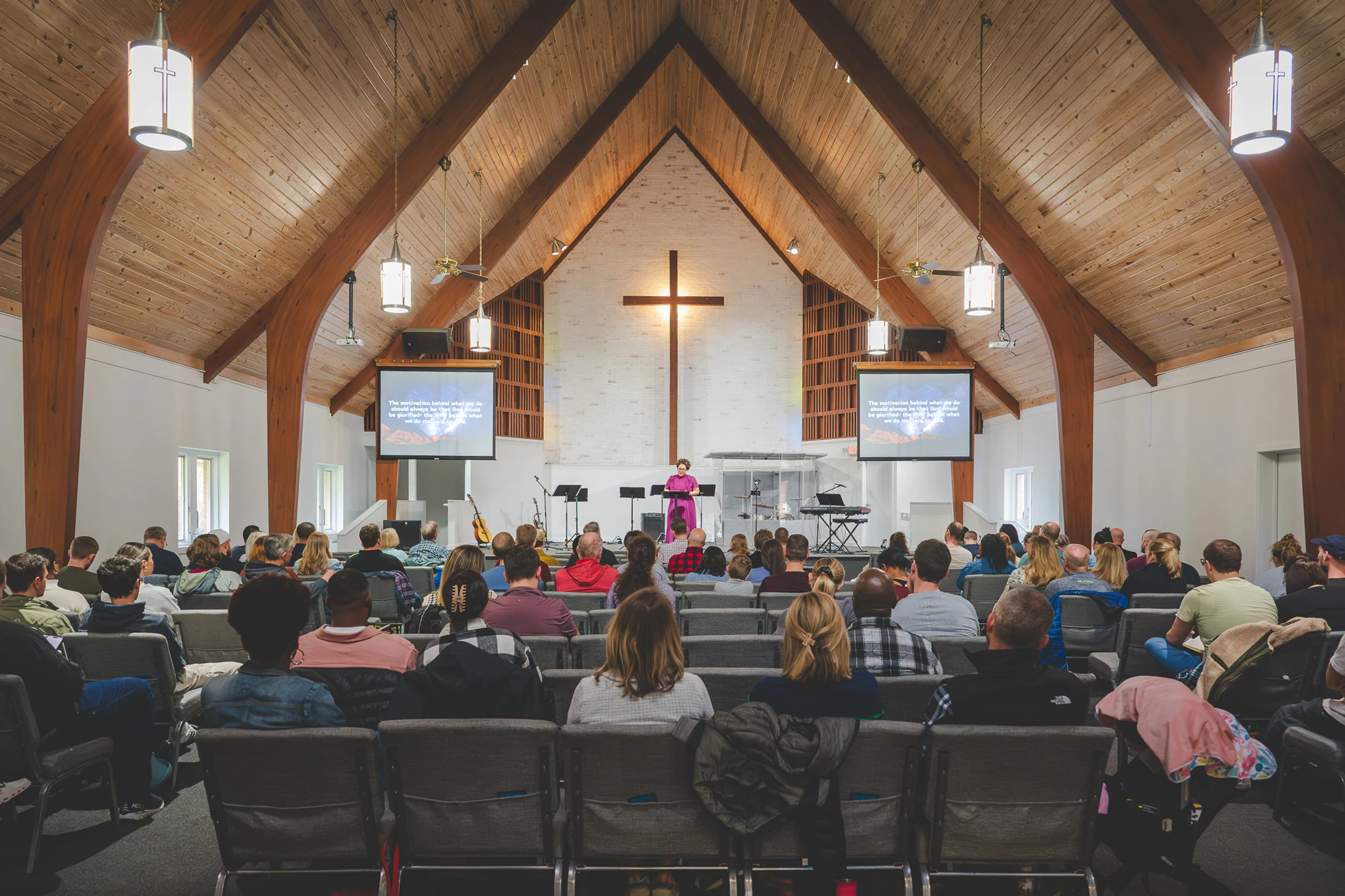
Join us this Sunday at 9 a.m. or 11 a.m. for our morning worship!