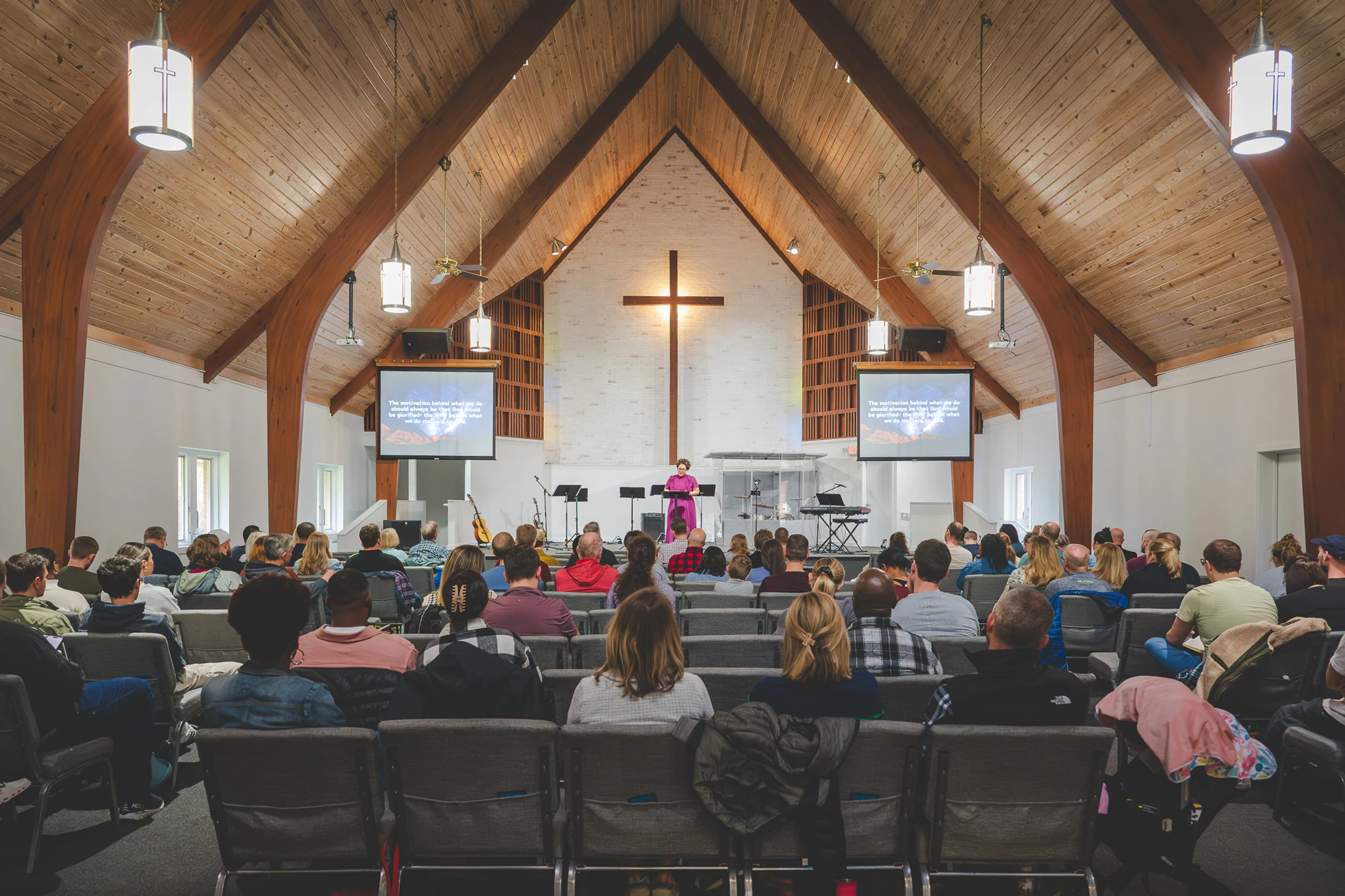
We can't wait to see you
Join us this Sunday at 10:00 a.m. for our morning worship!

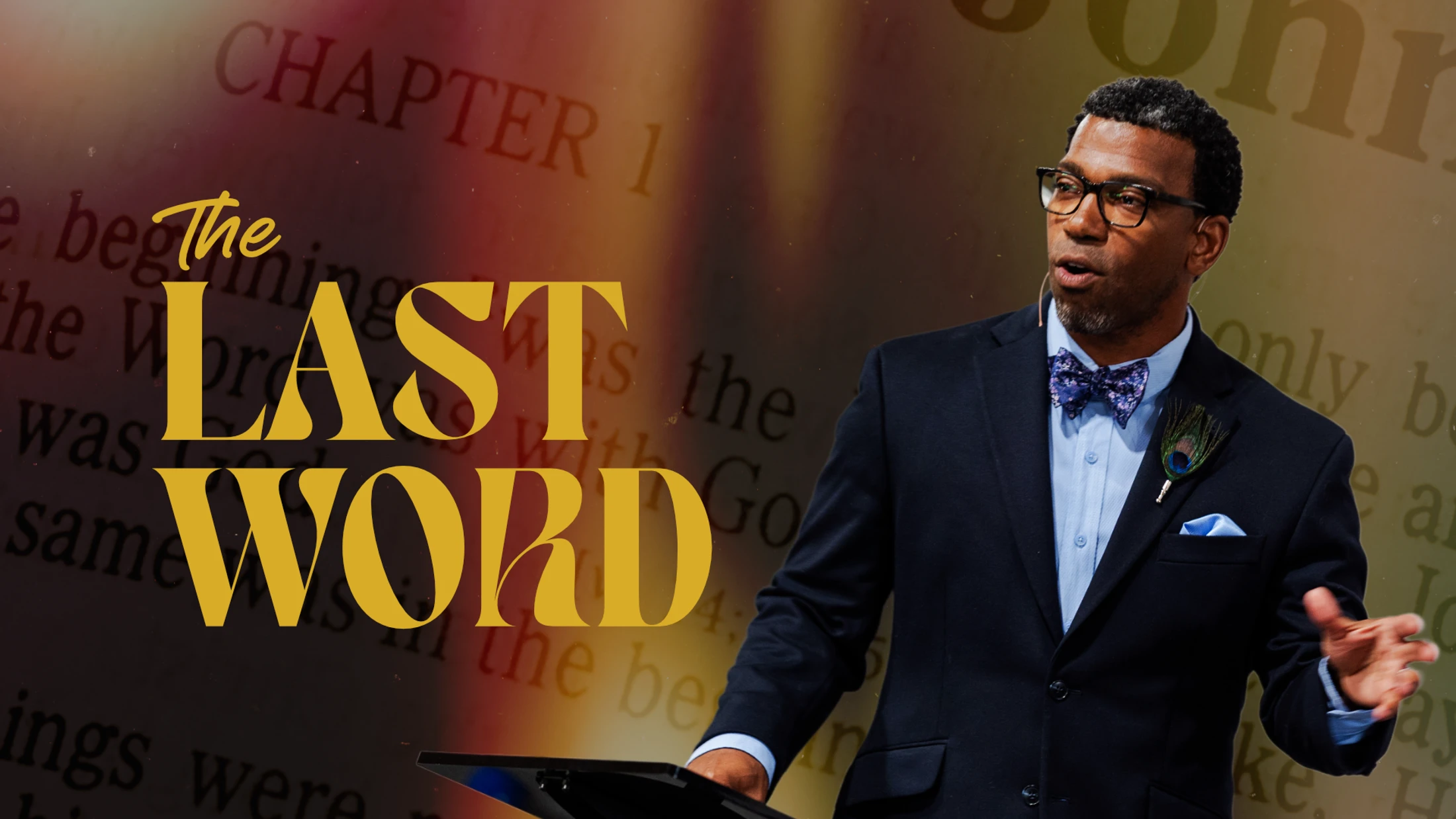
A verdict. A diagnosis. A relationship that ended with words you can't forget. Whatever gets the last word somehow gets to define what is meaningful in our lives. And whether we realize it or not, all of us are living under someone's last word.
So the question underneath Easter is this: who gets the last word over your life?
In this Easter Sunday message, Pastor Rich Johnson opens a brand new series through the Gospel of John with one of the most powerful passages in all of Scripture — the prologue of John chapter 1. Through four images of Jesus as the eternal Word, the source of life, the light in darkness, and the Word made flesh, Pastor Rich builds the case that because Jesus passed through death and came out the other side, he — and he alone — has earned the right to speak the final word over your story.
In this message you'll learn:
Whether you walked in today carrying a diagnosis, a broken relationship, a deferred dream, or just a quiet heaviness you can't shake — this message is a reminder that whatever has tried to speak the last word over your life, Jesus has already answered it.
📖 Scripture: John 1:1-14 | John 10:10 | John 11:25 | John 14:6 | Luke 4 | Isaiah 61 | Ephesians 4
This Easter, we try often to start a sermon series on Easter Sunday. It's kind of a trick to get you to come back, but the reality is we love starting something new on Easter Sunday as it represents this new creation. And so today we start off a new sermon series through the Gospel of John. We'll spend the first half of the Gospel for about 3 months, take a break for Psalms of Worship in the summer, and then we'll pick back up with the second half of the Gospel of John in 3 months in the fall. And most of us are probably familiar with this Gospel. When you started out your faith in Christ, you might have had someone say to you, "Of all of the 66 books of the Bible, start with the Gospel of John." So many places you can begin, start with the Gospel of John. Because John has a particular way of describing the person of Jesus. And I'm willing to bet that a lot of us in here have walked into the service, into this resurrection Easter Sunday, carrying something. We've carried something particularly unfinished, an unresolved conversation, a diagnosis that we didn't see coming, a relationship that ended with words that you can't forget. And whether we realize it or not, we're still living under the words of that conversation. Because whatever gets the last word somehow gets to define what is meaningful in our lives. The last word in a courtroom is called a verdict. The last word in a doctor's office is called a diagnosis. The last word in a relationship is called, "It's over." And culturally, culturally, whoever gets the last word has the authority, right? And we all are living under someone's last word. It tells you it's over. And the question underneath Easter is this: who gets the last word over your life? Who gets the last word over your life? The main idea for the message today is because Jesus passed through death, he gets the last word over your life. Because Jesus is the one who went through death, he has earned, uh, the right to give you the last word over your life. I know you just sat down, but I want to invite you to stand with me as we read from the Gospel of John, chapter 1, verses 1 through 14. Thank you. Let's read together. In the beginning was the Word, and the Word was with God, and the Word was God. He was with God in the beginning, All things were created through him, and apart from him not one thing was created that has been created. In him was life, and that life was the light of men. The light shines in the darkness, and yet the darkness did not overcome it. There was a man sent from God whose name was John. He came as a witness to testify about the light so that all might believe through him. He was not the light, but he came to testify about the light. The true light that gives light to everyone was coming into the world. He was in the world, and the world was created through him, and yet the world did not recognize him. He came to his own, and his own people did not receive him. But to all who did receive him, he gave them the right to be children of God, and those who believe in his name, who were born not of natural descent or of the will of the flesh or of the will of man, but of God. The Word became flesh and dwelt among us. We observed his glory, the glory as the one and only Son from the Father, full of grace and truth. This is the word of the Lord. The people said, thanks be to God. Let this word fill our minds, flow from our mouths, and free our hearts to live as the beloved children of God. You can take your seat. The four images that the author John wants us to see about Jesus, who is the last word, and the first is this: that the Word was eternal. In John chapter 1, verse 1, he opens up what theologians call his prologue, his introduction to his storytelling about Jesus, with these words, "In the beginning." And his Jewish audience would have hearkened back right to the reading of Genesis chapter 1, which also starts the same way, "In the beginning." And by doing so, John isn't opening his Gospel to talk about his birth story. He's not opening his gospel to talk about some miracle that he performed. He's introducing us to Jesus as the one who is and was eternal long before the world and time begins. John wants us to understand who Jesus is before we can grasp what Jesus did. Theologians call this Christology. It is the study of the person of Jesus Christ. Dr. Dennis Edwards Dean at North Park Theological Seminary says, "Christology must not begin with what Jesus did, but with who Jesus is: the self-expressing wisdom of God that is present before creation and interconnected with all of life in the past and in the present." To start to talk about Jesus is not to talk about all the wonderful things that he had done, but is to start with who Jesus is. And John reaches back before time and says before any of our stories began, we must understand that the Word, who is Jesus, was already present. And not just present, but was active. John says he was with God and he was God and that all things that were made were made with and by him. Jesus was there at the very beginning of creation when the heavens and the earth were created. When the seas and the land were created, when the beasts of the air and the beasts of the field and of the sea were made, and even when humanity itself was created, Jesus was right there from the very beginning. The Greek word that John uses here for "word" is "logos," and his choice is deliberate. It's not unintentional. Every culture in John's world would have understood what this what this word logos means. For the Greek philosopher, it meant that the logos was the thing that held the world together.
How is this world— how do we make sense of this world? The logos, the thing, the substance that holds everything together, the thing that some call the universe. It is that which we identify as the logos. It's held all together. It will not spin out of control. The Hebrews, they had another word that they used for word. It's called dabar. And that word represents the Word as something that has gone before us. In the same way when you go to a restaurant and the table is already set, your drink is already poured, and almost like they already know what you're going to order, they begin to bring the menu out for you with food to go with the menu. That's what the Hebrews understood. The Word goes before us. So the world isn't just held in order by the Word. It also goes before us to prepare a way for us so we don't have to worry whether our world will spin out of control or whether we will be taken care of by the great divine. But John goes even deeper when he uses this word logos. He's not just talking about a force. He's not even talking about some entity that's gone before us. But he locates logos in a person. The thing that's holding the universe together is not something we can't understand. The divine providence that has gone before us is not something that we can't grasp or hold on to. The person who is the Word is a person and we call him Jesus. So beloved, that means our doctrine is not going to hold this world together. Your systems and structures are not going to hold the world together. The way in which you try to order your life to hold it all together is not how life is held together, but in the person of Jesus who holds the world. In the person of Jesus who's gone before us. Our lives are taken care of. And that means because he created all things, he knows you. He knows you by name. He knows your condition. He knows your worst ending. And he has experienced the kind of life that you dream about and yet is not held back from it. John, in this prologue, is introducing us to the Logos to say, beloved, while we are in hardship, We don't have to worry because the Word is eternal, who is God, and the Word is active in our lives today. The first thing that John wants us to understand from this prologue is that the Word is eternal. The second thing that John wants us to see is that the Word was life.
In verse 4, he says, in him— that's Jesus— in him was life, and that life was the light of men. That Jesus doesn't just give life. Jesus is life. And you see this throughout John's Gospel. He's constantly talking about Jesus as life, using Jesus's own words. In John chapter 10, he says, the thief comes to steal, to kill, and to destroy. But Jesus says, I come that you will have life and have it to the full, or have it in abundance, or have it abundantly, depending on what translation you like. John 10:10, you will have life to the full and in abundance. John 11:25, he says to Mary and Mary and Martha who are mourning the loss of Lazarus, he says, "I am the resurrection and I am the life. And anyone who believes in me, they won't die. They will surely live." Because in Jesus is life. And in John 14:6, when we're wondering how we do make it into this life of fullness, Jesus says, "I'm the way.
I'm the way.
I'm the truth. I'm the life. And no one comes to the Father except through me. The belief that Jesus is life means that wherever Jesus shows up, dead things don't stay dead. Wherever Jesus shows up, that is not the end. Wherever Jesus shows up, the decay will not obtain the victory. And this idea that Jesus is life is where the resurrection becomes not just an event but an announcement of what is true right now. Jesus is alive. And when you read the book of Acts, the early Christians who preached the gospel of Jesus, they didn't go around asking people if they knew Jesus was dead. "Hey Brian, did you know that Jesus died?" "Hey Sarah, did you hear Jesus died?" They weren't concerned with Jesus' death as much as they were about his life. Instead of asking the question, did you know that Jesus died? They will ask the question, did you know that he is alive? Did you know that the resurrection happened? Do you know that, that he didn't just raise from the tomb, but he also appeared to his disciples? But not just to those 11 who were remaining, he appeared to some 500. He hung out for a few days, weeks, and even months around just to continue to teach the kingdom of God after after he rose from the grave. So, while we have our logo, an emblem of a cross, it probably will be better if we had an emblem of an empty tomb. But that probably doesn't make a good chain around. You know, the cross kind of works better with a chain, I guess.
But an empty tomb would be an even better symbol.
An even better symbol of the power and victory over death and over its hold on our lives. And when this early church preached the resurrection of Jesus, they took that message to those who needed it most.
They looked back at what Jesus read from the prophet Isaiah 61, that the Spirit of the Lord is upon me and has anointed me to preach the good news to the poor.
And they took the message to the poor because Jesus said that's what he was anointed to do.
That he has anointed me to set captives free. And so they went to those who were captives so that they could be free. The resurrection has come to free you, to those who are marginalized and those who are oppressed and who lived under systems that were beyond their control. He tried to tell them through the resurrection, they don't have a claim over your life. The early church was about the resurrection, and so should we.
We should let people know, as John said in this opening prologue, that the Word is eternal, the Word is life, and then thirdly, that the Word was light. In verse 5, John says that the light shines in the darkness and the darkness has not overcome it. The true light that gives light to everyone was coming into the world. And notice when you read those verses what John does not say. John does not say say, Conrad, that the darkness is gone. He doesn't say that the darkness is gone. What he does say, Sean, is that the darkness didn't win. It does not win, which means, Amelia, we could be in the dark but not be defeated by the dark. And some of us knows what darkness feels like. We know grief that lingers, don't we, Will? We have questions that don't have answers. Some of us wake up at 2 o'clock in the morning feeling anxious about the day ahead. Some of us have a heaviness that we've been carrying and living with that we just can't quite shake. And the scriptures do not pretend that darkness isn't real. In fact, story after story reminds us that darkness is real, but it also reminds us of this truth: that darkness doesn't have the last word. Darkness is real. The truth of the darkness is real. But it does not have the last word. And the Word, which is God, is the light, has the final say. In the year 1940, there was a man by the name of Brother Roger Schutz who started a community called Taizé, right in the middle of World War II-ridden France. France was occupied by Germany. Their violence was spreading all across Eastern Europe. And right in the middle of this turmoil, he began to take in Jewish refugees into his home. The community he eventually founded became famous for its prayer services around these 3 things. They just did these 3 things. They lit a candle, they had a simple chant, and they had extended periods of silence. And what was striking in the context of this Teisei community is that this candle in darkness was not to be a retreat from the suffering that they were experiencing, but a response to the suffering they experienced. Brother Roger didn't light candles because the world was peaceful. He lit them because it was not peaceful. And the practice of lighting candles was to say this: we're not pretending the darkness isn't there. We are insisting that the darkness is not final. It's no wonder that human beings across the centuries and cultures have gathered around a fire or a candlelight to pray. And when you sit in a dark room with one candle, that candle doesn't feel small. It feels like it owns the room. Even neurologically, your eyes are wired to find light. When you wake up in the morning and it's dark and your eyes take some time to adjust, they are looking for the spark of light in the room.
They're looking for the spark of light in the place.
So you, beloved, are hardwired to find light.
And you can find it in the person of Jesus, who is the light. Perhaps that's why John is so excited to use this reference of light over and over again about Jesus, because light shines in the darkness, conquering the force of the darkness that is trying to dispel the light.
No, John doesn't explain away the darkness. John does not overlook the darkness.
Instead, he lights a candle.
In the presence of the darkness to say that it will not prevail. Beloved, what if darkness, the darkness that you're carrying right now, isn't a force to be defeated, but simply an absence waiting to be filled with light? That heaviness that you're carrying is just waiting for a light to shine. The despair that you feel is waiting for a light to shine, that spark of light that that is inside of you, that is calling out to the light that is Christ together to illuminate that darkness that you see in this world. And you are carriers of light whether you realize it or not. That light is already in you whether you realize it or not. That is Christ in you, the hope of glory, whether you realize it or not. If we truly believe that we were made in the image of God, then we must mean that all of us already have the presence of God in us right now, but we suppress it. We suppress it. That's what John says when he says that there was one who came to bear witness of the light, and that light came into the world and the world knew him not. They suppressed the light that was in them by suppressing the light that was around them. But like John the Baptist, we're called to be carriers. We're called to be witnesses of the light that we already have. Beloved, if you've already got the light in you and you're aware of it and where it comes from and who it is, we ought to be shouting it from the mountaintops. This little light of mine, I'm gonna let it shine. I'm gonna let it shine. They weren't just talking about something that just would help you feel good. They were talking about something that came deep within. The Word is eternal. The Word was life. The Word was light. And finally, John wants us to see that the Word became flesh. Flesh. Christianity would mean nothing if not for this. It would mean it's just another philosophy. It would mean it's just another idea. It would mean it's just a concept that we could talk about and debate for centuries on end, except for the fact the Word that was eternal, that was life, and that was light became flesh. And dwelt among us. No other religion claims such an audacious belief that the one you see in the flesh already existed before there was ever flesh created in the world. No one believes that this flesh that was created to walk among us could also be life and light. And if it were not for Jesus becoming flesh, what the theologians call the incarnation, We shouldn't even bother trying to follow Jesus, except that he did become flesh. He did not just settle for being divine. He did not just settle for being what Richard Rohr calls the immortal diamond, the universal Christ, that if he were just to stay out there, it would not be worth following, except for the fact That he did. And he did not accept his divinity as something to lay claim of while he walked this earth. He set that divinity aside to show us what it's like to be fully human, but also to identify with us, to identify with our hardships, to identify with our complexities, to experience our real pain, to know and find our real ending points. And he didn't have to do it. Genesis tells us that God was already walking with Adam and Eve in the coolness of the day. They walked together. It wasn't like he didn't understand what it was like to be flesh and blood. He created flesh and blood, so it's not like he didn't understand and know what it is to create the thing that he made it to do. It wasn't as if he was unaware, but he did it to experience it. The way we experienced it. To experience the loneliness, to experience the hardship of marginalization and oppression by a government that doesn't respect or honor or dignify your humanity. By entering into a religious world that had put so many rules in place that it kept people from experiencing the life with God that the religion was intended to bring about in the first place. Jesus went through and experienced all of that. In the flesh, making Jesus the most trustworthy word, universal, gone before us, eternal that we could imagine. God experienced the worst of humanity by going all the way to the cross. When Good Friday came about, he suffered unjustly. He suffered unjustly by a government that had falsely accused him and a religion that was afraid of his power and authority that would usurp theirs, he went all the way to the cross to die.
He went all the way to the cross to die, and when he died, hope had died with him. The end of a movement had died with him.
His name that had brought so many joy and encouragement had died with him.
But not just on that Good Friday, on Holy Saturday, which was silent God seemed to be absent from the story.
God seemed to be far removed from the disciples who had chosen to follow him when Jesus said, "Come after me and follow me." Fear began to creep into their heart and anxiety began to settle into their minds until their bodies became paralyzed.
They were afraid and unsure of what to do. Would the Roman soldiers come after them next?
Would the religious elite come looking for them and finding them to crucify them as well.
The scriptures tell us in Ephesians what was happening between that Good Friday, Holy Saturday, and what we call Easter Resurrection Sunday. That Jesus, while his body was dead and decay had already begun to set in, Paul tells us that he descended into the depths of hell. To set captives free. Every being that was held captive by the sin of others, every being that was held captive by the fault of man, every being that had been captured and trapped and unable to be free, Jesus went down to have a meeting with the devil who thought he had the last word on Good Friday. He thought he had the last word when he nailed the nails into his wrists and in his feet. He thought he had the last word when Jesus said, "It is finished, and into your hands I commend my spirit." He thought he had the last word when they pulled him down off the cross and they buried him in the tomb. He thought he had the last word when they rolled the stone over the tomb. He thought he had the last word when the soldiers were placed at the tomb to make sure that somebody wouldn't try to steal his body to claim that he was alive. He thought he had the last word when the disciples were in fear. He thought he had the last word when those who had put their hope in Jesus were now in despair. And Jesus said, "Devil, you don't have the last word. I have come to set the captives free. I will be the Christ that will be universal for everybody, not just those who believe in me, but even for those who don't yet believe in me. I will free them as well. I will liberate them as well. I will deliver them as well. I will bring about their freedom as well." And on Sunday morning— does anybody know the story? On Sunday morning, when Mary rushed to the tomb to just go fix it up, she found that the stone was rolled away, and an angel of the Lord said, "Mary, Mary, Mary, the one that you came looking for has risen and he is alive." And she sprinted, she ran to go tell the disciples, "He's not dead, he is alive." The word that was eternal is alive.
The Word that was life is alive. The Word that was light is alive. And the Word that became flesh is alive. Jesus won the last word. That's a word for you today, because if you feel like the devil's got the last word in your life, you could tell the devil Jesus is the one who has the last word. You thought you had the last word in this relationship. Uh-uh, Jesus will have the last word. You thought you had the last word in my dreams and my hopes. Sorry, devil, the Word of God that is eternal, whose name is Jesus, has the last word in my life. And everything that I'm going through, all of the stuff that I've gone through, all of the failure, all of the setbacks, all of the grief, all of the anxiety, they don't have the last word as long as Jesus is alive, I am alive too. I'm alive because the word gets the last word. Can you tell somebody the word gets the last word? Michael, that means it's not over. Every bad thing won't get fixed overnight. Tiffany, the pain is real, but it doesn't have the final say. Angela, the place where we find ourselves sometimes on that Friday of mourning, that Saturday of silence, is not the end of the story. That God is not done and is not finished. Beloved, because I believe the light is in us all, it is waiting for is a witness like John to testify of the light. To testify that light in me is the light of God in the person of Jesus Christ. Jesus rose so that we too could be witnesses of that light and be carriers of that light as well. Let us pray. Risen Savior, that one who is and is to come, we're invited today not just to believe in the event of the resurrection, but to follow it. To enter all the way into the tomb that we've been living in and to walk out as a new creation. Jesus, because your end was really the beginning, you have the final word. And you've got the final word over our lives as well. Our story is not done, that we've gone through the hardest of experiences. We've experienced setbacks, we've experienced hardship, we've experienced things that people look down and frown upon. But you, Lord, say this is not the end. Your story is not over. May we be people who see that and embrace that and know that Jesus didn't just die or live for some, but he died and he lives again for all. That we would recognize that light in us is the light of Christ waiting to burst forth. And we'll be careful to give your name praise and glory and honor and dominion and power As it belongs to you. In the name of the Father, the Son, and the Holy Spirit, we pray. Amen.