We can't wait to see you
Join us this Sunday at 10:00 a.m. for our morning worship!

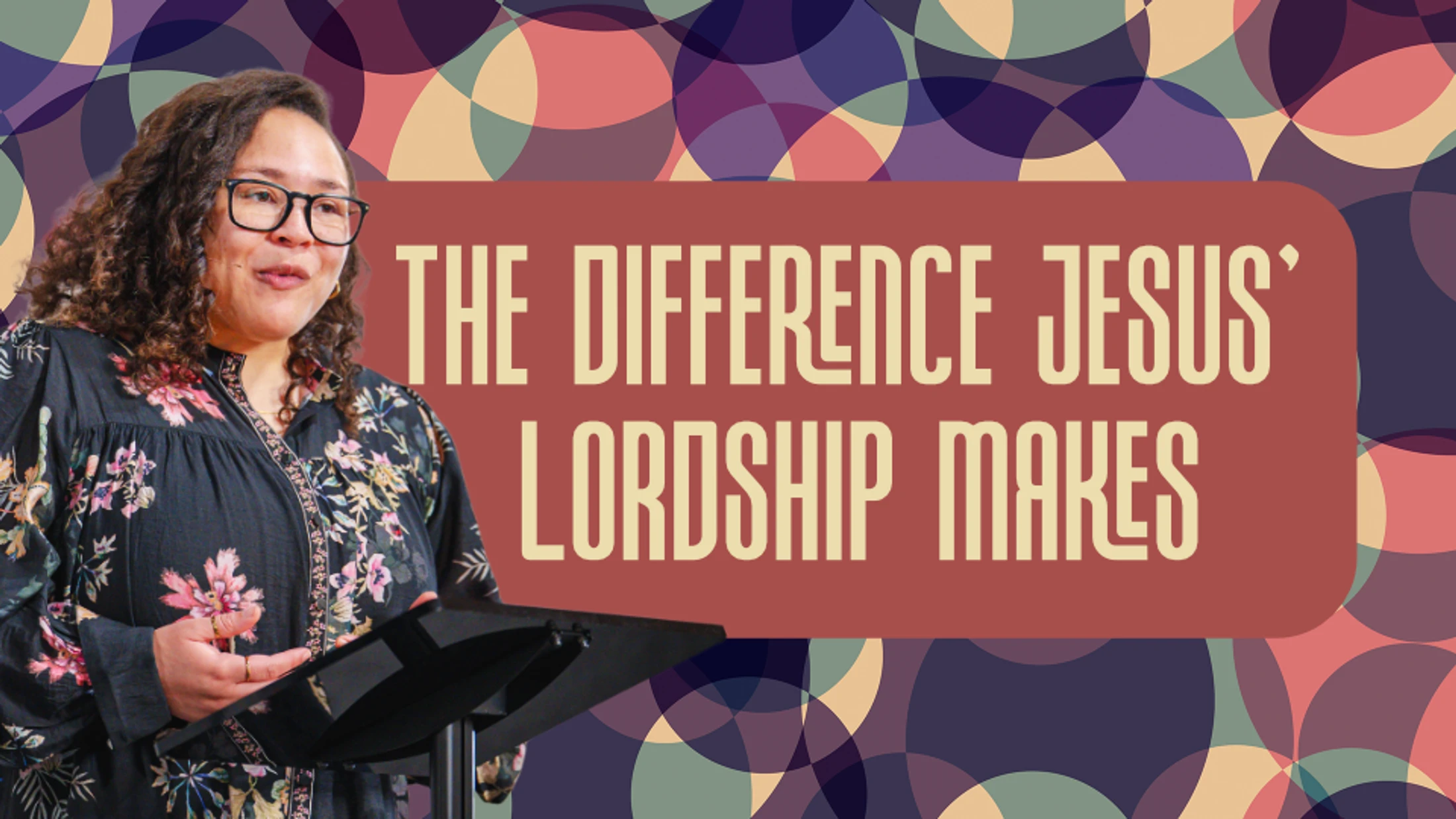
Everyone is investing in emotional health these days. Therapy, self-help apps, mindfulness — the world is all in. So what actually makes a Jesus follower's emotional health any different?
In this final message of the Journey to Wholeness series, Pastor Micah Morgan takes us to the last chapter of Joseph's story — and asks the question we've been building toward all series long. Joseph's brothers expect retaliation. What they get instead is mercy, provision, and caretaking. And in that moment, we see exactly what emotionally healthy spirituality guided by Jesus actually produces.
It's not a badge of honor. It's not something that separates us from the world with pride. It's this: a life so marked by emotional health that people trust us with their vulnerability. And a life so rooted in God's lordship that we can bring goodness out of chaos — even when we've been deeply hurt.
In this message you'll learn:
This is the sermon that ties the whole series together. Whether you've been here for every week or this is your first time joining us, this message will challenge you to stop treating emotional health as an achievement and start living it as a calling.
📖 Scripture: Genesis 50:15-21 | Matthew 7:12-14 | Matthew 21 | Luke 6:46-49 | Genesis 2:15
Well, family, we are in the final week of our sermon series called Journey to Wholeness, where we have been looking at the life of Joseph from the book of Genesis. And we've been using him as a case study, if you will, for examining emotionally healthy spirituality as Jesus intends it. Now, this is our Lenten sermon series, which also means that this has been a 40-day season of exploring what it means to be fragile, human, mortal beings who need the sustaining and saving power of God in our lives. And we're trying to figure all of this out. This is what Lent season really invites us to think about. We're trying to figure out what it means to be fragile human beings in the midst of all of the systemic and communal sin that we exist in. But in order to do that, In order to figure that out, we also must be curious about how our emotional lives mesh with our spiritual lives. That is essentially the theme of this sermon series that we've been exploring for the last several weeks. Here's how Pete Scazzero puts it in his book, Emotionally Healthy Spirituality. He says, emotional health and spiritual maturity are inseparable. We've used this quote before. This is our thematic quote for the sermon series. And yet, it is not possible to be spiritually mature while remaining emotionally immature. And so, this sermon series has argued essentially that our lifelong task as Jesus followers is to ensure that we are just as emotionally mature as we are spiritually mature. But one of the questions that I believe this sermon series begs us to ask is, how is my emotional health different than maybe a non-Jesus follower's emotional health? After all, Christians are not the only ones investing in an emotionally healthy spirituality. Here's some of the data that we have from the last several years when it comes to the investment that Americans in, at, in in a whole have been making in their emotional health. 42% of American adults have seen a counselor at some point in their lives. So almost half of all adults. And then in addition to that, 36% of adults are open to going to therapy but haven't gotten to it yet. And then when it comes to mobile apps that are devoted to self-help or self-improvement, there's been an increase in the revenue, a remarkable increase in revenue the revenue that those apps have been making. They used to make around $762 million in 2022, but now those apps, because of how many people are downloading them, are making over $1.2 billion as of 2024. And so what I believe this data tells us is that we can't reasonably say that what makes our emotionally healthy spirituality different from the emotional health of the world is the fact that we're the only ones investing in it. In fact, thinking of our spirituality as a kind of badge of honor that separates us from the world actually sets us up for an arrogant and judgmental posture toward our non-Christian neighbor. And that posture creates a barrier to us doing what God has called us to do, which is to love our neighbor well, whether they're a Christian or not. And so I want to encourage us away from this thought that what makes our emotionally healthy spirituality different is that we're the only ones who thinks it's valuable. But instead, what I think we'll find as we explore Genesis chapter 50 today is the following main idea when it comes to telling the difference between our emotional health and that of the world. Emotionally healthy spirituality guided by Jesus helps us to remember and embody what it means for God to be God and for humans to be human. Emotionally healthy spirituality guided by Jesus helps us to remember and embody what it means for God to be God and for us to be human. And so I've titled this sermon simply, The Difference Jesus's Lordship Makes. Let's pray and explore scripture together. So Lord, here we are looking at Joseph's life again and asking the question, what might he be able to teach us about emotionally healthy spirituality under the lordship of Jesus? And Lord, we ask this question because we know that your Spirit has been moving through the world since the very beginning. Moving through humans and helping us to be the kinds of humans you want us to be since the very beginning. And so, Lord, we ask this question trusting that you will in fact answer it by the power of your Holy Spirit as we study your word together. Lord, would you help us through the course of this study become more like Jesus so that we can bless the world? In Jesus' name I pray, amen. So for the end of our sermon series today, we're going to be exploring Genesis chapter 50, verses 15 through 21. But I don't want to read them all together in the beginning. I want to kind of read them together bit by bit. So I want to invite you to read with me the first 3 verses from your seats, beginning with chapter 50, verse 15. Let's read together. Realizing that their father was dead, Joseph's brothers said, "What if Joseph still bears a grudge against us and pays us back in full for all the wrong that we did to him?" So they approached Joseph, saying, "Your father gave this instruction before he died: Say to Joseph, 'I beg you, forgive the crime of your brothers and the wrong they did in harming you.'" 'Now therefore, please forgive the crime of the servants of the God of your father.' Joseph wept when they spoke to him. This is the word of the Lord, and the people of God said, 'Thanks be to God.' I pray that this would fill our minds, flow from our mouths, and help free our hearts to live as the beloved children of God. So a little bit of background here: we have arrived at chapter 50, the end of Genesis, And by this time, Joseph has been able to bring Jacob to the land of Goshen and live with his father. He's been reunited with his father and he's now been able to live with him for 17 years. But then Jacob passes away. Joseph's father passes away. And upon seeing that Jacob, their father, is now dead, Joseph's brothers have a moment of reckoning. They turn to each other and they say, What if Joseph decides to retaliate now? What if Joseph thinks back to the moment that we tricked him and sold him into slavery and then lied to our father about him dying, and he decides to finally get his getback? In fact, they even seem to assume that it was only their father and the fear of disappointing their father that kept Joseph from retaliating all this time. Bible scholars mention the fact that we don't actually know if Jacob said to his sons, "Hey, tell your brother to be nice to you." We actually don't know if he said that. But what we do know is that the brothers seem to think that telling Joseph that it was their dad that wants him to forgive them has a little bit of pull in this situation. What Joseph's brothers are demonstrating here is how normalized emotional unhealth can become in some people's minds, almost to the point where we expect it. We expect emotional unhealth around every corner and from every person. How many conflicts have we been in ourselves where we're getting ready to think about being vulnerable with someone or to tell someone that they've hurt us, and we hesitate because we expect for them to return vengeance or to return retaliation or to return humiliation. How many times have we hesitated to be honest with someone because we're like, "I don't know if I'm gonna get the emotional health that I want in this situation." But here's the wisdom that I believe that we end up pulling from verses 15 through 17. Emotional unhealth may be the norm, but every human still craves and thrives in emotionally healthy spirituality and relationships. Notice what else happens in this moment with Joseph's brothers. Not only did they expect the worst of Joseph, they expected for him to retaliate, and they started trying to plan for it, but they also still craved humility, forgiveness, and mercy from Joseph. This is what it means to be human. It means that we may intuitively know that bad things tend to happen because of the world that we live in, and we may intuitively know that destruction is the norm. But deep down inside, we all crave a world where the hardship that's put into the system isn't the same hardship that we get back. That is what mercy is. Our thirst for mercy is our recognition that God originally created and intended the world to be a place where goodness flourishes. Jesus actually offers us some specific teaching on whether we should react as normally expected. In Matthew chapter 7, verses 12 through 14, he says, "In everything, do to others as you would have them do unto you." For this is the law and the prophets: Enter through the narrow gate. For the gate is wide and the road is easy that leads to destruction, and there are many who take it. For the gate is narrow and the road is hard that leads to life, and there are few who find it. Many of us know the first verse in this scripture passage to be the Golden Rule. And we often quote the first verse and we stop there. We say, "Do unto others as you would have them do unto you." But what if the Golden Rule also includes verses 13 and 14 here? What if the Golden Rule isn't just about doing unto others what we would hope they would do unto us, but it is also noticing that the narrow path of emotional health is going to be hard even if it's not normal. What if the Golden Rule is also us saying that it's easy for everyone to choose destruction? It's common for everyone to choose destruction. But when we choose to do unto others as we would have them do unto us as dignified image bearers of God, we are saying, "I am going to choose the narrow way." Jesus acknowledges, though, that the narrow way is not the easy one. It'll always involve engaging in the hard work of discernment to figure out what it looks like to respond to the people who have hurt us without retaliating for the sake of retaliation. And sure, sometimes that'll mean discerning what compassionate distance might look like with that person, what boundary setting might look like with that person, but it will never mean doing something to someone else that we wouldn't want for ourselves as dignified image bearers of God. And so Joseph's brothers weren't wrong. One would probably have looked at Joseph and thought it was perfectly normal for him to retaliate against his brothers. And people would have said things like, "You know what? I probably would have done the same thing." But Jesus teaches us that an emotionally healthy spirituality means choosing the hard but good ways of love so that our reactions to our neighbor leads to life, not destruction. Because when our emotionally healthy spirituality offers mercy to our neighbor, we give our neighbor a chance to thrive. We give our neighbor a chance to turn away from the harm that they've caused us. So let's read our next section of scripture together. Verse 18: Then his brothers also wept, fell down before him, and said, 'We are here as your slaves.' So the brothers have started to conspire, and they've tried to figure out how can we manipulate Joseph into forgiving us. We'll tell him that Dad told him to. Then they come to him and ask him for forgiveness. And then they take it another step further and they get vulnerable in front of Joseph. They weep in front of him. They lay prostrate in front of him and offer themselves as lifelong servants to him. Now mind you, this is the very thing that Joseph said would happen in the very beginning of this sermon series. Right? Now, I think we all agree Joseph probably shouldn't have said it the way that he did. But this is now coming to pass. The two dreams that he had of not only his brothers, but all of his lineage bowing down to him is happening right before their eyes. But I would beg to offer The Joseph's brothers would not have been this vulnerable, would not have been willing to lay prostrate in front of Joseph, if they did not see the emotionally healthy spirituality developing before them since chapter 45. In chapter 45, when the brothers finally come and they, they notice that, okay, this is Joseph who is now in charge of all the food in Egypt. Joseph had an opportunity then to be emotionally unhealthy. Joseph had an opportunity then to retaliate, to give evil in return, evil for evil. But instead, Joseph didn't. And so here's the bit of wisdom that I believe we can extract from this one verse: when we display emotionally healthy spirituality, people trust us with their vulnerability. Framley, the, the fruit of emotionally healthy spirituality is not a badge of honor. It's not being able to look at everyone else and say, I'm doing spirituality better than you. But the fruit of emotionally healthy spirituality is actually creating a relational space around us that people feel comfortable being their vulnerable selves in. It's creating a space around us such that people are willing to say, "You know what? I don't just trust you with the good parts of me. I don't just trust you with my smile when I come in on Sunday morning. I don't just trust you with my canned response of 'Oh, good and highly favored' when you ask me how I'm doing. But I also trust you with the broken parts of me." the parts of me that are not yet aligned with Christ-likeness the way that I want it to be. I trust you with my sin. I trust you with my being in flux-ness. I trust you with my whole self. That is the fruit, family, that I pray we would seek as we nurture an emotionally healthy spirituality. That is the why that I hope that we would continue to say to ourselves when nurturing emotionally healthy spirituality, inevitably becomes very hard and not very profitable. I pray that we'll tell ourselves that I am doing the hard work of following Jesus into emotionally healthy spirituality because I want to be the kind of person that people trust with their vulnerability. And why? Because a safe place to be vulnerable is also a safe place in which to change. And so here's our final scripture for this morning, and this is what I believe is actually the meat of today's sermon. Let's read verses 19 through 21 together. But Joseph said to them, do not be afraid. Am I in the place of God? Even though you intended to do harm to me, God intended it for good. 'in order to preserve a numerous people, as he is doing today. So have no fear; I myself will provide for you and your little ones.' In this way he reassured them, speaking kindly to them." Am I in the place of God? This is what Joseph says back to his brothers as they are laying vulnerable and prostrate face first in in front of him. And I believe that there are two Jewish beliefs that are coming out in this phrase, and I would venture to say they're also Christian beliefs. One is that it is against God that we sin because God is the one who sets the standard of righteousness for humans. So essentially Joseph is saying, I'm not in the place of God. I haven't set the standard that says what you did to me was wrong. And then here's the second Jewish belief: that because God is the one who sets the standard, God is therefore the one who judges the breaking of the standard. Joseph is saying, "Listen, this isn't on me. This is between you and God. You are the one who is going to have to answer to God for the things that you have done." In essence, Joseph's emotionally healthy spirituality allowed him to be a non-judgmental presence for his brothers. And the reason he was able to do that was because he fully understands the place of God that is different than the place of humans. He fully understands that when they asked him for forgiveness, what they were really saying is, I have broken the will that God has had for humans. I have gone against the vision that God has had for relationships between people. And Joseph recognized that. But here's the thing: Joseph could have stopped there. It would have been beautiful for him to simply say, "You know what? I'm going to recognize my position as a human and not God. I'm going to allow God to judge you, not me." But instead, he takes it a step further and he says to them, "Have no fear. I myself will provide for you." and your little ones. Joseph chose to steward his relationship with his brothers by literally stewarding them. And I believe Joseph's response of caretaking, even if we think that he's being extra here, even if we're thinking, man, you really could have just sent them back home, you know, after the repast, had a plate together, could have been fine. He still took it a step further and he reflected the very thing that God expects of all of us. In Genesis chapter 2, verse 15, it says that shortly after God created all of humankind to bear their image, the Lord took humanity and placed them in the Garden of Eden to work it and to watch over it, to rada. That phrase, "to work it and to watch over it," is the Hebrew word "radah," which means not to have this trampling, domineering relationship with it, but to engage in caretaking over it, to bring some good out of the world. As the Jewish priests were leaving Babylonian exile and they were writing down their creation story in Genesis chapter 1 and 2, this is the image that they had in mind. They had this, this image of stewardship and caretaking that God had given to all humans regardless of their station in life. I appreciate the way that Lisa Sharon Harper puts it in her book, The Very Good Gospel, and I know I quote this a lot, it's one of my favorite books, but I think you'll like the quote: "Radah equalizes power. No one is too low to exercise agency to steward God's creation. Likewise, no one can add value to his or her soul through the pursuit and exercise of power. We are all equally powerful and we are all equally vulnerable. The call to exercise rada would have been both subversive and humbling for post-exilic Hebrews. This invites us to remember that no matter what our lot is in life, Whether we're better off or struggling in many ways, God has still trusted and equipped us with the caretaking of our relationships and of the parts of the world that we have influence over. And so here's one bit of wisdom that I believe these verses offer us: an emotionally healthy spirituality under the lordship of Jesus means stewarding our relationships as Jesus would while trusting God to create goodness out of hardship. Family, notice what else Joseph says about God in response to his brothers. In verse 20, he says, "Even though you intended to do harm to me, God intended it for good." Joseph is saying not only does being human mean engaging in the caretaking of our relationships and of the world around us, but it also means trusting God to be the kind of God who brings goodness out of chaos and harmony out of hardship. As we engage in our stewarding work in our relationships and in the world around us, we are saying, "I don't believe that God has brought my hardship on me." But I do believe that he is going to function as a great editor, bringing out goodness out of that hardship. Therefore, an emotionally healthy spirituality is one where we live as if God is God, the Good Shepherd, and where we live as if humans are humans, the stewards. Family, as we recognize today as Palm Sunday, We recognize that today is the day in scripture that marks the beginning of what's commonly called Passion Week or Holy Week, the last week of Jesus's life. And what's significant about Palm Sunday is that this is one of the first times that we see in scripture where a large group of people recognize Jesus as Lord and Savior. Matthew records it this way in chapter 21: He says, "They brought the donkey and the colt. Then they laid their clothes on the donkey, and Jesus sat on them. A large crowd, a very large crowd spread their clothes on the road. Others were cutting branches from the trees and spreading them on the road. Then the crowds who went ahead of him and those who followed shouted, 'Hosanna to the Son of David! Blessed is he 'Who comes in the name of the Lord! Hosanna in the highest heaven!' Bible scholars tell us that when the Jewish people of Jerusalem shouted this word, 'Hosanna,' what they were shouting was, 'Save us now!' They would have pulled from their Jewish collective memory, from Zechariah chapter 9, verse 9, which told them to look for their King and their Savior riding into Jerusalem on a donkey. And so when they saw Jesus coming in on this donkey and this colt, and they thought about all of the miracles and all of the teaching that they had been seeing him do for the last few years, they shouted what they knew to shout: "Hosanna! Lord, save us now!" And so Palm Sunday, family, is the day during the liturgical or the Christian calendar when we join in with our Jewish cousins from the ancient day and we shout out to the Lord, "Hosanna! Save us from the suffering of this world. Hosanna! Save us from the fragility. Save us from death. Hosanna! Bring goodness out of the chaos and harmony out of the hardship." But, family, I can hear Jesus answering, "I have saved you, but in a way that's more complicated than you may think." Listen to what Jesus says in Luke chapter 6, verses 46 through 49. He says, why do you call me Lord, Lord, and do not do what I tell you? I will show you what someone is like who comes to me, hears my words, and acts on them. That one is like a man building a house who dug deeply and laid the foundation on rock. When a flood arose, the river burst against that house but could not shake it because it had been well built. But the one who bears and does not act, who hears and does not act, is like a man who built a house on the ground without a foundation. When the river burst against it, it quickly collapsed, and great was the ruin of that house. Family, I believe that Jesus is reminding us to remember that calling him Lord means that we are going to do our part as followers. I believe Jesus is reminding us that we can't call Jesus Lord and not trust him to do the things that he's going to do. In between the lines of this scripture in Luke chapter 6, I can hear Jesus saying, yes, I died on the cross and rose again from the dead to conquer death itself. Yes, I also lived and taught all of the things of the Father's heart, and my expectation is that you would leverage the power of the Holy Spirit indwelling within you to follow me and do the things that I have equipped you to do as Lord. If we are going to call Jesus Lord, we must follow. Where there is offense, Jesus has commanded us to seek out reconciliation. Where there is vulnerability being shown from someone else, Jesus has commanded and modeled to be compassionate and gentle. Where there is lack, Jesus has commanded us to be generous. Where there is hunger, Jesus has commanded us to provide food. Where there is justice. Jesus, his model for us, advocating for the woman caught in adultery, drawing near to outcasts like the woman in the well, flipping tables in temples where people were being taken advantage of and being separated from God. Where there is suffering and death, Jesus modeled weeping and grieving with those who grieve, as he wept for Lazarus. I hear Jesus saying I've done all of the work of saving you from the ultimate consequences of sin and evil and death, and now I need you to participate in that salvation by doing what I've commanded you to do. And that is to live out the emotionally healthy spirituality that I have taught and modeled for you, that you would steward each other and steward the world. I love the way that Dr. Howard Snyder puts this ecology of salvation that I'm describing here, this collaborative salvation. In his book, Salvation Means Creation Healed, he says, "True Christians become God's healers, even if wounded healers. The Christian community infectiously carries God's healing throughout society and culture, nurturing cycles of healing and counteracting cycles of death." death. This also is part of the ecology of salvation. Family, when we are emotionally healthy in our spirituality, we become a source of healing for the world. We become a space where people can be vulnerable about their sin and brokenness, and we become a space in which they can change alongside of us as we walk back toward Jesus. Together. That is the ecology of salvation that God has offered to us. Not that God just does all the work and then we have nothing else to do, but it's a salvation where we call God Lord and we live like it. So here's my prayer for us today, family. As I close, I pray that we would hear this invitation to nurture an emotionally healthy spirituality under Jesus's lordship and that we would resist the urge to hear it as a badge of honor, as some distinction between us and those people who don't follow Jesus that makes us puff ourselves up with pride. Because that's not helpful, family. There are plenty of non-Christian people in the world who are engaging in good humanitarian work even if they haven't made a formal relationship with Jesus. But what I do hope that we think about when we nurture an emotionally healthy spirituality is this: I pray that emotionally healthy spirituality guided by Jesus would help us to remember and embody what it means for God to be God, the shepherd, and for humans to be human. The stewards. Amen? Amen. So, family, I want to offer you 3 steps of continued action and reflection as you leave here today. The first is to study. You'll notice that today, even though our main scripture came from Genesis chapter 50, I also incorporated several scriptures from the Sermon on the Mount in Matthew chapters 5 through 7. This is where I believe Jesus has done some of his most accessible teaching about what it means to have an emotionally healthy spirituality. And so I invite you to reflect on and study this part of Scripture through the next week. And then as you're reading, step 2 will be to reflect on the following question: What are 5 things that the Sermon on the Mount may be inviting me into When it comes to loving my neighbor well? And then finally, I invite you to pray. Pray, Lord, would you help me to steward my relationships in the way that you've modeled and taught? And also, Lord, would you tell me, reveal to me what is unique about the ways that I steward relationships? Because here's what's beautiful about all of you in this room. And listening online, there is something that you have a strength in when it comes to relationships. Some of you have a strength to be merciful when many other people don't have energy to be merciful. Some of you have a strength to be gracious truth-tellers when others may be avoidant. Some of you may have generosity as a gift, service as a gift in your relationship. And so, I want to invite you not to just think of this as, "Woe is me. I'm a worm. I'm not doing it well enough." That's not a helpful spirituality. But think about, "What am I good at in relationships?" And invite Jesus into helping you know where you can live that out. Let's pray, family. Father, I thank you that we have had your son Jesus as an example and a teacher to help us to know what emotionally healthy spirituality looks like. And so, Lord, I pray that as we have spent time looking for emotionally healthy spirituality in Joseph's life Lord, would you help us to use the wisdom that we've studied today as a source of Christ-likeness as we leave this place? Lord, you are faithful and your word is true. In Jesus' name I pray, amen.