We can't wait to see you
Join us this Sunday at 10:00 a.m. for our morning worship!

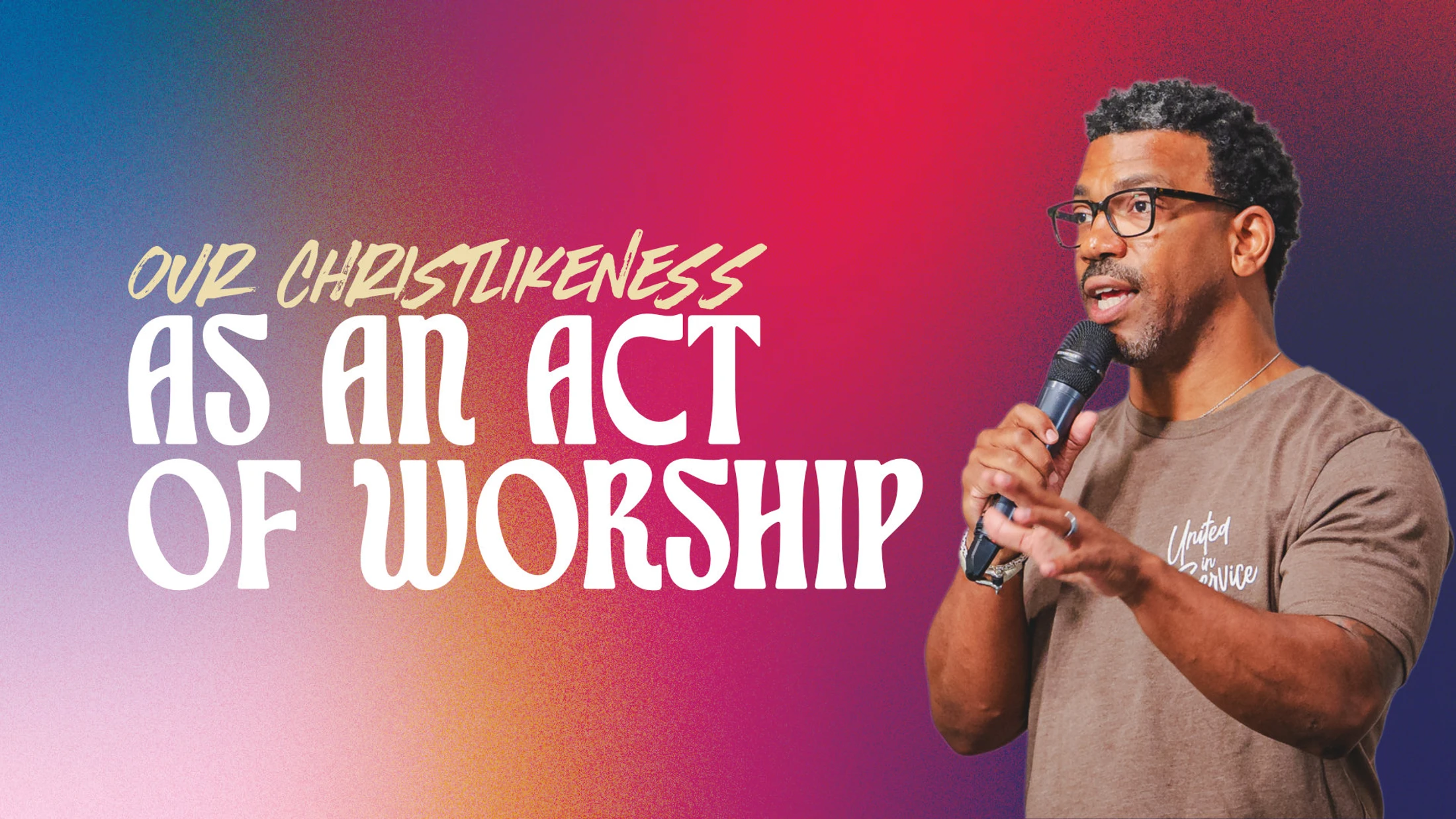
Obedience. Just reading that word might have made something tighten up inside you. And honestly? That reaction makes complete sense.
For too many of us, obedience has been weaponized. It has been used by legalistic churches, controlling homes, and abusive systems to silence, shrink, and manipulate. It has been collapsed into blind compliance. It has been stripped of love and replaced with fear. And so we have done what any reasonable person would do — we have quietly removed it from our vocabulary, our relationships, and our walk with God.
But what if we've been working with a broken definition this whole time?
In this final message of The Reason Why We Sing series, Pastor Rich Johnson takes us into Psalm 119 — the longest chapter in the entire Bible — and makes a case that obedience is not the fine print underneath worship. It is one of worship's native languages. And when it flows from trust instead of fear, from delight instead of duty, from Christ-focus instead of comparison, and from a praising heart instead of a performing one — it becomes something altogether different from what most of us have experienced.
In this message you'll learn:
Whether obedience is a word that fills you with dread, brings up old wounds, or simply feels like something you've drifted away from — this message is an invitation to approach it from a completely different angle. Not as a leash. Not as a chain of command. But as a love language between you and the God who already calls you his beloved.
📖 Scripture: Psalm 119:1-8 | Psalm 19:7-11 | John 14:15 | Galatians 4:19 | Romans 8
[00:00:00] In the tail end of the message series, the reason why we sing, looking at particular Psalms of the Old Testament that speak to reasons why we sing. Let me read to you Psalm 119:1-8 in the CSB. Actually, why don't y'all read this right along with me? "How happy are those whose way is blameless, who walk according to the Lord's instruction.
Happy are those who keep his decrees and seek him with all their heart. They do nothing wrong; they walk in his ways. You have commanded that your precepts be diligently kept. If only my ways were committed to keeping your statutes, then I would not be ashamed when I think about all your commands. I will praise you with an upright heart [00:01:00] when I learn your righteous judgments.
I will keep your statutes. Never abandon me." Amen. This is the word of the Lord. The people said, "Thanks be to God." Let this word fill our minds, flow from our mouths, and free our hearts to live as the beloved children of God. The title of the message today is Obedience as Worship. Yes, Obedience as Worship.
Say that word with me, obedience. How many of y'all got chills? How many of y'all started, the temperature started to build up in you like, "Ooh, I, I really don't like that word obedience." It sounds like a, a leash and not a love language. It sounds like control rather than freedom. It's the vocabulary that you use when you're trying to train a dog, not a human being.
It's the kind of [00:02:00] language that they're gonna use with my son when he joins the Navy and becomes a commissioned officer. There's a hierarchy here that you must follow. You must follow the chain of command. You must obey. The word obedience rubs some of us the wrong way because, to be quite honest, it's been abused.
It's been... Say it, Angela. It's been abused. It's been in spiritually abusive systems that don't speak towards covenant, it speaks towards control and falling in line. And those are just a few reasons why this word causes us to have such angst, but it also is something that we avoid. Why do we avoid this word obedience, Noah?
We avoid this word obedience because we prize autonomy as the highest good. We live in an independent culture that values independence. We live in a [00:03:00] country that has just celebrated 250 years of, quote-unquote, freedom, and because of that freedom and autonomy, it has made its way into our Christian value system and culture as well.
So self-determination is treated as the essence of one's dignity. Your autonomy is the essence of what it means to become your most full and complete self, and to submit to anything other than yourself cuts across the grain of your cultural expression. That's one reason why we avoid obedience. We also avoid obedience is because, as we said earlier, it has been weaponized.
Anybody go to a legalistic church? Don't rai- raise your hand. Legalistic churches. Anybody come from a controlling home? Don't raise your hand. Controlling homes. Anybody grow up in a purity culture? Don't raise your hand. Legalistic churches, [00:04:00] controlling homes, purity culture, all speak to diminish yourself, make yourself less, shrink, fall in line, perform, stay silent.
It is better to be seen than to be heard. And all of that carries a scar that leaves a tissue that is unhealed. We avoid obedience because it has been weaponized. We avoid obedience because it collapses us into blind compliance. We've lost that obedience as trust kind of factor. We've lost that. A- anytime I'm doing premarital counseling and the, we get to the talk about the ceremony we have that conversation, where that, that, those one words get tricky.
You know the words I'm talking about in Ephesians 5, huh? The one that says, "Wives, submit to your husbands." Can we take that one out please? I don't need no, I don't need none of that in my wedding vows, thank you [00:05:00] very much. I don't need we taking that out in Jesus' name 'cause it's been weaponized.
Never mind the fact that the verse right before that one says, "Submit to one another." So the problem often times when we have with obedience is the way it's been weaponized, the way it's been forced into v- viewing our independence as the highest good, and the way it quarter sort of shapes people into blind compliance, that we don't even think about whether or not it's good for us.
We've only seen how bad and wrong, we've seen how manipulated it has been used. And when we read the Bible, we read it through this lens, we read it through this lens that we'd rather take that word out. Get amen, somebody. I'd rather take it out. I'd rather take it out of my relationship with God, rather take it out of my relationships with others.
I'd rather take it out of my relationships and in my workplace. I'm like let's just take the word out altogether, please," [00:06:00] because it's done so much damage. But across Psalm 119, in these eight verses, and these, these eight verses don't just stand alone as it describes obedience. Obedience is throughout this book of worship, the Psalms.
When we hear words like precepts... Anybody old school? You be, "What was the precepts? Wasn't there like a Bible study or something or... He precepts." What, who was it? Kay Arthur. Yeah, follow the precepts. It's like, all right. So the word precepts and judgments, they went all the way back, commandments, God's ways, every single one of them gets put off rather than put on.
Rather than wrapping ourselves in the delight of obedience, we clothe ourselves in dread. Listen to how some of the other Psalms, again, because this is throughout the whole book of worship. Psalm [00:07:00] 19:7-11 says that, "God's law is perfect and it is sure. It is right. It is to be more desired than even gold, that God's laws are even sweeter than honey."
Psalm 1 speaks about the person who delights themselves in the law of the Lord. They delight themselves in following God's way. Psalm 25:10 says, "All the paths of the Lord are steadfast and they are full of faith for those who keep the Lord's covenant." Psalm 40:8 says, "I delight to do your will, O God."
This is wonderful. "Your law is written on my heart." Psalm 111 112:1 says, "Blessed is the one who greatly delights in the Lord's command." And the aim of the psalmist is that worship produces [00:08:00] obedience. It's not separate. And the main idea for today is a w- is obedience i- is not the fine print that's underneath worship, it is one of worship's native languages.
And the psalmist doesn't hide this word obedience from us. He surrounds it with love, and so can we. Can you imagine surrounding the word obedience with love? These are not four rules that I'm gonna give us this morning, but four movements, four ways in which obedience turns into worship, and worship again fuels obedience, where keeping the law of God and the command of God becomes a praise.
Four ways in which it becomes an act of love rather than a burden to carry. The first is this: obedience is worship when it begins with trust and not fear. Obedience is worship when it begins with [00:09:00] trust and not fear. He's he goes in verse four, "You have commanded your precepts," there it is again, K.
Arthur, "to be kept diligently." So before the psalmist revol- resolves to do anything, God has already spoken. An obedience that, that doesn't start with our effort can start with God's initiative. It doesn't start with our earning and our effort. It starts with who God is. In fact, the verses the, in the chapter that precedes this, he speaks of the character and the nature of God that is worthy of our affection and attention.
The Hebrew word for precepts comes from the w- root word that means to entrust or to give a charge over. And this is the language for a charge that's handed to a trusted friend, not a sentence that's handed to a soldier. When the psalmist says that I trust in your precepts [00:10:00] and keep them diligently," he's not falling in line like a soldier or encouraging us to do the same.
He's saying think about it as if you are a friend who receives something wonderful and beautiful. My third son just turned 18, Caden Thomas Johnson, 18 years old going into his senior year. Hallelujah. Thank you, Jesus. Groceries about, bill about to come down. And when I think about Cayden Thomas, the difference of seeing precepts not as a rule to follow like a soldier, but more like a trusted friend, I think about his relationship with his grandmother, my mother.
Now, one of the things that Cayden has, has loved to do is make pound cake. Tre- cream cheese pound cake. It's slamming, too. It's got this nice little crust on the top of it that's oo-wee. It's oo-wee. And Cayden goes and spends time with Grandma Johnson, and [00:11:00] she teaches him the recipe to follow, and he follows the recipe because he loves Grandma Johnson.
Maybe as much as he loves cream cheese pound cake, I don't know. I don't know which love comes first, but they're wrapped up together. He doesn't veer from the recipe because he's just trying to do his own thing. He stays with the recipe because of the person that he loves and what it produces in him, great joy, great love, great satisfaction and delight.
Will make a whole cream cheese pound cake and only bring home half to share with the rest of his family He's following the precepts that these precepts are something to delight in and to follow. Now I'm a, a pietist by my own theological conviction. Pietism is is that theology that seeks to keep the head and the heart together.
One is not separate from the other. And it emerged at a time [00:12:00] particularly in German Lutheranism when the, the Lutheran seminary had taken spirituality to be all head and less heart. They didn't even actually feel what they were teaching, and pietism emerged out of that void and chaos to bring the two in line with one another.
One of the theologians of pietism is August Francke, and he says, "I can't keep God's commands unless I have tried." You can't keep God's commands unless you try. To the church who he pastored, he said but Pastor, the, the commands seem too high. The commands seem too lofty." And his response to the congregation was, "Have you tried?"
Rather than assuming you can't and you will never, have you even made the attempt? Not out of a sense of perfection, not out of a sense of accomplishment, but out of a sense of [00:13:00] delight to do what God has offered you to do. When obedience begins with trust, then we're relieved of having to earn our own way before we even get started, and it becomes worship.
Worship that is o- obedient, born out of trusting that what God has invited us to do is enough. Here's a second thing about obedience that is worship. Obedience is worship when it flows from delight and not duty. When it flows from delight and not duty. The psalmist says, "Oh, that my ways may be steadfast in keeping your statutes."
Oh, that my ways is a cry of the heart. It's not a checklist. And again we've been in worship places, we've been in communities where worship became a checklist, where obedience became a checklist and a rule to follow, [00:14:00] and it didn't produce the kind of heart that we longed for ourselves, and so some of us abandoned it altogether.
The psalmist doesn't say, "I will comply." The psalmist says, "Oh. Oh, that I would keep your statutes." Everybody say statutes. Yeah, that's one of those commands, and it comes from the woo- root word that means to engrave. To keep the Lord's statutes are to have them engraved on one's heart. The statutes are not rules that are layered on top of life.
They are meant to be carved into your way of life, a, a way of delight that marks you from the inside out. And what the psalmist is encouraging here for worship that, that follows obedience in the statutes is that we learn how to live from the inside, not from the outside. So many of us when we came to faith in Jesus Christ as our [00:15:00] Lord and Savior, we were handed then rules to follow This is the rule that you follow to read the Bible.
This is the rule that you follow to pray. This is the rule that you follow to attend church. This is the rule that you follow in your relationships, and if you break the rules, then you may not be a follower of Jesus. And some of us adopted this burden of trying to make God proud of us by following these rules from the outside, rather than hearing the words over and over again that you are transformed on the inside.
That when you have received that revelation that you belong to God, that revelation that you are the beloved child of God, that revelation that you are God's own, that revelation that there is no condemnation to those who are in Christ Jesus, that revelation that you are a new creation. The old has [00:16:00] passed, the new has come.
That revelation that when God sees you, God sees his beloved child on whom His favor rests. That leads us to another kind of delight, and not duty. Picture two musicians who are practicing scales. Both have to practice scales. Anybody have piano lessons when they were little? And you had to go sit down at that piano, and you had to practice them scales.
One does it because the parent has said, "I paid too much money for this." I done paid way too much money for this. You better sit down there and you better do it." And for them, that repetition of scales became a duty to follow, it became a checklist. But for somebody else, it wasn't a rule to follow.
They weren't watching the clock. They weren't feeling the eyes standing over top of them. They were moved by the sound that they could produce in beating on those keys or [00:17:00] strumming that chord or hitting those notes, and it transformed into something from duty to delight. It became a part of them. And the psalmist here is encouraging that worship that becomes the statutes that are written on our heart, is that it actually moves from that duty into delight so that we are transformed more like the person we are worshiping.
The Apostle Paul picks this up in the New Testament in Galatians 4:19, where he describes the anguish that we go through until Christ is formed in us. In other words, this delight that we get to partake in being obedient and following God, is also going to have some strain and some struggle with it.
But we must keep in mind what the, the end game is. We must keep in mind what what the purpose is that it is Christ being formed in us. And some of us would rather not do the [00:18:00] obedient thing, but by not doing the obedient thing, we are subjugating ourselves to not being made more into the image of Christ.
Or what he says in Romans chapter 8, that God's purpose is for us to be conformed into the image of His Son. That our worshiping of Jesus is not just the songs we sing on a Sunday morning, or what you sing along with your Spotify playlist. It is actually in the way in which you live that changes you into the image of Christ.
And Jesus even says this Himself. In John 14:15, "If you love me, you will keep my commandments." If you love me, you will keep my commandments. And some of us, when we hear those words, we... all we hear is judgment. We hear if, then. If you love me, then you'll keep my commandments. And we hear it as something that...
See, even Jesus is lifting up an impossible [00:19:00] goal for us. He's lifting up an impossible duty for us. "If you love me, keep my commands." And if I don't keep your commands, I guess I don't love you. And all we hear is judgment All we hear is pain. All we hear is removal. All we hear is the distance that we have between us and a holy God.
But I don't think that's the intention that Jesus means here, nor the Psalmist when they say, "Oh, that I would keep your statutes." There is a longing there and a striving that is born out of delight. Here's the way I say it. Love, the love that Jesus is reaching for is the object of its devotion, and obedience that follows as the natural shape that reach takes on.
In other words, we become what we worship. Tell your neighbor, "You become what you worship." Only one neighbor said that to you. Come on, y'all. [00:20:00] The person next to you. Come on. You become what you worship The challenge with even saying that out loud is because it forces us to ask ourselves, "What is it that we are worshiping right now?
Who is it that we are worshiping? What is the object in the context of what we are worshiping?" Elsewhere in the Psalms, it warns us about the things we worship that are less than God. They call the, the Old Testament calls them idols and we look around and say none of us are worshiping idols," unless it, comes to the fall and we talk about Ohio State Buckeyes.
Then maybe there's... Then maybe there's that idol, but certainly we don't bow down to anything else But we do. We bow down to the idols of ambition, the idols of perfectionism, the idols of control, the idols of autonomy, and they become the very things that we worship, and [00:21:00] when we worship those things, we become those things, and we make ourselves like those things.
And Jesus here is saying, "No, if you love me, you'll keep my commands," because all of those idols have commands of their own. If your idol is ambition, it will command that you overwork yourself. If your idol of worship is control, it will command that you resist any kind of critique. I- if your idol i- is to be owning your own place in life and no one can tell you anything, then you become your own god, and it commands that you follow their rules.
And Jesus is wakening us up to the fact that all of those commands and all of those idols will leave us dying and not more alive. That's the third thing the, the psalmist says here is that obedience is worship when it focuses on Christ and not comparison. Can I get a ooh-wee on that? He says, "You will not be put to [00:22:00] shame when you have your eyes fixed on the commands of God."
And note what's remo- note what removes the shame in our lives. It's not a flawless perfection or execution, but it is fixed attention. I fix my eyes on you, and it by comparison abhors shame. Comparison, every time we do it, it just brings up shame. It reminds you of what you don't have. It reminds you of what you lost.
It reminds you of where you failed. It reminds you of going sideways rather than staying straightforward. Comparison is a shame machine, and it is calling for our devotion and our worship all the time. I don't know how many times I've said to myself, "I am getting off of this Instagram," because of all of the comparisons that it brings into my life.
I just have a hard time just looking at it and enjoying it sometimes. I'm like, "Oh, dang, they got [00:23:00] that? Shoot. I'm about to be 50 years old, and I'm still driving a Honda Odyssey, like, what?"
This ain't right. I need a custom, Land Rover Defender. That's what I need in my life at this stage. Comparison, and I can't even worship God alone without comparing to somebody else of what I don't have, or even worse, I start to think that I deserve that, and I worship God so that I can get it.
Ooh, God, I deserve that. I love that. I want that, and I'm your beloved son. You already told me I'm your favorite child Lord, let me get what I want. And we worship out of contract, out of what we can give, rather than the presence of God. We all have this. Rather than fixing our eyes on Jesus, we are looking to the left and looking to the right.
You guys have probably seen those runners in the Olympics, or not even just in the [00:24:00] Olympics, but, high school, you see that track runner. They're running. They got the lead, and all of a sudden they look over. Why are you looking over? You want to see how close they are to you? You want to see if they're gonna be...
You take your eyes off of the prize, and you look to the left and the right, and every time, every coach tells you, if you look to the left or you look to the right, what's gonna happen? You're gonna slow down. And inevitably, what happens? You slow down. What's stopping you? What keeps you from... what keeps you looking to the left and to the right is worry, anxiety, and fear, and taking your eyes off of the person at the end of the race.
The person who's right there with you. Here's what I say about comparison. It always steals two things at once. First, it robs you of your joy in the moment. Comparison robs you of the joy in the moment, and secondly, it drains your ability to actually see what God is doing in your life. You out there smoking, and then you [00:25:00] look to the left and look to the right, and it slows you down 'cause you're too busy watching someone else.
I got too much going on in my life to be worried about what somebody else got going on. I got too much that God has actually given to me to be worried about what somebody else got going on in them. Lord, I want to stay fixed and focused on you, and I wanna run, Lord God, this race with others who are fixed and focused on you as well.
Here's the last thing. Obedience is worship when it overflows into a praising heart and not a performing one. The psalmist says, "I will praise you with an upright heart." When I learn your righteous judgments. Now, this upright heart isn't sinless perfection. It is a heart that is being shaped by God and by God's own righteous judgments from the inside.
The Hebrew word for this judgment is to judge rightly, to see things the way [00:26:00] God sees them. I wanna reference the classic book, The Imitation of Christ by Thomas à Kempis, where he draws the sharp line between two kinds of obedience, and he... If I could boil down his book into one line, it'd be this, "Obedience from necessity is a burden, but obedience from love is worship."
Obedience from necessity is a burden, but obedience from love is worship. And the Psalm is reminding us that God's statutes, God's laws, God's precepts, God's ways are good for us, is that when we live them out, your very life becomes the song that others sing to. That's because worship is not just what you sing out here with your words.
Worship is what you live with in your actions and in your behaviors, and some, some actions, are entirely different from somebody else's, but [00:27:00] when they are born out of the desire to please God, when they're born out of the desire to become like Jesus, when they're born out of the desire to follow the Holy Spirit, God begins to do a good work in shaping our hearts so that we are made more like Him.
Not out of performance, not out of checking a list, but out of a heart of praise. It becomes a delight. There's something that happens in many of us who have walked with Jesus for a long time, is that we get tired. Anybody get tired? Prone to wander, Lord, I feel it. Prone to leave the God I love. We are all prone because it goes down this long line and we get tired.
We get tired of reading scripture. We get tired of singing worship songs. Same old worship songs. We get tired of hearing sermons. We get tired of going to church. Somebody said that don't just happen when [00:28:00] you've been following Jesus for 20 years. 20 minutes, I'm already tired. Ugh. We've been there. And one of the prayers that I have been praying recently i, is out of this Psalm.
Lord, help me to delight in your statutes, your precepts. One of the things that drifts in our love for God is a love for God's Word. We stop loving it. We stop- reading it. We stop appreciating it. What we start doing is we start picking it and pulling it apart and finding all of the, the ways we are discomforted by that word that we'd rather not deal with, and it draws us rather further into God's Word to say, "Lord, what is it that you're trying to teach me?"
It turns us away from God's Word, and we say, "I don't really need that or that part." And I'm convicted by that. I'm convicted by the times in which I've looked at God's [00:29:00] Word and said, "I don't need that." I'm convicted by the times I've looked at God's Word and said that, that part is, that part right there is not for me," maybe because I don't understand it or because I feel like it doesn't apply to me anymore, or it doesn't make sense to me.
It doesn't build me up. It breaks me down, and I just wanna be built up. I don't wanna be broken down. When the psalmist says, "Search my heart and see if there's any wicked way in me," I'd rather say, "No, I don't wanna read that part. I just wanna hold out for right now." I'm convicted by that, because what delights in God is what God has set before me and before us, that to become like Him, that we delight in the Word of God.
What's the Word of God? See, I know, what's the word of... Is this the Word of God? What are we talking about? I know all of the stuff that comes up in, in your minds because it's come up in mine, too. What [00:30:00] translation of the Bible are we talking about? Like I... Tell me what's the right one. And rather than approach it with all of the skepticism, maybe today you start to approach it from a different angle, one of delight, one of search, one to say, "Lord, I am searching to find you, because when I find you, I find me, too."
I want to invite you for just a moment. You may not have a physical Bible, 'cause we don't really carry physical Bibles to church anymore, right? Who got a physical Bible? Look at you. I'm proud of you. I'm proud of you. I'm proud of you. Yes. Maybe... It's what'd you say? It's in her bag. Oh, see, trying to call her out.
She brought it, but it ain't even out. There it is. And it's purple too, just like DJ Faye got to be purple. Purple cover. If y'all know Dewana, y'all know purple is her [00:31:00] color. May, may I even invite us, you may not bring a physical Bible to church, but maybe even this week open a physical Bible. Open a physical Bible.
If you don't have a physical Bible, order one. Okay? Sister Dewana says she got a extra. But that may, maybe we find in our worship is to delight in this Word of God so that we might have the mirror held up to us, to ask, "Lord, help me to look more like this scripture. Help me to look more like this Word so that I can become more and more like you."
Let's pray.
Lord, we delight ourselves in you And to delight ourselves in you, Lord, is [00:32:00] to also delight ourselves in your way To delight ourselves in your way, Lord, is to also delight ourselves in your Word. And right now, God, I ask for a healing in even our view and approach of the Scripture That Lord, where it has been used to cause abuse and harm, that you begin to heal, restore view and a vision for your word that can be a delight and not a burden Where it has been used as a weapon, God, help us to have a shield of faith against it.
For those who have interpreted and misinterpreted it Lord, we pray that you would shield us from the impact [00:33:00] The wounding past, present, and future. Help us ourselves, Lord God, to be in a right posture as we see your word and to see all of it and come to love you more through it For those of us who feel like it's too high and too lofty, may we follow Pastor August Francke's words to his congregation.
Can we try? Or maybe as the Saint Thomas a Kempis diagnosed that obedience out of necessity is not true worship, but obedience out of love is. May we find the difference between the two. As you aim our hearts to become more like you, God, we know that we haven't done all that we can. We know there's places that we've fallen short.
And let that not be an [00:34:00] excuse, Lord God, from receiving your Holy Spirit to try again, and to call forth heaven on earth as it already is in heaven. In Jesus' name we pray, amen