We can't wait to see you
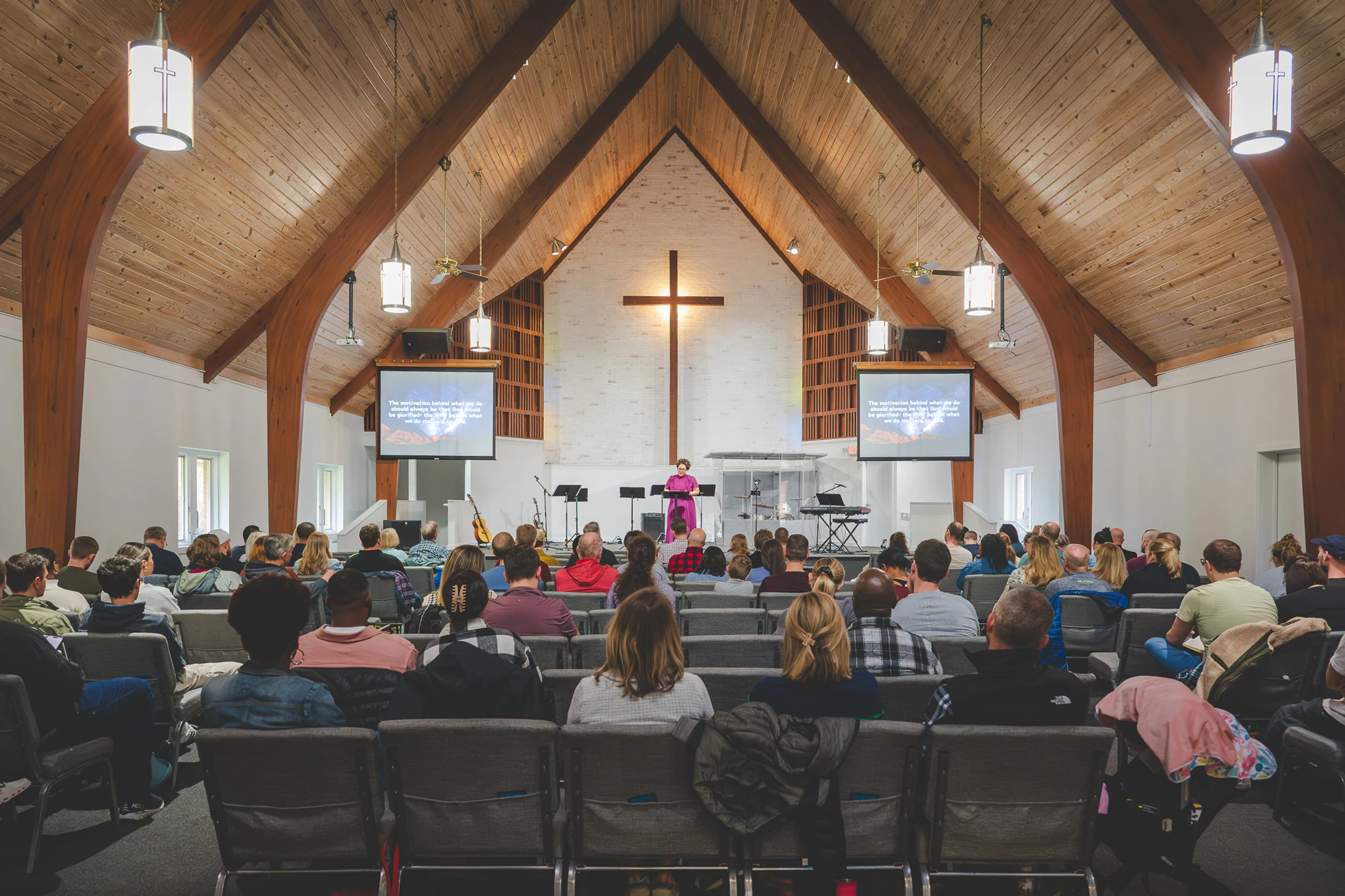
Join us this Sunday at 10:00 a.m. for our morning worship!

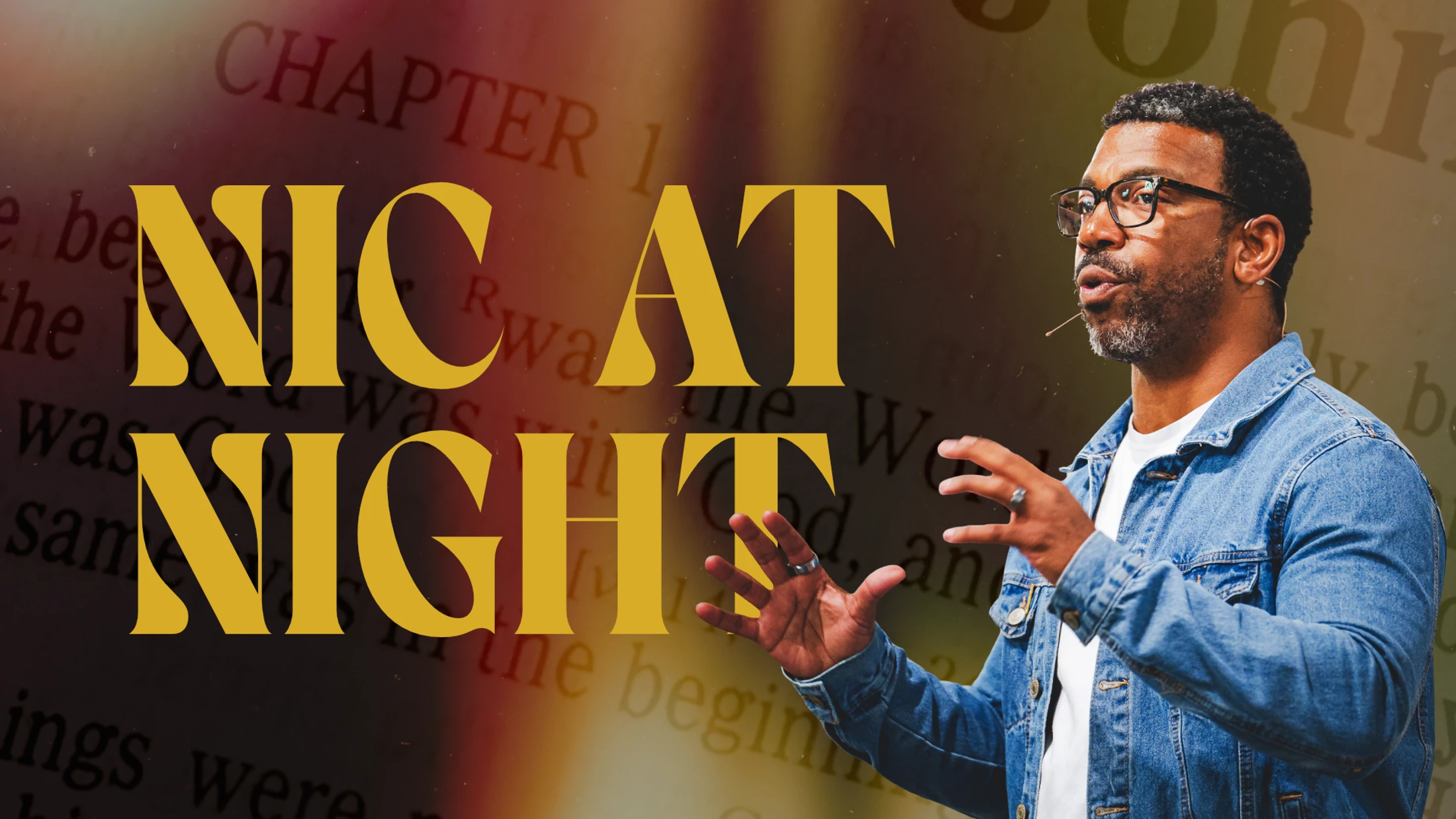
He had every credential. Every answer. Every religious box checked. And yet something kept him up at night — restless, questioning, unsettled — until he finally decided to go find Jesus himself.
Nicodemus wasn't a skeptic. He was the most religious man in the room. And that's exactly what made his encounter with Jesus so disorienting.
In this message, Pastor Rich Johnson takes us into one of the most famous conversations in all of Scripture — and challenges us to see it with completely fresh eyes. Because this isn't just Nicodemus's story. It's the story of anyone who has ever trusted more in their religion than in an actual encounter with Jesus. Anyone whose faith has stopped surprising them. Anyone who is still bringing their questions everywhere except directly to the source.
In this message you'll learn:
Whether you've been following Jesus for decades or you're still sneaking up to him at night with questions you're not sure are allowed, this message is for you. Because Jesus isn't waiting for you to have it all figured out. He's ready to meet you right where you are.
📖 Scripture: John 3:1-8, 16-21
We're in the sermon series on the Gospel of John, that fourth book of the Bible—
Matthew, Mark, Luke, and John— that tells the story of who Jesus is. And John wants us to understand this Jesus of Nazareth from Palestine is not like anything you've been looking for.
He's so much more.
And can I be honest with you? After 15 years of ministry, there's a group of people who are sometimes the hardest to reach. You know who they are?
Not the doubters, not the skeptics.
Somebody said the Christians. Yeah, it's the religious folk, the people who've read the whole Bible so they've figured it out.
The person who came to faith in Jesus and had that conversion moment and so their maturity has stopped.
The person who already understands and knows what God is doing in the world and in fact has already predicted when Jesus is coming back. That person is sometimes the hardest to reach with the gospel, the good news, because the good news is not about just making a decision, it's about a new way of living. And honestly, it's these religious folk— and don't get on my nerves, I love you— because I've been one of them people where somewhere along the way I trusted more in the religion than the experience. I trusted more in what I knew than the encounter with Jesus. And I leaned more on what I could manage and control and manipulate than on that which I could not understand and was far more mysterious than I would have ever known. So my question to all of us this morning is this: When was the last time your faith surprised you?
It went beyond what you could understand.
It went beyond what you could know or name. It shifted the way, perhaps, you related to Jesus because the last time our faith may have surprised us was when we came to faith in Jesus, when you were 7 years old, when you made that decision to follow Jesus after that crisis of faith you had at 32. But since then, what's been surprising? What's been fresh? And I'm not talking about a faith that comforts you. That's good.
That's good faith.
I'm not talking about a faith that sustains you.
That's good.
That's good faith too.
I'm talking about a faith that surprises you.
When was the last time you were unsettled?
When you were shaken up?
There's a man in John chapter 3 that we'll read about today who has the most surprising, unsettling moment in his journey of faith.
And he's a religious man. In fact, if they were handing out awards for the most religious, he'd win it because he was a person who was known as a Pharisee, but not just a Pharisee of the religious order. He was also part of the Sanhedrin, the governmental body, as well. He was somebody who mixed religion and politics together and called it nationalism. Ooh-wee. And he was somebody who we all can identify with in some part of another. He had everything right, he had everything figured out, and yet there was something unsettling about him that drew him to ask the question, "Who is this Jesus?" Because there come a point in time in our lives when credentials will not get us what we truly need. There will come a point in time in our lives where our past experiences and our past knowledge won't get us to what we're actually looking for. And if we're honest today, we are more like this character than we care to admit. The most religious in the room, he's about to have the most disorienting conversation of his life. I know you just sat down not too long ago, but I invite you to stand with me as we read from the Gospel of John chapter 3, verse 1 through 8, and then 16 through 21.
The word of the Lord.
There was a man from the Pharisees named Nicodemus, a ruler of the Jews.
This man came to him at night and said, 'Rabbi, we know that you are a teacher who has come from God, for no one could perform these signs you do unless God was with him.' Jesus replied, 'Truly I tell you, unless someone is born again, he cannot see the kingdom of God.' 'How can anyone be born when he is old?' Nicodemus asked him. Can he enter his mother's womb a second time and be born? Jesus answered, truly I tell you, unless someone is born of water and the Spirit, he cannot enter the kingdom of God. Whatever is born of the flesh is flesh, and whatever is born of the Spirit is spirit. Do not be amazed that I told you that you must be born again. The wind blows where it pleases, and you hear its sound, but you don't know where it comes from or where it's going. So it is with everyone born of the Spirit. For God so loved the world, in this way he gave his one and only Son, so that everyone who believes in him will not perish but have eternal life. For God did not send his Son into the world to condemn the world, but to save the world through him. Anyone who believes in him is not condemned, but anyone who does not believe is already condemned because he has not believed in the name of the one and only Son of God.
This is the word of the Lord.
And the people said, thanks be to God. Let this word fill our minds, flow from our mouths, and free our hearts to live. As the beloved children of God.
Amen. You may take your seat. If you're taking notes this morning, the title of the message is Nick at Night.
Nick at Night.
Nick at Night.
I thought that was pretty cool.
And the guy working our slides this morning, his name is Nick.
Hey, go figure.
So here's the scene. It's Jerusalem at night. The Passover is taking place. That's when Hebrews from all over the diaspora, Jews from all over the place, come and gather in that great city called Jerusalem to celebrate the Passover feast. And the buzz in the air is not about the history of Passover and Moses, it's about a guy named Jesus. The news had been spreading around Jerusalem at this time. They, they heard about this guy that John the Baptizer was saying who was greater than him. And that they should be baptized in his name. John chapter 1, John the Baptizer sends two of his disciples to go follow Jesus. And then in John chapter 2, during the Passover celebration, Jesus goes into this space where a wedding takes place at Cana, and he performs a miracle turning water into wine. And people said, "Who in the world is this guy?" that he would turn water into wine. That wasn't it. At the temple worship during this Passover festival celebration, Jesus goes into the temple and he sees something that causes him to crash out. Crash out, that's the young people's term for losing their mind.
Jesus lost his mind when he went into the temple and he saw things that were not the way God the Father designed them to be. He saw the poor being exploited. Having to pay over top dollar for their worship. He saw worship being gatekeep— being gatekept by Pharisees and Sadducees and all these religious elite folk keeping those who were in need of an encounter with God out. And so he started flipping tables and overturning tables, and he said, you know what, my Father's house was meant to be a house of prayer for many nations. 'But you have turned it into a den of thieves.' This name Jesus was gaining popularity all across Jerusalem, and Nicodemus would have heard about it. He would have heard about all of these things happening, and Nicodemus, in his own questioning, says, 'I got to find out for myself.' I know oftentimes when we read about Nicodemus, we make a caricature out of him, right? He, he represents the worst of the Pharisees, he the worst of the religious elite. And oh, he had to come to Jesus at night because he was scared and he was ashamed. I want to give some humanity to Nicodemus, uh, for a moment, because we've all been in that situation where we've had questions about Jesus or questions about what God is doing in the world, but instead of going directly to the source, we go everywhere else. In, in these days, when you have a question about what Jesus is doing or what God is doing in the world, where do you go in 2026? You go to Google. Google, what is Jesus doing?
I really want to know. And if Google doesn't work for you, where else do you go? ChatGPT. ChatGPT, what is God doing? Please tell me what Jesus is doing. Well, Rich, you've asked a great question. That's so thoughtful of you. I really appreciate the humility with which you enter into deep conversations like these.
Let me tell you what Jesus is doing.
That's exactly how my ChatGPT talks to me. If we don't go to Google, we go to ChatGPT. If we don't go to ChatGPT or whatever AI source you use, we go to social media and we let the influencers answer the questions for us. But I appreciate about Nicodemus, he didn't allow anybody else to be a second source or a third party. He wanted to get it right from the source. Who are you? What are you doing in the world? And yes, he's approaching this at night. And this is where I love The Chosen series. Anybody watch The Chosen series? I love The Chosen series because it just, it just humanizes people. And when it talks about the story of Nicodemus, you see Nicodemus and his wife kind of wrestling together. And Nicodemus is like, I'm not sure about this law thing anymore. I'm not sure if it's leading to life giving, flourishing anymore. And his wife says, what do you think? And he's just like, I don't know, the robe doesn't mean anything, the headrest doesn't mean anything, all of this, it doesn't, you know, it doesn't mean anything. And she stops him and she says, you are a representative of the highest religion known to man. She doesn't say it just like that, but just I'm paraphrasing. She says, you gotta uphold the institution. You've got to uphold your role. You are the people, you are the person that people come to for answers, and you have to give them an answer.
And you see the wrestling in Nicodemus.
You see the restlessness in him. You see the questioning in his mind and his heart. Religion isn't working for me anymore, honey. How can you send me out to be this representative of something that isn't working anymore? Basically because we have a reputation and a power to uphold. Does any of this sound familiar? When we are restless, beloved, we are restless with our questions. The early church father Augustine of Hippo said it this way. He said, when you are restless, you will continue to be restless until when you find your rest in God. Because we've been made for God. We've been created in the image of God. We've been created to reflect God, and if we are restless in our hearts, it's because we are putting our rest in things that will never satisfy.
If you keep putting your rest in the church, and I'm just talking about the church structure, it ain't going to satisfy. If you keep putting yourself and your hope in things that are not eternal, you keep putting your hope in a government, you keep putting your hope in a person, you keep putting your hope in something from the past that hasn't let go of yet, you keep putting your hope in all of those things, it will leave you restless, beloved. And that restlessness will not be satisfied until it is placed into the hands of God.
And this is Nicodemus living this out well before Augustine addresses it.
And most of us know, we know what it's like to have questions that don't have answers. Questions that we're too afraid to ask in public, questions that we're too afraid to share with our small group, questions that we're not quite sure about. Can we bring that question into church? Because the church is supposed to have the answers, and I got questions. Anybody got questions? Yeah, we got questions about what God is doing in this world. We got questions about whether we're working in the right vocation. We got questions about, uh, you know, Lord, how are you working in the midst of all of this turmoil and this difficulty? I can't, I can't figure it out. I can't make sense of it. Lord, I've got questions. In the first place, beloved, that we should go to is right to the source, not to all of the other places. And this is what Nicodemus does. Nick at night, I'ma meet with Jesus. I don't even know how they arranged it. Like, did Nicodemus send somebody to Jesus and say, hey man, can you hook up a meeting with me and Jesus?
Did they just happen to be at the same place at night? Oh look, Jesus, maybe I'll take an opportunity to talk to him now.
I don't know, we don't have all that detail.
But what we do know is what Nicodemus says next: Rabbi, which means teacher, we know that you are from God. And I wonder, does Nicodemus really know that he's from God? What does this "Rabbi" mean?
It means teacher, right?
And he himself is a rabbi and a teacher to whom people come to for answers to their questions. But he says, "There's something different about you. You, Rabbi, we know that you come from God, otherwise you wouldn't be able to do all of the stuff that you are doing." But I actually want to push this a little bit, in that this word "Rabbi" coming from Nicodemus is to create distance between him and Jesus, not to bring him in close proximity. He's calling him "Rabbi" and "Teacher" and not any of the wonderful names we just sang about—Healer, Master, Redeemer, Savior. He calls him Rabbi because he can understand what Rabbi means. He knows how to intellectually spar with another rabbi. He knows how to get into a competition of wits and will with another Rabbi. And for many of us, the questions we come to for Jesus are not because we're ready to submit to the answers, it's because we want to get into a sparring match. It's because we want to question, challenge whether or not we actually agree with what he has to say because we are so much more learned than he is. We're so much more experienced than he is that he couldn't possibly understand what we are going through and what challenges we are facing on this side of earth. And so, I'm not really asking you, Jesus, because I want to submit to you, I'm asking you because I just want to see what you got to say. And some of us, when we do that, it keeps us from being in true relationship with God. But notice Jesus's response. He reads right through it. Hmm, you know nobody can see the kingdom of God without being born from above, right? Oh, so you think I'm a good teacher? Watch this. Let me teach— let me, let me learn you something. That's what the old boy— let me learn you something. You can't see the kingdom of God unless you are born from 'from above,' and some translations say 'born again,' and the Greek word there means both because in the nuance of this word, you need to be born from above, from heaven.
You need a heavenly birth, and you need to be born again into a new life. Now, what happens in the church in the West is we have used this as one of our clobber verses. Unless you're born again, you can't see the kingdom of God. And many people have talked about their salvation just like that. Are you a born-again believer? Oh no, I thought I was just a believer. That ain't good enough. You got to be a born-again believer. Are you a born-again believer? And that's even come back in fashion. I'm a born-again believer, hallelujah. But they use it as a clobber verse. But the Eastern Church, the early church, didn't use this as a verse where we decide and cross the line. Are you born again? 'Or not.' It was a question about, 'Have you adopted a new way of living? Are you born again to be made new?' It's like going from one operating system to another new, different operating system. I've been using Macs my whole life, 30 years I've been using Macs. And this part-time job I got in Chicago training people in spiritual direction at North Park University, they don't use macOS. They use Microsoft. Microsoft 365 Office Suite or whatever it is, and it's terrible. It is not of God.
Come on into my Teams room. It's like, where is the Teams room? Pull the document from the SharePoint or the One Doc or the— I'm like, Lord, can you just put it in one place? Like, what is going on?
I can't find a calendar reset, I can't find nothing in the Microsoft Office Suite 365 because I've been used to using macOS.
And what Jesus is inviting Nicodemus, and therefore us too, is not just to tweak your operating system, it's to get rid of it and come into something brand new. And for many of us, we want to hold on to the old and just tweak a little bit. Can I get a little bit of Jesus? Can I get a little bit of born again? Can I just add them to whatever it is that I'm doing? He said, no, that's not going to work. You got to be born from above. The Spirit has to initiate this, and it needs to change the way you live. It's got to change your operating system, and it's going to be discomforting. It's going to throw you off. It's going to disrupt you. But you will not see the kingdom of God unless you move from the old operating system into a new way of living. And Jesus is inviting Nicodemus into a new way of living.
Not the old, the new.
And he responds the way any one of us would respond when Jesus says, "You got to be born again." He says, "Huh, can anyone be born after growing old? Does he need to enter into his mama's womb again?" Ha ha ha, got him. And it's not a question of stupidity. This is an intellectually formed man who studied law, who studied philosophy, who studied theology and religion his entire life. And so it's not a dumb question. It's a question that any of us would ask. "Hey man, you got to be born again. You got to receive a new life." "Well man, well, how do I do that? Do I got to start over from scratch?" And the reason he asked this question, I want to push this a little bit, what's underneath is that he is trying to take Jesus literally.
Ooh-wee.
And when he takes Jesus literally, it's because literal is safe. Literal can be controlled. Literal can be managed.
We try to literally reason whether or not Christianity is worth our time, and does he literally mean for us to give up our lives, or does he just mean part of it? Does he literally mean for us to treat our possessions as if they're not our own, or does he just mean these few things over here? Does he literally mean for us to become one new humanity that is reconciling people across race and class and difference and gender, Or does he really mean that that's fine, when we get to heaven it'll all be figured out? Does he literally mean for these things to take place here and now? Does he literally mean for us to pray for heaven to come on earth and for heaven to make a difference in this earth? Or does he just want us to really wait until the by and by? Do you see what I'm saying? If we can question Jesus literally, then we can keep him at a distance because it's safe and it's controllable. And it's manageable. And the church has profited off of this literal kind of discourse with Jesus. We're gonna do this thing literally, and we're gonna treat people, you know, literally. We're gonna treat all of theology literally. We're gonna take all of the mystery out of what it means to follow Jesus and what it means to be a Christian, and we're gonna put things literal in it. Like, unless you can tell me, Sean, the day you became a follower of Jesus and what time it was and where you were and who was with you there and what it smelled like and what clothes you had on, I don't think you're really saved. Hey, you know what, another tradition I grew up in— hey, do you, do you have the Holy Spirit? Because we know when you get saved, you get the Holy Spirit. You get the Father, Son, and Spirit, right? And the evidence of that is that you speak in tongues. James, do you speak in tongues? You ain't got— you ain't saved. Hey, you know what, as Bible believers, we take in the whole Bible, and Genesis says that God created the heavens and the earth in 6 days. Do you believe in the literal 6-day creation? If not, you ain't going to heaven. And we use these things as litmus tests to try and prove who's in and who's out, who's in relationship with God and who's not in relationship with God.
And Jesus blows him out of the water when he replies and says this: Oh, Nicodemus, Nicodemus, the wind blows where it wants to blow. You can't see it. But you can feel it.
You don't know where it comes from or where it goes, brother, but that is what it like— it's like to be spiritually renewed. You can't control the wind, you can't manage the wind. It's even hard for you to measure the wind. That's because the Spirit cannot be managed, it cannot be mastered, it cannot be earned. And for someone whose entire life was built on mastery of the sacred, this is the most radical thing that Jesus could say to him.
In all of your whole life, on what you built your life on, it is not the most solid foundation. You didn't initiate it. I did. The mystic Saint John of the Cross reminds us that God is always the initiator of our formation. The wind blows where it wills.
We may not be able to see it, but we can feel it. And what's happening in your lives right now, beloved, the wind is blowing and you're trying to control it. You're trying to manipulate it. And it cannot be controlled or manipulated. It must be embraced. Holy Spirit, where are you moving? Where are you working? Because that's where I want to be. This contemplative life and contemplative journey leads me to bring to this conclusion, beloved, that we are not capable of producing transformation that we most deeply need. We can position ourselves, we can show up, we can come at night with our questions, but what happens next, the actual remaking of our human soul, the new operating system, that is not our work to do. We can only receive it or you can resist it.
You can receive it or you can resist it. You can receive what Jesus offers or you can resist it. The transformation that God is inviting you into, he's inviting you into to be a participant with him. God, I want new life. Here's the way to find it. But that isn't working for me because you built the foundation on something that's not solid.
'But I can't control it.' Because if you could, you wouldn't follow me.
If you could control it, if you could dictate it, what do you need God for? What do you need Jesus for? What do you need Holy Spirit for?
They might as well just go do their own thing and let you do your own thing too.
This is the most honest thing though that Nicodemus responds with, because he's finally surrender to the idea that this is not a debate. I thought this was a debate. I thought I was coming here to get some answers.
What I'm finding is actually something more disruptive that says, okay, how can these things be? How can it be? How can it be this new life through the Spirit?
And when they ask, how can it be?
That's when he's asking the question of what's really underneath all of my questions.
One of my spiritual advisors, an old woman, 80 years old, named Ann Haley. And Ann, when I meet with Ann, she says right when we sit down, "Rich, I'm so excited to be with you. I've been praying for you, and I just know that the Holy Spirit is going to do something great in our time today." And it just makes me feel like I've got something to anticipate. Even in times when I come in, I'm like, I don't even know why I got time. I ain't got time for this. I got too much going on.
I don't need that.
Why did I keep this appointment?
I should have canceled it.
And Anne says, "No, it's such a delight. I'm so delighted to meet with you. God is going to do something great." And what Anne taught me in our times of spiritual direction, she identified 6 core longings. She said, "Rich, underneath every desire of yours, underneath every question of yours, is one of these 6 core longings. You're either longing for love, you're longing to be fully known, you're longing to be wanted." not just tolerated. You're longing to be fully known inside and out, not by what you do, but by who you are. You are longing to be loved. Or you're longing to be significant. You want to know not just are you loved, but do you matter? Do you matter to someone? Do you matter to something? Does your life have significance? When all of the stages of life that you go through change, do you know that your life still has significance because your life is not defined by the stages of life that you're in? Whether you're married or single, separated or divorced, whatever that relationship status is, you know your identity is not in that. Your identity is in me. Do you, do you know that there's a core longing of understanding? That you just wish that you could make sense of what's happening in the world. You want to understand, where is God? And where is God in the midst of the church that Jesus brought to pass and birthed? What's happening in the world? I want to understand. And some of us, when we don't understand, we lose it and we crash out in some unhealthy ways. There's a core longing of belonging. Where's our community? Where's our people? Where's the people that I have some relationship with?
We don't have to be perfect and we ain't all got to be the same, but we do need to have the sense that we belong. Or purpose. That your vocation in life is to understand and know why you are here. One of the most existential universal questions of humanity, regardless of the place, time, or people. And then lastly, security. That yes, we want safety, but underneath the question of safety is security. Do I feel secure despite the things changing? You can be in unsafe places and still feel secure in knowing who you are and whose you are. Though the times and the challenges that come will be difficult, you can still have security. And so my question to you, beloved, which one of these core longings are you wrestling with? They're the core longings for all of us in each of our hearts, but which one is rising to the surface? For Nicodemus, religion had given him a framework for how to meet these longings.
Religion will give you love.
Once you ascend to the highest places, you'll be fully known. Religion will give you significance. It will tell you that your life matters because nothing else matters than this religious practice. It will give you understanding because it will help to make sense of the world. We have laws and we have rules and we have regulations that help us to make sense of the world. It gives us understanding and comfort. Religion will give you a place of belonging. We're all in the same religion and as long as we are together then we've got our belonging secure and purpose and security. It was all for Nicodemus until he realized his heart was still restless. And our hearts will continue to be restless until they find their rest in God. Not in religion.
Not in rules. And though in spiritual formation we talk about spiritual practices and spiritual disciplines, the practices and the disciplines are not the end in themselves. They are to get you to Jesus. So yes, pray. Yes, give. Yes, confess. Yes, serve. Yes, do all of the things that give you life. If it doesn't point you to Jesus, beloved, It has become another religious obstacle. It is something that will still leave you restless at night until you learn how to rest in Jesus. And here is where everything turns in this pericope, this passage of scripture. You know that it's not John 3:16 though, right?
I hope y'all know that.
It's not in John 3:16. If you don't know no other Bible, you know John 3:16. Come on, let's say it together. For God so loved the world that he gave his only begotten Son, that whomsoever will believeth in him shall not perish but have everlasting life. That's the King James Version. Hallelujah! It's the only version. And so we all know that, we all know that we get saved by the King James Version. We all know that we get saved by John 3:16. It's still popular at sporting events. It's still popular on street side road signs. It's still popular everywhere. But we've used the verse again as some like crossover, and it's used by the religious elite people of today. That God so loved the world, he gave his only begotten Son, and whosoever believeth— and they hammer down the belief. Do you believe? Do you believe? Do you believe? Do you believe? And they forgot the most important, important part of the verse was the first 3 words. 'For God so—' Okay, forward. '—loved the world.' Okay, all of that. He didn't say, 'For God so loved the Jews only.' That would have been something Nicodemus could understand because he'd been spending his whole life as a Hebrew studying this religious text for Hebrews only.
Jesus didn't say, 'For God so loved the Hebrews, he gave his Son.' No, no, he said he loved the whole world.
He didn't say because God hates the world and is going to hell in a handbasket that he gave his own— his only son. He said no, it wasn't for wrath, it was for love. Wait a minute, but wait a minute, what about Paul? What about the wrath of God that must be satisfied? Who is the wrath against? Is it against humanity or is it against the evil one? Who tricked humanity into thinking of themselves lesser than what they were created to be, made in the image of God. I venture to say it is not because God is wrathful against you, it's because he is angry with Satan and he wants to put Satan in his place. He wants to put the evil one in his place for convincing you to think that religion would get you into heaven, for you to think that religion was going to save your life. Forgetting you to think that religion was something to gatekeep rather than to release for the whole world. God loved the world. He loved, he loved.
He wasn't angry, he wasn't upset, he wasn't vengeful. He loved and he poured out his love on humanity by giving the world Jesus Christ, his only son, his own flesh.
And it is that love that he is inviting us into.
He did not send the Son for wrath. So the most important verse, beloved, is not 3:16. We should be quoting 3:17.
Read it with me. God did not send the Son into the world to condemn the world, but in order that the world might be saved through him. He didn't come to condemn Nicodemus for being religious. He didn't come to condemn the Pharisees for their stoic formation. He didn't come to condemn the Sadducees who made less of the resurrection. He didn't come to condemn the Greeks or the Roman Empire. He came to save. He came to deliver. He came to heal. He came to liberate. He came to set free. And those who don't believe that already are already suffering their own condemnation because they think that those things will get them into right relationship with God. And if you think anything less than Jesus will get you into right relationship with God, you have received your own condemnation as well.
You're giving yourself to lesser things, then you find yourself with a lesser God.
I went old school today and I looked up my Ragamuffin Gospel by Brennan Manning. Somebody knows all about it. Here's what Brennan Manning says about the gospel. He says, the gospel is absurd and the life of Jesus is meaningless unless we believe that he lived and died and rose again but with one purpose in mind: to make brand new creation. Not to patch leaky roofs or to mend broken fences, but to tear down the old building and erect a new one in its place. In other words, he didn't come for you to just tweak the old system. He came to get rid of it so that you would adopt a new system.
And a new way of life.
And if we think that Jesus came to just tweak some relationships, "Oh, he's made relationships better, it's so cool to follow Jesus." "He's made, you know, working, you know, a lot easier, I have so much more peace, praise God." "He came to make sure that I was gonna be taken care of, isn't that sweet?" Those are all little add-ons to what Jesus is really inviting us into. Is a complete reorientation of the way we think, the way we live, and the way we interact in this world.
And that's Nicodemus.
And you know the best part of this story, Sean?
Best part of this story?
I got two Seans over here, I'm talking to both of you. You know what the best part of this story, Sean, is? Or Papa John, or Connie, or Megan, or, you know, Elle, or, you know, everybody, 'cause names are escaping me. Adam, Andrew, Aaron, Mike, let me see if I get some, Sarah, Karen, Sue, I'm just naming off some names, Margaret, I'm gonna be like really, Jenny, Hannah, you know, okay? The best part of the story is this: you don't get what happens to Nicodemus. John leaves that out. All this great wonderful teaching, all this great wonderful discourse in this particular, uh, pericope, this passage of scripture, is cool, but you don't get the end of the story right here.
You don't get it. What happens to Nicodemus?
How does he respond? And it's as if Jesus is saying to us, or maybe John is saying to us, to invite us into, "Hey, what are you bringing at night? What are you bringing at night to Jesus?" Because when we do continue to read the Gospel of John, John does follow his trajectory. In John chapter 7, he defends Jesus in front of the Sanhedrin. And a little bit later on in John 19, he becomes the one who spends 100 shekels or something like that, to buy the myrrh and the oil for Jesus's dead body. He moves from a guy who shows up at night, to a guy who defends Jesus in public, to a guy who will be expendable of his own possessions for the sake of the person he believes in. He moves from something very cognitively about his Understanding of religion and faith to something that touches his heart and is poured out in his hands. That, beloved, is what we call a slow work of God. The slow work of God of our formation is maybe to start in one place, but we end in another.
So here's my two questions for you.
Number one, what question are you bringing to Jesus at night?
What unsettling, what wrestling are you bringing to Jesus at night? What caused you to be disrupted in your heart and in your soul? And number 2, what longing brought you here today that your religion hasn't been able to touch?
What longing, which one of those core longings there religion has not been able to touch in you? You know you need an encounter. With Jesus.
I want us to invite—
I want to invite us into a quiet moment of prayer, just that we might use our imagination, that we are Nick at night, sneaking out maybe to meet Jesus because we're a little embarrassed, maybe ashamed, maybe afraid.
There are people in our lives who we can't go to because They're going to push us towards the status quo.
I want us to imagine for just a moment that this Jesus, who turned water into wine, who overthrew tables for the sake of us, is the same one who will meet us in our quiet place. Let us pray in silence for about 30 seconds here as you meet with Jesus, who is willing and ready to meet with you. Lord, we came to church this morning with our past experience, our church religious experience, yet some of us still have some questions.
We came looking for certainty, but may we leave with wonder.
May we leave with a wind at our back to notice and pay attention where the Spirit of God is not waiting for us to figure it out, but is already there with us. God who is Father, Son, and Savior Spirit that hovers over us like a mother over her hen, watching over us, not just to tweak a couple areas in our lives, but to be a remaker, a reshaper, a new operating system, so that we might know you are truly with us. In the strong name of Jesus, we do pray. Amen.