
We can't wait to see you
Join us this Sunday at 9 a.m. or 11 a.m. for our morning worship!

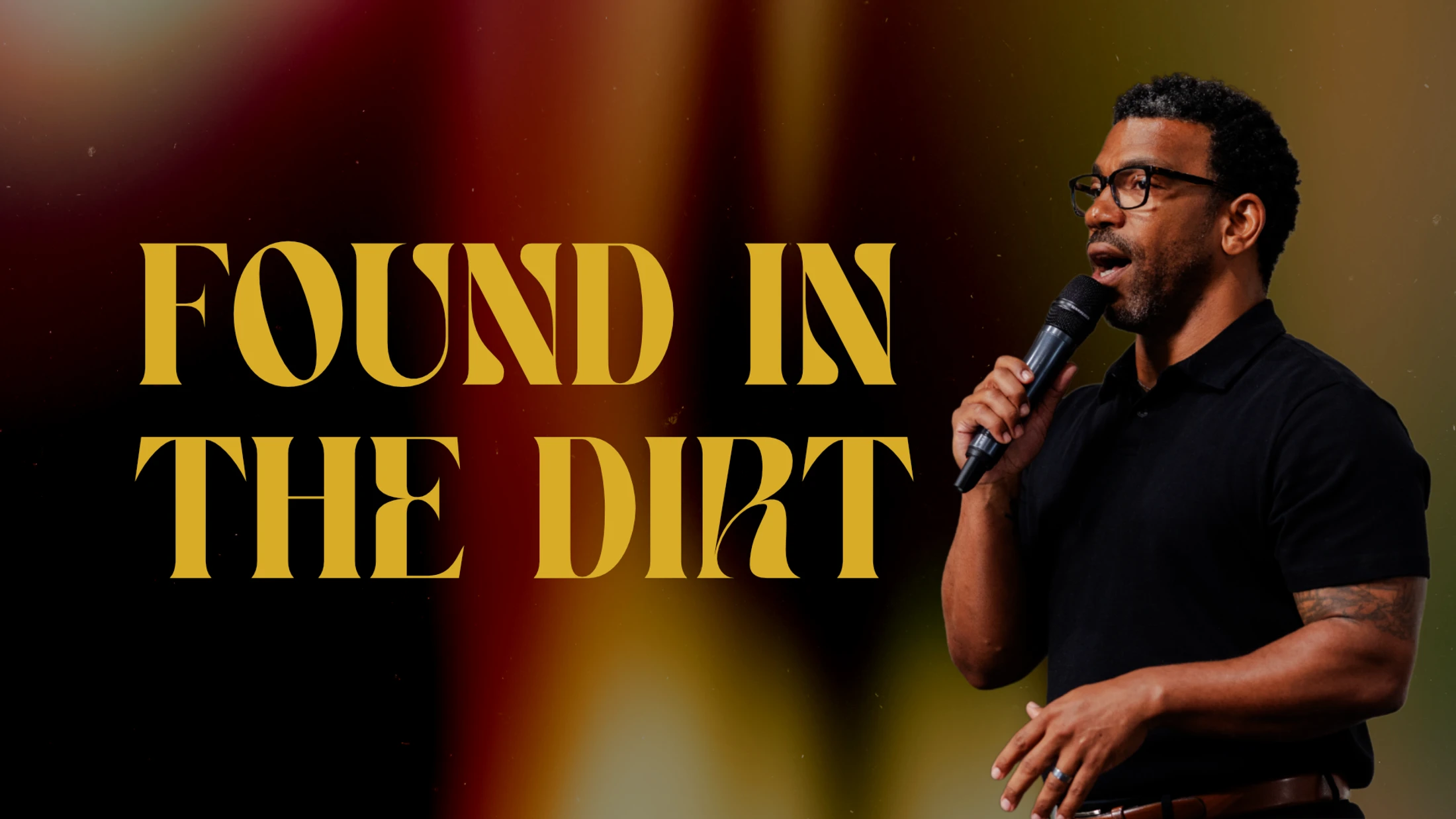
What if sin isn't primarily about what you do — but about what it does to you?
Most of us grew up with a definition of sin that centered on behavior. The checklist of what's allowed and what isn't. The rules we break and the punishment that follows. But what if that definition, while not entirely wrong, is missing the deeper wound underneath?
In this message, Pastor Rich Johnson takes us back to the very beginning — Genesis chapter 3 — and then forward to one of the most dramatic scenes in the Gospel of John: a woman caught in adultery, dragged into the center of a crowd, and placed before Jesus. And in both stories, he finds the same thing: not just broken rules, but broken communion. Not just behavior that needs correcting, but a rupture that needs healing.
Because sin, as Pastor Rich explores it here, is more than what we do. It is a power of deception and rupture that distorts our relationship with God, ourselves, and others. And Jesus came not merely to forgive sin — but to free us from sin's grip and restore us to communion with God.
In this message you'll learn:
Whether you've carried shame for something that has become your identity, or you've been holding a stone of self-righteousness you've never named — this message is for you. Because Jesus doesn't just see the accused. He sees the accusers too. And to both, he says the same thing: neither do I condemn you.
📖 Scripture: Genesis 3:1-8 | John 8:1-11
So we're in the Gospel of John, and, um, we're not, we're not going verse by verse. We're trying to cover, you know, the Gospel of John kind of not at a high level, but particularly to, to get to know the person, um, of Jesus. And chapter 8 is a familiar chapter, particularly because of the, the story of the woman who was caught in adultery. And when I was doing the service, uh, service plan, I was like, man, we, we We preached that sermon about 4 times here, you know, at Sanctuary, and it's already well known. I'm gonna, I'm gonna just skip over chapter 8, and we're just gonna go into chapter 9. And then last Sunday, we were at a graduation party. Zoe, we're at Zoe's graduation party, and me and my son Cam, we, we just talking about life and stuff, and then sin comes up, you know. So I don't know what you talk about at your graduation parties, but me Me and Cam, you know, we start talking about sin. You know, what is sin and what's the definition of it? And you know, Brit Dahlstrom gets in the conversation. Brit, what you think? You know, we got Brit in there and Shiloh's rolling her eyes. She's just like, okay, can we tone down the sin for a moment and just focus on the graduation party? And as I was thinking about this, you know, Campbell, he's grown up in a Christian home and he's off on his own now in the college in Washington, D.C. at Howard University, surrounded by, you know, Christian friends. He's on fire for Jesus. And, you know, his definition, you know, of sin is starting to take shape even more so than when he grew up in this church and in the— our youth program and in this home. And it started to, you know, I was reading over it again, chapter 9, chapter 9. I was like, let me, let me actually read chapter 8 all over again. And Yes, there is the story of the woman who's caught in adultery, and even later on Jesus talks about sin as slavery. And I said, you know what, I want to do a two-part message on sin from John chapter 8. All right, let's do that. Let's not skip over it. Let's go deep down into it. And next Sunday is Father's Day. Let's talk about sin, you know, on Father's Day. What better topic to talk about on Father's Day? Because all of us have inherited a definition of sin. We've inherited not just a definition but a story of sin. We've inherited from our parents, we've inherited from family, we've inherited from churches and denominations, we inherited from Sunday school teachers if you grew up with that tradition. We inherited from a Christian culture. We're inheriting it now from social media and other ideas. And most of these definitions of sin center on behavior, like, what is the behavior? Is that sinful or is that sinful? Which means we learn to think of sin compartmentally, primarily as something that we do. That's sin that you did over there. And the question became— and this came up in, in our conversation— is, um, if that's your definition of sin, if it focuses on behavior, then the The next question that comes after it is, well, what are the rules so I don't, you know, so I don't sin? You know, what are the behaviors so that I don't sin? And what happens if I break them? How do I get back into, you know, the right relationships? And in John chapter 8, the story of the woman caught in adultery, I want to ask this question for us to consider today. What if sin is not merely action but condition? Whatever, you know, it's like, oh yeah, that seems very obvious. What if it's not behavior? What if it's about something much deeper? Because John chapter 8 and the woman caught in adultery actually begins in Genesis chapter 3. That's actually where the story begins, George. It begins in Genesis chapter 3, the story that we read often about Adam and Eve, where it never defines sin Instead, it tells us the impact of what sin does. What is the impact on us of what sin does? Here's my main idea. I want y'all to wrestle with me a little bit this morning. Sin is more than what we do. It is a power of deception and rupture that distorts our relationship with God, ourselves, and others, and all of creation. And Jesus comes not merely to forgive sin, but to free us from sin's grip and restore us to communion with God. Let me just pause there for a second. We're going to be hanging on this main idea for 2 weeks. The first week we're going to tell the story of the woman caught in adultery, and next week we'll lean in a little bit more on Jesus's demonstration of sin. So let me begin right here with Genesis chapter 3, verses 1 through 8. You've heard it. Before. I'm not going to ask you to stand. I want you to just hear it. Now the serpent was more crafty than any of the wild animals the Lord God had made. He said to the woman, 'Did God really say you must not eat from any tree in the garden?' The woman said to the serpent, 'We may eat fruit from the trees in the garden, but God did say 'You must not eat fruit from the tree that is in the middle of the garden, and you must not touch it, or you will die.' 'You will not certainly die,' the serpent said to the woman, 'for God knows that when you eat from it, your eyes will be opened, and you will be like God, knowing good and evil.' When the woman saw that the fruit of the tree was good for food and pleasing to the eye, and also desirable for gaining wisdom, she took some and ate it. She also gave some to her husband who was with her, and he ate it. Then the eyes of both of them were opened, and they realized they were naked. So they sewed fig leaves together and made coverings for themselves. Then the man and his wife heard the sound of the Lord God as he was walking in the garden in the cool of the day. And they hid from the Lord God among the trees of the garden. But the Lord called to the man, 'Where are you?' Pause with me for just a moment and let's pray. Where are you, Lord, is a question that you're continuously to ask your creation. Your highest creation. Where are you? Where are we? We're here to find out, God, where we are. We're here to find out where our heart is in relation to you. We're here to find out, God, where you are in relation to us. There's this search that's happening. Sometimes we're aware of it, sometimes we are completely oblivious. And the search is your pursuit of us. Help us to hear what the Spirit has to say. In the strong name of Jesus, we do pray. Amen. Uh, the title of the message today is Found in the Dirt. Found in the Dirt. We'll get to John 8 in just a moment, but what I want us to highlight here from Genesis chapter 3 is this: before sin, before that thing that you understand as the fall, there was trust. There was trust in the atmosphere. There was intimacy between God and God's creation. There was communion with God and with one another, and there was no shame. And then immediately after the sin, the result was distrust, right? There's this distrust of God. From this human that he created. There's this distrust of one another whom God created to be in fellowship and relationship together. There's hiding and there's fear and there's blame and there's alienation. They can't even take any responsibility for where they are because where they are is their heart is deeply impacted By the distrust in the relationship. So the first consequence of sin is not punishment. The first consequence of sin is rupture. The first consequence of sin is not punishment. You did this wrong, and so here is the impact of your wrong, and here's how it's going to be dealt with. No, the first consequence of sin is rupture. That when God asked the question, where are you? It wasn't because he didn't know where his creation was. It was because there was something that had ruptured in their relationship. Adam hides. Eve blames, blames the serpent. And then when God actually has the conversation with Adam, Adam blames Eve. The blame just keeps going all around. The woman 'You gave me. It's your fault, God.' Fear dominates their heart. No longer can they be out in the open. They hide, and shame controls their mind and their heart. The communion between Adam and Eve is broken, as well as the relationship between them and God is ruptured, and sin enters the world. How? Through a lie. Surely you will not die. Surely you will not die. What was— what was God even saying? When you eat the fruit of the tree, you will die. Was it a physical death or a spiritual one? But what we have that's left behind is a fracture in this relationship between God and God's creation, and in the creation between one another. When God created heaven and earth, when he created all of the things in it, he stepped back and he said that it was good. And when he created man from the dust of the ground, literally putting his finger in the dirt and creating, he said it was very good. And the Hebrew reading of this story understood that what God was creating was shalom. God was creating peace. He was creating something that was whole, that was joyful, that was integrated. And what happens when sin enters into the world, the effects is that that shalom is ruptured. Theologian Cornelius Plantiga Jr. says that sin is the vandalism of God's shalom. In other words, what it does is that it disrupts the peace that God created. It disrupts the wholeness that God made and intended. It disrupts the harmony that God has with the creation. It disrupts the right relationship that God has intended and desired and has made and has wonderfully, in God's imagination, brought into fruition. Shalom is a word that holds us all together. And the shalom is what we have been missing out on from the very beginning because sin vandalizes the shalom, the peace of God. You see, when we focus on just sin as the behavior, we miss out on the impact of what is actually missing, what is actually being disrupted. I'm not going to ask you to raise your hand. I'm not going to ask you to raise your hand. Anybody ever been to marriage counseling? Don't raise your hand. Don't raise your hand. Marriage counselors will tell the couple, right, in the marriage counseling, you know this fight is not about the dishes. I know the dishes need to get done and they're not pulling their weight, but you know this fight is not about the dishes. You know this fight is really not about the money. The money is important, you know, it answers all things, Brandon, for sure, but it's not about the money. It's not about the money. Nope. It ain't even about the sex. I know the sex is desirable. I know the sex is good or bad, but it ain't even about that. That's not— is much deeper than that. They are real. The dishes, the money, the sex, all of that is real, but the wound is underneath. The wound is the thing that needs to get addressed at the root. And the question that marriage counselors will eventually get to is helping you ask your significant other Do you see me? Do you see me? Do you feel me? Like, this argument we're having is not about that. It's about something deeper underneath. Do you see me? Do you feel me? Because right now I don't feel seen. I don't feel felt. I don't feel heard. The behavior is on the surface, and that stuff does need to get addressed, but the rupture is at the root. And sin works exactly the same way. Bless you. We spent centuries arguing about the behavior. Centuries arguing about the behavior. It's like we're in, you know, uh, marriage counseling. God and us, right? The counselor, look, you know, this keeps happening, this keeps happening, this keeps happening, this keeps happening. And underneath, the counselor, the Holy Spirit, is like, yeah, It's not about— it's not about what's on the surface. It's about what's deeper. The truth of the matter is we can modify our behavior, we can change our behavior, but never touch the wound. We'll never touch that soft spot, that spot that keeps getting pricked over and over again. And Adam and Eve proved that. They proved that by trying to fashion for themselves fig leaves to cover up their deep wound. And you can't cover up the deep wound with fig leaves. We've been trying to cover up our deep wounds with fig leaves over and over again, and that doesn't fix it. Now we can talk about John chapter 8 and the woman caught in adultery, because the way typically we try to handle sin is we handle it by looking at a behavior and then we judge it, and then it's got to be punished, right? Over and over again we try to deal with it on the surface. The woman caught in adultery— here's John chapter 8. Verse 1 through 11. Jesus went to the Mount of Olives. Oh, y'all want to read this on the screen? Hey, let's read it together. Jesus went to the Mount of Olives. At dawn, he appeared again in the temple courts where all the people gathered around him, and he sat down to teach them. The teachers of the law and the Pharisees brought in a woman caught in adultery. They made her stand before the group and said to Jesus, 'Teacher, this woman was caught in the act of adultery. In the Law, Moses commanded us to stone such women. Now what do you say?' They were using this question as a trap in order to have a basis for accusing him. But Jesus bent down and started to write on the ground with his finger. And they kept on questioning him. He straightened up and said to them, 'Let any one of you who is without sin be the first to throw a stone at her.' Again he stooped down and wrote on the ground. At this, those who heard began to go away one at a time, the older ones first, until only Jesus was left. With the woman still standing there, Jesus straightened up and asked her, 'Woman, where are they? No one condemned you?' 'No one, sir,' she said. 'Then neither do I condemn you,' Jesus declared. 'Now go and leave your life of sin.' This is the word of the Lord. Thanks be to God. Let this word fill our minds, flow from our mouths, and free our hearts to live as the beloved children of God. Okay, everyone, in this story Bears the mark and the impact of Genesis 3. Everyone— the woman caught in adultery, the Pharisees and Sadducees and terrible seeds that brought her, the terrible— they just terrible— all of the folk that came to church that day, all of the people who heard the story. It's not just the woman who's impacted and bears the marks of Genesis 3. Everybody does. Everybody. The woman's sin, however, though, is visible. It's a visible sin, and yet she cares or carries an invisible manifestation. She carries what you can't see. She carries shame. She carries exposure. She carries fear. And like Adam and Eve, she stands visible, open in front of everybody. Hey, Andrew. Hey, Leslie, how you doing? Welcome to church! Front row, give it up! Let's give them a hand. They got here. Hallelujah! We made it to church today. Not to shame them, to celebrate them. We're celebrating, you know what I'm saying? I might ask Andrew to come on upstairs. Be an illustration for me this morning. So Adam and Eve, they were visible and vulnerable, and just like the woman caught in adultery, they and her were in trouble. But the religious leaders are also carrying an invisible manifestation of their sin. They carry self-righteousness. They carry condemnation that they thought was within their power and authority. They carry a moral superiority to the woman caught in adultery. And these religious leaders aren't even aware of their sin because their sin is respectable. It's respectable to be self-righteous. It's respectable to be a good one. It's respectable to be in that position where you can say to everybody else, I ain't like you, you ain't like me, and because of that, you deserve X, Y, and Z. And that's always the danger to put one against the other, to think one is more righteous than the other. Visible sins oftentimes drive people towards grace, whereas invisible sins often drive people away from grace. When your sin is visible, it's— oh Lord, have mercy on me, a sinner. Lord Jesus, please, it's become visible, have mercy. When it's invisible Glad nobody saw that. Glad ain't nobody pulling me in the middle of the church service to expose my stuff. Visible sin often drives people towards grace, and invisible sin drives people away from grace because they think as long as it's hidden, it can't be dealt with. And in this story, we see the woman trapped by her adultery, but what is less visible is the leaders who are trapped by the sin of their own doing. And in short, the most obvious sinner may not be the person most captive to sin. The most obvious person might be the one whose sin is invisible. You know, you, you get older and you got to go through, uh, tests and stuff like that. And so you just learn about all this stuff as, you know, you get older. Maybe not even just older, just stuff going on in your life. And you know, when you got something kind of going on internally, surgeons, uh, will use this dye that they will put into your system so they can see the damage that is there that's not visible to the naked eye. Under normal conditions, you can't see it. Under normal light, you can't even see it. But this fluorescent stuff— you can help me out here, right? This fluorescent stuff, you know, will help to see under ultraviolet light the damage that becomes unmistakable. You couldn't see it. That's why they had to inject you with this stuff that will, uh, when the light goes over, you see, oh, that's where the damage is, that's where the scar is, that's where the tissue is, has not repaired, uh, correctly yet. That's where the damage— it didn't catch it on X-ray. The— all the professionals, all the experts, they couldn't catch it. It wasn't until it was injected into your system. And Jesus is like the ultraviolet light that says, there it is. It's not visible, but there it is. It's been in your system this time, all this time. It wasn't visible. You weren't like the person who was, uh, obviously had a broken leg. You can see that broken leg. You see, uh, you don't see all the, the torn tissue underneath that's not holding you all together. And so when Jesus points this out, he's the light in this story For the woman caught in adultery, for sure, but also for those accusers. For all of the accusers, he writes in the dirt. Hmm, what is he saying? Everybody speculates. Was he writing down the law? Was he writing the word grace and forgiveness? Who knows what he was writing down in the dirt. I kind of think about it in the same way that God in the first story of Genesis Reaches down into the dirt and is creating humanity. And Jesus is writing in the dirt just to be reminded that he created this human. He created them, he made them, and he will step in to protect them. He will be the light that brings awareness, not just to the woman caught in adultery, but to all of those accusers. To the woman whose identity now is being defined by what she has done and was brought to light. But also to those whose sin is invisible. And so when I read this, I ask myself, uh, Rich, where are you carrying shame that has become your identity? Where, where are you being dragged into, uh, the middle and the accusers are there with their stone? What, what has been weighing down on you? And at the same time, I ask myself the other question: Rich, where are you carrying self-righteousness that you've never named? The stone that you are holding, however big or small it is, because it looks respectable. You, you do know that both sides affect you, right? It's not one or the other, it is both. So say this with me: sin is more than breaking rules. Sin is more than breaking rules. It's more than breaking rules, because sin ruptures communion with God and others and ourselves. And in the text, it's not like adultery doesn't matter. It does matter. Jesus doesn't dismiss it. He doesn't deny her sin, but neither does he reduce her to that sin. He doesn't say, 'This is you.' And that's crucial, because the crowd sees the categories that people are put in. The accusers see the categories that people are put in. And Jesus He sees the person. And what I want us to understand and notice that Jesus doesn't just see the accused woman. He also sees the accusers. I see y'all too. And I'm not going to spend a whole lot of time discussing adultery. I'm not going to spend a whole lot of time talking about the behavior. Instead, I want to raise awareness to the condition in every heart that is present. One where those who are invisible, whose sins are visible, in need of forgiveness. And then whole other group whose sin is not visible, who are in need of awareness. Which one do you need? Do you need forgiveness or do you need awareness or do you need both? Because Jesus offers both. Sin is deeper than breaking rules because sin disrupts communion with God, with others, and ourselves. That old theologian St. Augustine noticed that sin is rarely, rarely, he says, rarely loving evil things. Well, all that we're not out here trying to do the worst evil. It's really about loving evil things. It's usually loving good things that have become idols. Things like family, things like success, things like security more than we love God. Things like ourselves. We put ourselves in the place of where God is supposed to be at the center. And even when good things get promoted to the place that only God is meant to occupy, they stop being blessings, they stop being good, then they start becoming burdens that you are now a slave to, that we'll get into next week. We can't put the weight on them because they will continue to fail us often and over again. Ambition is not bad. Beloved. Be ambitious, but it becomes sin when it eclipses love. Politics ain't bad, it becomes sin when it eclipses mercy. Identity ain't bad, it's a good thing, it becomes sin when it eclipses belonging in Christ. Money ain't even bad, it becomes sin when it eclipses trust in God and scarcity mindset. So what good thing What are the things that you have become somewhat self-righteous about? It's not very visible. It's good, but you have placed too much load on it. You've placed too much weight on it. You have organized your life around it. You are afraid if anyone touches it, if they bring it up, and it has created a disordered love that is worth examining. Sin is more than breaking rules. But here's the other thing I want y'all to know: sin is both personal and systemic. Say that with me: sin is both personal and systemic. The woman caught in adultery, that's personal. What we oftentimes don't consider when we read this passage is the system surrounding her was also sinful. Deuteronomy chapter 22, verse 22, is explicit. It says, if a man is found sleeping with another man's wife, both of them shall die. Both of them. The law the religious leaders were quoting to Jesus in John chapter 8 was Deuteronomy chapter 22, verse 22. Nowhere in the story is the man. Where he at? Home chilling. Sleeping with somebody else? Hiding? Where is the man who was also in adultery? Why is she the only one dragged into public shame? Where are— or why are the religious leaders weaponizing her condition for their own personal advantage? Why is mercy absent from this community all together. Where the man at? Where he at? Where he at? Where he at? Where is he? And the law givers understood, and they knew the law, but because of their self-righteousness, they were blind or willfully ignorant that they were also caught up in the same condition of sin. Not the same behavior, but the same condition. And what we learn in reading this passage, Bob, is that the law is being selectively applied not to pursue righteousness, but to construct a trap for Jesus. And friends, we do the same thing. We do, we do. We, we selectively apply things that make us look good. We selectively apply things that make us feel like we are in the right place and everybody else is in the wrong, or they're in the wrong. And we self-righteously point out other people's sins, forgetting that we too are a part of the condition and the culture in which this sin is impacting all of us. Another theologian, Walter Brueggemann, says this, particularly about the systematic, uh, impact of sin. He says sin scales. Starts personal and then it scales systemically. He says the system of domination depends on the internalization of the values of the system by the dominated, the ones who are in power and in control. And what began as one act between two people in a garden, Adam and Eve, doesn't stay small. It grew into hiding, it grew into blame and shame, and eventually into entire systems, cultures, and institutions that practice sin collectively while calling it order. Oh, that last word right there. This is the order in the way it's supposed to be, and the order is breaking and burdening and killing people. It is breaking and burdening and killing relationships. It is breaking and burdening and re— instituting institutions that go deeper and deeper into how they are structured to keep us from them and them from us. And we are arguing about the behaviors and forgetting about the condition of the sin and the impact that it has on entire systems. So sin is not just personal, it is societal, it's social. And the question is not just simply, what did I do But what systems am I participating in that's keeping the thing going in the first place? But the good news, the good news is that when Jesus steps in, Jesus restores communion. He actually restores order. Everybody say, Jesus restores communion and order. Very good. The climax of the whole story is how Jesus handles the sin. He stoops down and he drawing. No one knows what he's writing. No one knows what he's saying. But we know what he's not saying. He's not condemning the woman for her adultery, nor does he excuse her sin of adultery. Instead, he chooses to restore her to relationship to God and community. He says these words: Where are your accusers? Where they at? Where they at? And neither do I condemn you. Go and sin No more. All kinds of theologians have speculated, uh, when, when, how many people were around there, you know, bringing this woman caught in adultery. We don't know, uh, what, what was their status in the community. We don't know. We don't have that information. That's not present in the text. How big were their stones? Did somebody have big stones and somebody had small stones? You know what Who left first? It does tell us the older ones left first. If you've been following Jesus, you know, 10 years, 20, 30, 40, you the first one out of here. You are the first one. Why? Why? Why? Why would the older ones be the first ones? What do you think? What do you think? What y'all think? Why you think the older one left first? Huh? Experience? They got too much experience. Yeah, I experienced that. I experienced that and that. Mm-hmm. Anybody? Well, why? Why would they— why would they be the first ones to leave? Wisdom. They know. They know how much they need mercy. They know how much they need grace. There's something about— and I've actually witnessed this, uh, as people are transitioning in from, from this life into the next life. It's, it's been consistent. Most closely, it was with my father when he was transitioning from this world into the next. He was battling lung cancer. And one day I just saw him, you know, sitting, you know, on the bed, and just, he looked like he was deep, deep in thought. I was like, "Dad, what you thinking about?" I was expecting him to say, "You know, you, son. You know, you my man." You know what I'm saying? I just saw, "God dog," you know what I'm saying? "How you gonna live without me?" I just, you know. He didn't say anything about me, didn't say anything about Mom. He said, I'm just, I'm just thinking about the goodness of God for all that I have done in my life, everything I've been through, and still he loves me? Question mark. I mean, this is a seasoned follower of Jesus, a minister of the gospel, somebody who's battling, you know, cancer in his last year, and he can think about wondering, God You still love me after all that I've been through, after all that I have experienced. Lord, me. As you get older and more mature in your walk with the Lord, it ought to make you fall on the grace and the mercy of God even more. It shouldn't make you more arrogant because you've been walking with God for decades.. It shouldn't make you more haughty or haughty or whatever that word is. You know, as you become, you know, in your stage of leadership. None of that really matters. What it ought to do is make you even the more humble. It ought to bring you all the way to your knees. On a daily basis. Not just the one time when you made that conversion commitment to follow Jesus. But I'm talking about right now. Lord, I I need you. I need you. I need you. Because what Jesus offers is grace that invites transformation. And the one thing I wonder about in this whole story, one thing I wonder about— these guys missed it. The accusers missed it. They weren't supposed to just drop their stones. They were supposed to drop their stones and stay. They left. They left. They missed that they too were a part of Jesus's words. Where are your accusers? So friends, neither do I condemn you. I don't condemn you. You brought the rock in here. You brought the woman caught in adultery in here. You brought your self-righteousness in here. You brought all your good stuff in here. You brought it all, and I don't accuse you of any of that either. Hear these words: neither do I accuse you. Now go and sin no more. The sins that are visible, the sins that are invisible— don't lead that life of sin anymore. The bringing people in because you think yourself righteous— don't do it anymore. Hear the words that I have for you. You My beloved, I don't accuse you either. Go and sin no more. I wonder what would happen in the story if they would have stayed right there. How might that story have been a little bit different if the accusers would have stayed right there and they would have gotten down in the ground where they had brought the woman, where they had thrown her down, and they got down on her level and said, man, I'm sorry. I brought you here, and now I realize I need him just as much as any one of us in this room. How might the story have been different if they would have fallen on the mercy, the grace, and the forgiveness of Jesus? The story in Genesis 3 and the story of John 8 is not disconnected from one another. God asks the question, "Where are you?" And what we find in both stories is that God is the one pursuing those who are caught in their sin. In Genesis 3, God is the one pursuing and looking for Adam and Eve. In John 8, Jesus is the one who is there with the woman, down on her level. The story, in fact, of Genesis to Revelation Is God coming after us, pursuing us over and over again? So here's a couple questions for you to think through. Is sin bigger than what you've been taught? You thought it was about just breaking rules and behaviors. Is it bigger than that? Is there more of a root to it? Have you— number 2, have you considered sin is not merely what we do? It's not just what we do. Number 3, where do you see sin as the rupture that touches every part of life, touches all of life? And 4, what is the impact if Jesus came not only to forgive our sins but to heal what sin has broken? I'm not trying to diminish your definition of sin, trying to expand it. So that we might live from a deeper place, so that we might draw on the goodness and the grace of God. That we might draw on the goodness and the grace of God. That we would hear the words of God. That we wouldn't simply focus on behavior and behavior change, but we would hear the story of God. I want to end with this illustration, 'cause The Odyssey is about to come out. You know, Matt Damon in his old age is about to, okay, whatever. So the Odyssey, you know the story of the Odyssey, right? Take you back a little bit. There's just one part, there's all kinds of little stories within the story, you know, of the Odyssey. And one of the coolest stories is when they have to go past sirens. The sirens. Not the one on Cleveland Avenue. Not that sirens. The one at Cleveland and 170. Not that one. Or 270. Yeah, not 270. Not that one. Don't go that one. But the sirens in the story were these beings, and they would sing and they would draw people towards them. And what they didn't notice, the sailors who were drawn to the sirens, is that it would get misty and then they would end up dashing against these rocks and they would literally be dead. They would die because they were listening to the sound of the sirens. And the way The Odyssey handles the story is, uh, the hero says, hey, listen, here's how we're going to navigate past these sirens. We need everybody to be bound up in chains, you know, and, you know, chain yourself to the mast and chain yourself to the chest and chain yourself somewhere to this thing. Don't, don't, don't, don't steer that boat, you know, over to the sirens. Don't do it, don't do it, don't do it. They'll kill you. And it was all about behavior management, right? We're gonna, we're gonna chain ourselves so that we don't give in to the sirens. Do you know about the other story that's similar to The Odyssey? It's called Jason and the Argonauts. All right, a couple, a couple people from English class still remember. So the way they handle the sirens is very different. They don't handle it by chaining themselves to the mast and say, hey, listen, we got to focus on our behavior so that we don't give ourselves over to these sirens. Instead, Jason says, let's play some beautiful music. Let's play a sound more wooing than the sound of the sirens. Let's play a sound that will drown out the sound of the sirens, and that sound will keep us from drifting over towards Destruction. And in Jason and the Argonauts, the sound is beautiful. The strings, the harp, the lyre, all of that goodness. It creates a sound more compelling than the sound of the sirens. And they make their way on by. For some of us, we're like the Odyssey. We need, we like, we got to chain this down. What I want to invite us to is to hear a better song. Hear a better song. Hear Jesus say, 'Where are your accusers? And neither do I accuse you. And now go, sin no more.' 'Where are your accusers? Neither do I accuse you. Now go and sin no more.' Hear a more beautiful sound, a more dynamic and glorious and wonderful sound of Jesus who says, 'I love you. You are my beloved child in whom I am well pleased.' Before, you did and didn't. Do anything. There's nothing that will disrupt you and me together. He's chasing after you. Let's pray. Lord, help us hear a better song. A song that compels us, woos us. One that we can hear in our heart. And in our soul. We thank you that you are the victor over sin. You are the victor over even the destruction of sin. And you invite us, Lord, to hear your words that you are not accusing us, you are covering us. Cover us, Lord. Help us to hear that beautiful sound of your voice. In the strong name of Jesus, we do pray. Amen.

Join us this Sunday at 9 a.m. or 11 a.m. for our morning worship!