We can't wait to see you
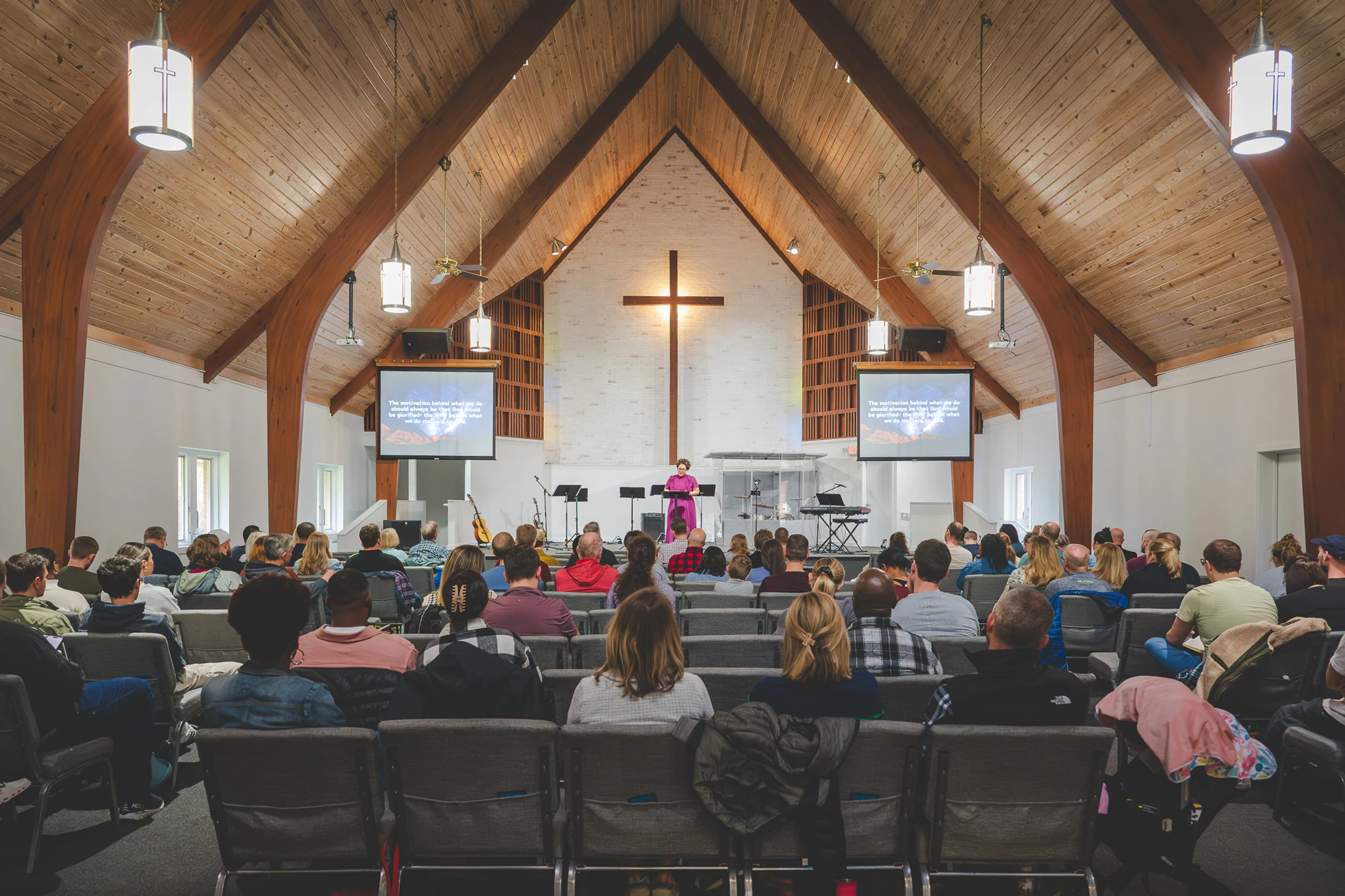
Join us this Sunday at 10:00 a.m. for our morning worship!

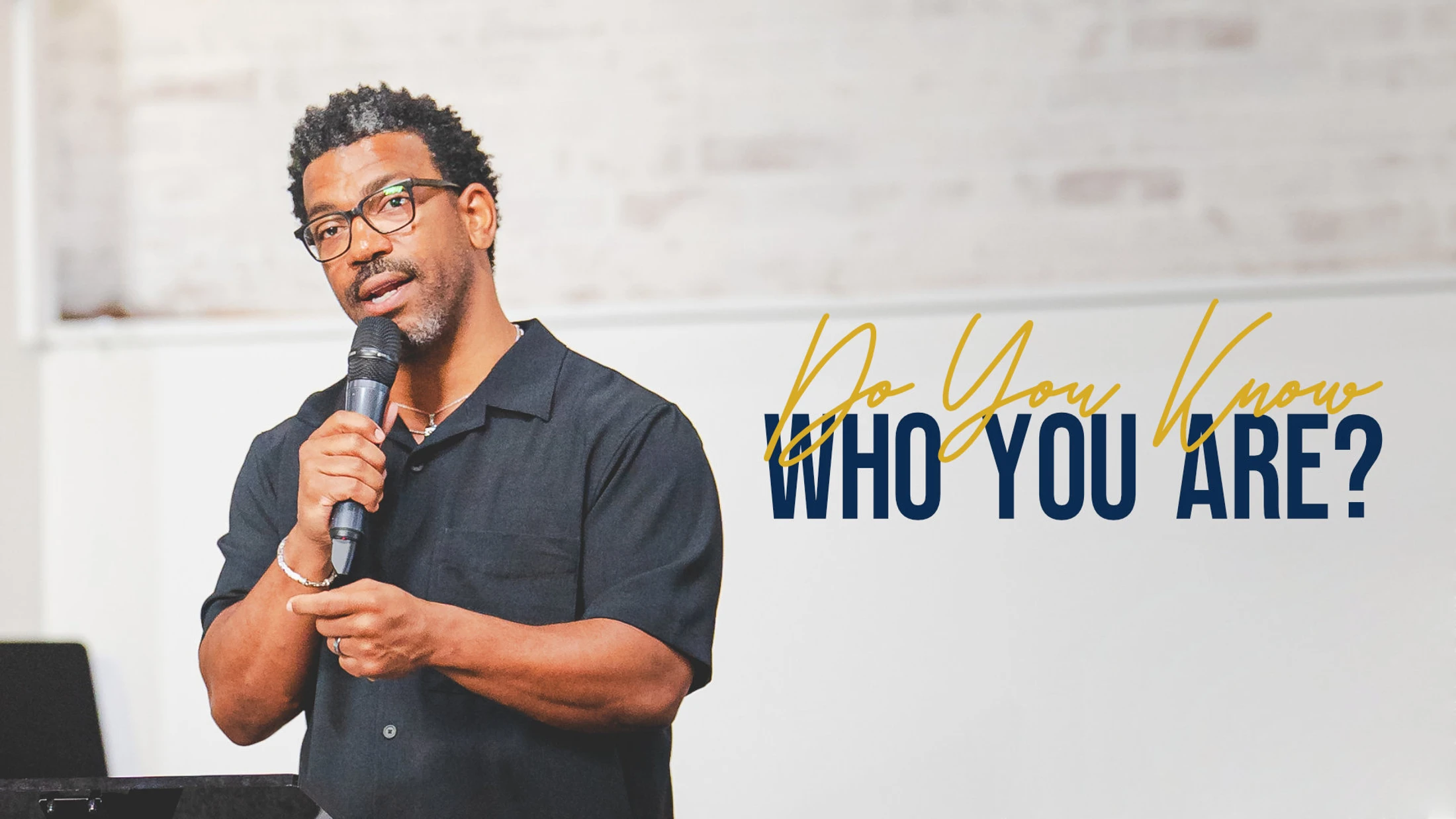
Before you built your resume. Before you had your best year or your worst one. Before you knew what you believed. Somebody already answered the question you're still asking: do you know who you are?
On a baptism Sunday, Pastor Rich Johnson steps back from the waterline and asks what's actually happening underneath the surface. Reading from John 1, he traces three words that hold the answer together — and what happens when we try to build an identity on just one or two of them.
In this message you'll learn:
This is for anyone who has believed all the right things about God and still doesn't feel like they belong to him. It's for anyone still trying to earn a love that was already spoken over them before they could do anything to deserve — or lose — it. Wherever you are in the water, the voice hasn't stopped speaking.
📖 Scripture: John 1:29-34, Galatians 2:20, Romans 6
anytime we have this baptism service, I like to take the opportunity to remind us to remember our baptism. And in every baptism, underneath the water are the words that is asking this one question. This one question is asked of all of us. Do you know who you are? Do you know who you are? Not what you do for a living, n- not what keeps you up at night, not what kind of successful year you've had, not even what you believe in particular, but we'll get there.
Underneath all of that, underneath that water of baptism is God's answer to the deepest longing of our human hearts. Do we know who we are? And is that enough to hold us through all of life's twists and turns and ups and downs? Uh, I'll just give you the three words this morning. This is a brief sort of sermonette and meditation, so not the full, full deal, but these three words are hopefully gonna hold us today.
Belief, belo- belovedness, and belonging. Say that with me. Belief, belovedness, and belonging. We're gonna come back to each one. Let's read in John 1:29-34 in the NIV Translation together. "The next day, John saw Jesus coming toward him and said, 'Look, the Lamb of God, who takes away the sin of the world. This is the one I meant when I said, "A man who comes after me has surpassed me because he was before me."
I myself did not know him, but the reason I came baptizing with water was that he might be revealed to Israel.' Then John gave this testimony: 'I saw the Spirit come down from heaven as a dove and remain on him.'" And I myself did not know him, but the one who sent me to baptize with water told me, "The man on whom you see the Spirit come down and remain is the one who will baptize with the Holy Spirit."
I have seen and I testify that this is God's Chosen One. This is the word of God. The people said, "Thanks be to God." Let this word fill our minds, flow from our mouths, and free our hearts to live as the beloved children of God. So three words about baptism underneath these waters. The first is belief, baptism as affirmation.
When you look back at that John chapter one, the scene is John the Baptizer. He got that name for being the one who baptized people in the water. He's standing at the River Jordan, and along in the crowd, uh, maybe it's like a line of people getting baptized, and the next face he looks up and he sees, he's like, "Wait a minute.
The Lamb of God? The one who comes to take away the sin of the world, he is coming to be baptized?" And he knew that this was the one to look for, because the Spirit would descend on that beloved one like a dove and confirm that he's God's Chosen One. I want you to notice what's happening here. John the Baptizer isn't performing a, a mere ritual to make something true.
He's testifying with his words. He's testifying out loud and in public, and he's testifying with his own body, standing in those waters, to something that he already knew to be true but was yet to be revealed, that baptism is an affirmation of your belief. You, you don't go down in the water and then believe.
You believe and, and then go down, but that belief is actually something that is revealed over time, that none of us, regardless of our age, whether we remember when we were, uh, or, or seen pictures when we were infants being baptized or adults being baptized, truly know the mystery of what's taking place in this water.
That in the mystery of this water, there is something that, uh, about believing that, that is not about just having all the answers figured out, but it's about the revelation of what we get to see in the person of Jesus Christ over time. You see that word baptize comes from, uh, a, a Greek, uh, word, uh, baptizo, and it simply means to wash, to plunge, to soak.
In the first century, they would say that you baptize that cucumber in the vinegar. You soaked it in the vinegar and made it a pickle, okay? And any time we were soaking things and washing them, it was a means of being cleansed, and so John the Baptizer, uh, who takes this practice of being washed and cleansed, is not saying you're being washed and cleansed of everything that has happened to you, but you are washed and cleansed into a new way of believing.
I, I tell you this not because there's something tricky in the water, but baptism is about a body as well as it is about a belief. A body that goes down in the water, that doesn't determine what the belief means or represents, but that it is bestowed upon you. There's a moment when you go down into this water where you're not breathing for just a moment, where you have to let go of control.
You have to let go, uh, uh, of, uh, uh, holding on and trust that the one who took you down is going to bring you back up. And when you come back up, you come back in a physically new, dynamic way. In a few moments, those who are being baptized will be asked four questions about the Trinity. They'll be asked questions about the life, death, and resurrection of Jesus.
They'll be asked about forgiveness and their commitment to continue in this faith. And these questions aren't, uh, a pass or fail to doctrine. They're an invitation to say out loud with your whole body in the water what you already believe in your heart. You see, baptism doesn't manufacture faith, nor does it prove it.
Baptism is the affirmation of what is happening inside of you that will be consistently revealed as you continue to walk in the faith. So belief alone isn't the whole story of baptism. You can believe all of the right things about God and still not know in your soul that you belong to Him. You can believe and you can quote scripture and still wrestle with the idea that you belong to a savior who will never leave you.
That's the danger of stopping at belief. That's the danger of just holding on to doctrine as the central thing without the experience of the baptism waters that affirms this second thing, belovedness, baptism as your core identity When Jesus himself was baptized, before he had preached a single sermon, I love this, before he healed anybody, before he preached the Kingdom of God, before he performed any miracle, he hears the voice from heaven say, "This is my Son, whom I love."
It is a word of belovedness that is spoken over him before he performs anything, before he accomplishes anything, before he has earned anything. And the, the voice from heaven, I believe, is something that Jesus heard every time you read in the Gospels that he went away to a private place to go pray. He was hearing these words spoken over him, "You are my Son, whom I love.
You are my Son, whom I love." Uh, some of you know one of my, uh, favorite authors is Henri Nouwen, a writer and Catholic priest, and, uh, a, a book that I read every year and I've handed out probably a dozen times is the book Life of the Beloved. It's where he talks about how he spent much of his life wrestling with this idea of be- of belovedness, and how it became central to him in his life.
That replaced the central struggle of his human life that was about doubt, that was about achievement, that was about notoriety and recognition. He heard the words that Jesus heard at his baptism, "You are my Son, whom I love." Not a belovedness that i- is given to you because you're impressive, and he had an impressive resume.
Not because of something that you earned, and he had already written several, several books by the time he wrote this one. But it was in that simple way that a child receives their belovedness before they have done a single thing to deserve it or undeserve it. And Nouwen spent, uh, years feeling desperate for approval and achievement and applause, and slowly became to understand that all of this striving was really just a search for truth spoken over him from the very beginning The mystics also have something to say to us.
In the contemplative tradition, one thread that keeps showing up in the mystics is union with God isn't something that you achieve, it is something you recognize. That the core meaning of your life, the por- the, the core purpose of your life is to obtain this union with God, but it is not something that you obtain, it's something that you already receive and know that God's got all of you and you've got all of God.
And that simple recognition is something that we're all invited to in the baptism. What, what happens in those waters is that it gives you this reminder that you are the beloved child of God. Every time I, I talk about baptism, you know I gotta show my baptism picture. Some of y'all already know. I was six years old when I wanted to be baptized, and my mom said, "Uh-uh, you're too young.
You're too young." In the Baptist Church tradition, the Baptist pastor would get up in the front at the end of, uh, the sermon. Every sermon ended with Jesus on the cross, in the grave, and then resurrected, by the way. And then would come down and ask, "Is there anyone who wants to be saved?" And he would walk down the center aisle looking to the left and the right, and I would say to my mom, "I wanna be baptized like my daddy was baptized."
I got to see my father baptized in his later years of life. And so finally a year later, when I was seven, my mom gave in and said, "Okay, you can go ahead and be baptized." W- w- the one of the reasons why I keep these pictures, uh, in front of me, and they, they sit, uh, in my office and at my home, i- is because when I was in college, I was wrestling with my relationship with Jesus.
I wasn't sure whether it was worth it. I saw other people, uh, experience whatever, uh, faithfulness and success looked like, and it seemed like I was failing around every corner. I, I, I felt like there was something I had lost, Noah, and I was struggling to get it back. Thankfully, I got a good relationship with my dad.
I talked to him about it, and a couple of weeks later, he just sent these two pictures in the mail. No lengthy letter, just a couple of verses of scripture. Galatians 2:20 was one of them. "I am crucified with Christ. Nevertheless, it's not I who live, but Christ who lives in me." And he reminded me that I was new in Christ.
This is your baptism. You belong to God. I didn't need my questions answered. I didn't need my problems fixed. I needed to be reminded of who I already was and what I already had been given. I have been given this belovedness, that God had not left me nor forsaken me and would not ever in the future.
Belief and belovedness together, they aren't the whole picture, though. There's one more, and that is belonging. Belonging is baptism as kinship. Belonging is baptism as kinship. Those of us who study family systems know that every single one of us is shaped long before we ever choose anything by the family we were born into.
We didn't get to choose the place, the people, the time in which we were born. We were given those patterns, and we were given those, uh, roles in our lives, and we were assigned without even being asked. Sometimes that worked out great, and other times it resulted in wounding that we're still trying to heal from.
And all family systems thinkers call this our family of origin. It, it forms us at a level far below the surface in our conscious. We don't get to opt out of being shaped by our family. Our family is what it is. But we can become aware of how that impacts us. We can become aware of how it impacts our relationship with God, how it relat- relates to our, our, impacts our relationships with one another, and even impacts our relationship with ourselves.
And in this baptism, we are reminded that we are given a new family. A new family with a new pattern, a new family with new roles, a new family with new structures, and new systems, and new operations, and in a way that is to lead us to greater healing. The Apostle Paul said it this way, "Don't you know that all of us who were baptized into Christ Jesus were baptized into his death?
We were therefore buried with him through baptism into death in order that just as Christ was raised from the dead through the glory of the Father, we too may have new life." Notice the language, that you are baptized not just into Christ, but you are baptized into a family. Over and over again, he uses the language of us and we, not just you.
Not just you, not just you. We are baptized together into death. We are raised together into new life. We are raised together as a new body. In fact, one of the earliest confessions of the church at baptism was, "I no longer belong to me, but I belong to we." There was a confession that you have been given a new family with new patterns of grace instead of patterns of performance and shame.
And you've been given no longer to the product of the circumstances that you were raised in, but you're now a member of the new family. This doesn't erase what happened to you, but it gives you something to be reshaped and reformed by. And all these three are held together, beloved. Be- belief without belovedness just turns into performance.
Just trying to check another thing off the list, another, uh... Y- you go to any other church, and they give you a list of disciplines to check off, right? And so you gotta believe this and believe this and believe this, and if you believe all of those things, then you will be accepted, then you can belong, then you can receive what love looks like.
Belovedness without belonging just turns into isolation. That God didn't just come to save you, God came to save us, and that what Jesus did is not just for you, He did it for us, and that there's an intentionality with who we are becoming, not for the sake of ourselves and our own salvation, but for the sake of the world.
That when you are baptized into this family, you are baptized into a new mission, not one that is just yours alone, but ours together. And belonging without belief just kinda curdles up into social religion. We just become socialized by identifying with what belonging looks like. No differentiation, no, n- n- no diversity, uh, n- no relationship with those who are not like you.
Just simply what to believe, how to believe it, what to practice, and how to practice it. And the water baptism holds all of these together. I, I invite these young people, these three young people who will be baptized today, to know this question, the answer to this question: Do you know who you are? Do you know who you are, Haven?
Do you know who you are, Caleb? Do you know who you are, Titus? Do you know that you belong to the one who bestowed belovedness onto you before you had to even say it out loud? That it was given to you. Do you know that you are now my sister in Christ, my brother in Christ? That defies age, that defies family ties and relationship.
That we are now family together in this beloved community. Do you understand and know that wherever you go, this voice from heaven will be with you? If you're already baptized, did you know that? Did you realize how deep it was, Vanessa, that you could belong and be beloved even before you had all of the words to believe?
I invite you today, Kevin, to understand and know that these waters are what have held you together through all of your ups and downs and your trials, and it will hold you together for the future. There's a song that goes with baptism. Anybody know what it is? It's called Kinds of Songs. Wade in the water.
Wade in the water, children. Wade in the water. God's gonna trouble the water. Sing it again. Wade in the waters. Wade in the
water, children. Wade in the
water. God's gonna trouble the water. Now, do you know where it comes from? It's an old Negro spiritual. Predates The Civil War, the Emancipation Proclamation. There's all kinds of stories. Nobody knows the origin. It was just passed down orally. There wasn't a written record of where it started. It was sung in worship communities among African Americans who were held as slaves, told that they didn't belong, told that they weren't loved, told that there wasn't a belief that would make them worthy to be anything other than a slave.
They didn't just sing this song in, in worship services, though. The, the story goes that it was also sung as those African Americans who were held as slaves made their escape from plantations, shackles, and chains up north. It was a sign to get in the water because the hound dogs were coming to hunt for them, and the water would hide their scent so that they couldn't be found.
It's said and reported that Moses, Harriet Tubman Moses, used it as a sign and a signal to give to those who were escaping from slavery to remind them of this double entendre that you are saved by the good grace and the love of God, and that in these waters as you escape, you are receiving your physical liberation as well.
Y'all, when y'all sing that song, Wade in the Water, it wasn't just something that was passed down in, in churches with no historical context. It was passed down from church to church that now transcends color and race and denomination as a sign and a reminder that baptism in these waters points to our collective unification and our collective liberation, that we can be free together.
When we are baptized in this water, we're reminded that we belong to God's racially, culturally, ethnically diverse family, and that we will work towards each other's liberation until the Kingdom of God comes in full. Would you bow with me for just a moment?
Wade in the waters. Wade in the water, children. Wade in the water. God's gonna trouble
the water. Went down to that Jordan stream. God's gonna trouble the water. He washed my soul and made me clean. God's gonna trouble the waters. Wade in the water.
Wade in the water,
children. Wade in the water.
God's gonna trouble the water. I stepped in the water and the water was cold. God's gonna trouble the
water. It chilled my body but not my soul. God's gonna trouble the water.
Wade in the water.
Wade in the water, children. Wade in the water. God's gonna trouble the wa- One more time. Wade. Wade in the
waters. Wade in the water, children. Wade, come on now, in the water. God's gonna trouble the wa- God's gonna trouble. God's gonna trouble the wa- Last time. God's gonna trouble the water.
Amen