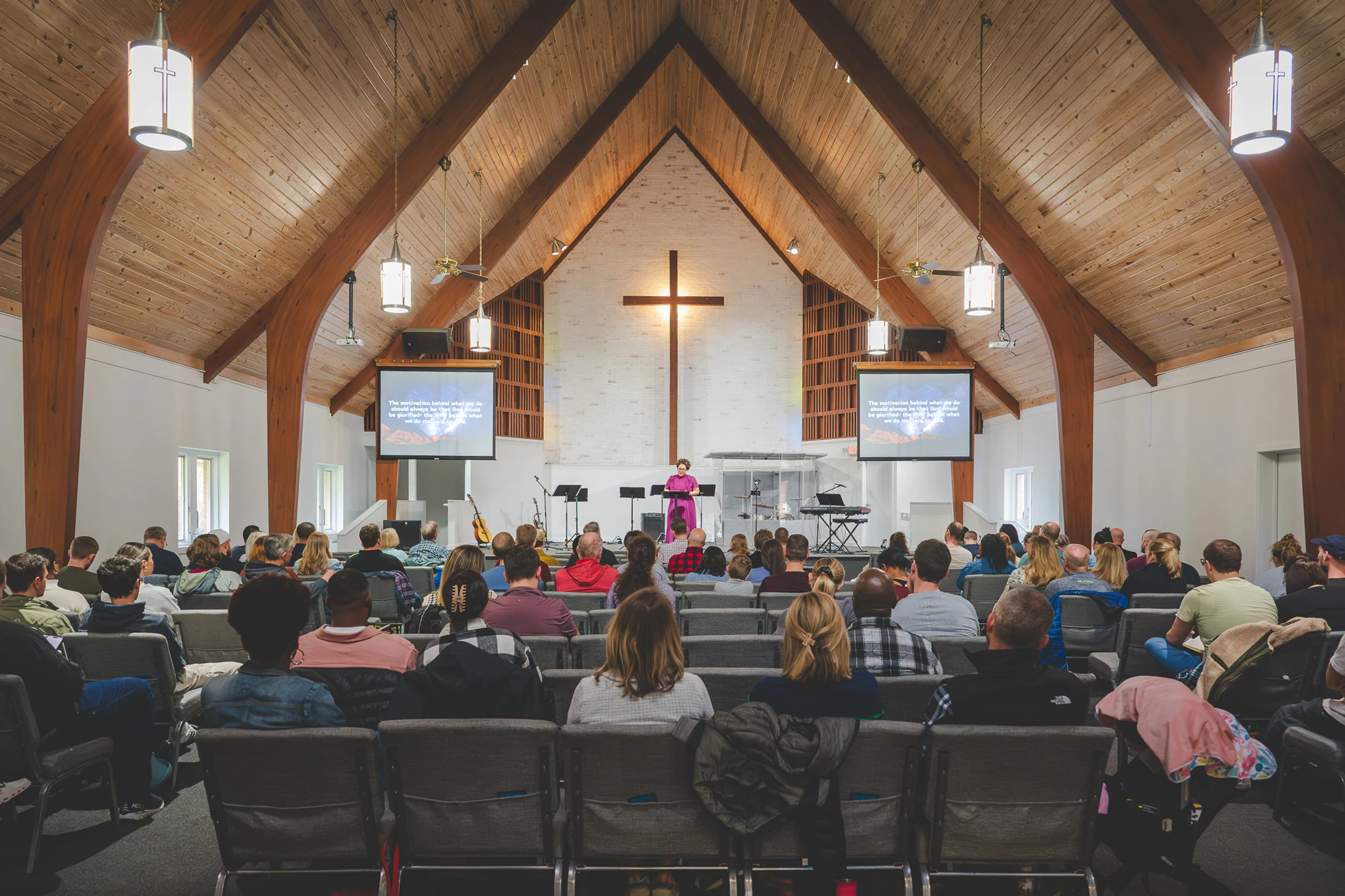
We can't wait to see you
Join us this Sunday at 10:00 a.m. for our morning worship!

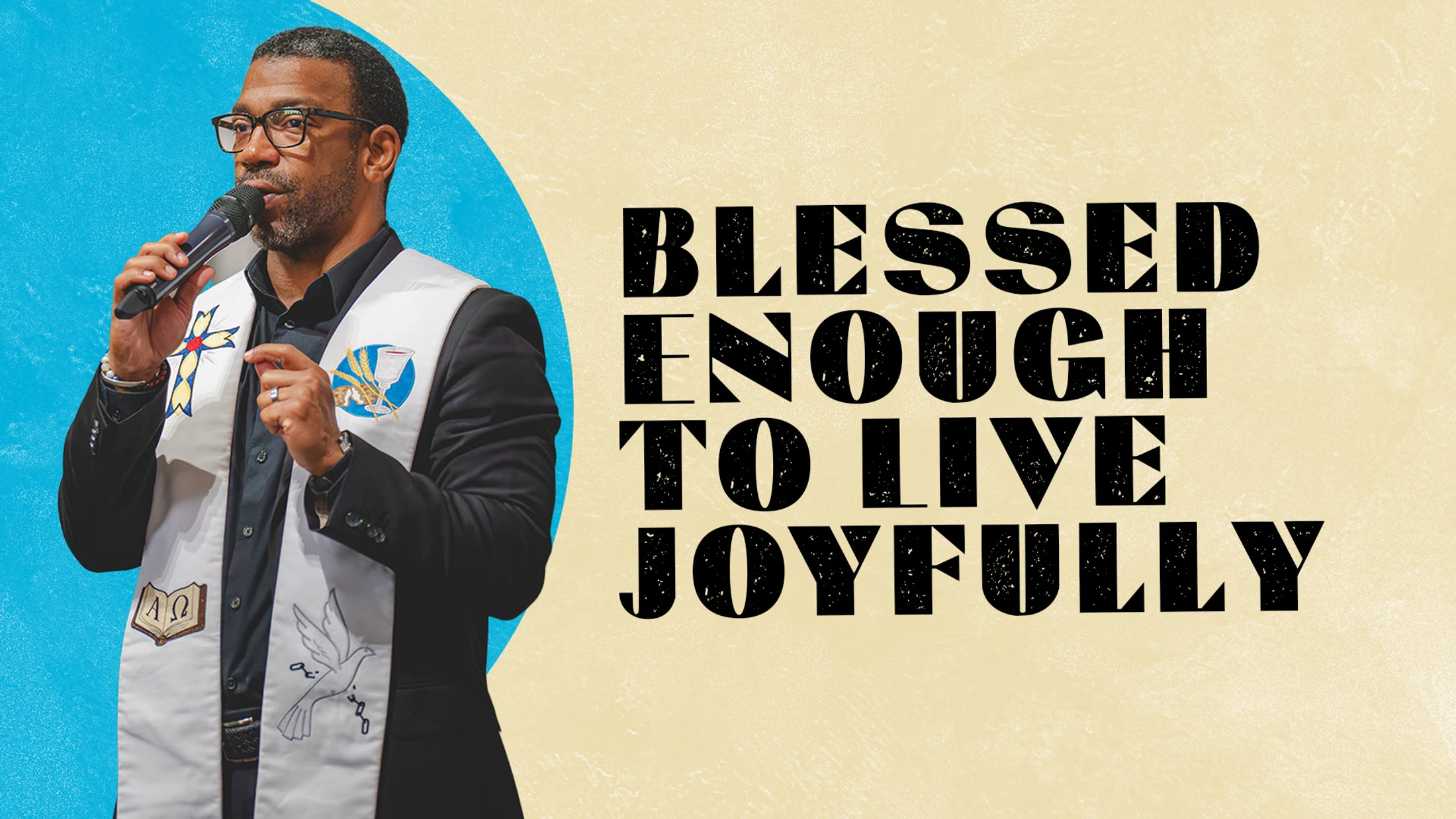
It's the perfect setup because of our new sermon series today that begins just three parts called Dianu, which is about finances, about money. There's two things you shouldn't talk about in church, right? You shouldn't talk about politics and you shouldn't talk about money. Well, we just finished the politics sermon series on Daniel, so now let's talk about money, right? It's a great, a great follow up because we live in a culture that runs on not enough, right? There is never enough. Our phones tell us we don't have enough and they whisper there's more. Our jobs demand more. And even when we slightly get ahead, there's this anxious voice that says, careful, it could all go away. Just this past week, my financial advisor gave me a text message like, hey, we gotta talk. Your investment's doing great. I want to move some money around. I'm like, okay, whatever. So I take, you know, several days to get back to him. We got to move fast, you know, like, okay, man, okay, what's going on? He's like, man, it's doing great. It's yielded whatever over the last quarter. And so I want to, you know, get more aggressive, you know, with your permission. I was like, just give me the bottom line. What does this mean? He's like, it means you can retire when you're 85. Now I'm like, praise God. Let's, let's do it. Let's go before it goes away. I see this consistently, even in, like pastoral conversations with people who are doing well financially and yet still feel broke or who have their provisions in their cupboards, and yet, and still they are worried about losing. It's a narrative that runs in our minds regardless of what our income and expenses are, that we don't have enough, we don't have enough time, we don't have enough money, we don't have enough, we don't have enough energy. And sometimes we feel like we don't have enough faith. This all comes from a scarcity mindset, that lie that we will never have enough. And it keeps us in a posture of anxiety, it keeps us guarded, it keeps our relationships to focus on transaction. What you can get for them and what you can give to, you know, somebody and what they can give to you. And then there's this other side of this distortion that creates fear. It's the self sufficiency myth that you can take care of yourself. It's the whisper of the serpent in the garden who said, you can be like God, knowing good and evil, needing no one and Let me give you the formula of what the world creates in this posture. It is fear plus ownership times control that builds up anxiety. And neither that fear or that ownership reflect the economy and the kingdom of God. It is just the world's formula to say, hold on, hold on to it or you'll lose it. Or when your finance person calls you and you get excited, trusting more in the numbers than you do in the God who provides every insurance that we have, every insurance that we have from the world reinforces this message of fear plus ownership times control equals anxiety. But Jesus invites us into another way. And the other way is the Diana. It means it would have been enough. It would have been enough. And we pray. This Diana prayer oftentimes during our contemplative moment, it's the. It's an ancient Hebrew word. During the Passover, Jewish families would get together and they would recite the dayanu liturgy, recounting God's acts of deliverance. God, if you had just brought us out of Egypt, it would have been enough. God, if you had just brought us out of Egypt and parted the Red Sea, it would have been enough. God, if you would have delivered us from Egypt and pardoned the Red Sea and put us on dry land and drowned our enemies, it would have been enough. It would have been enough. It would have been enough. And it builds on top of one another so that one notices the goodness and kindness of God. And dayanu is not about denying your need or ignoring the desires of your heart and the real practical needs that you have on a day to day basis. It's not toxic positivity. It is a declaration of gratitude that is rooted in God's covenant faithfulness. Israel still faced threats, they still faced opposition. They still faced the reality of where they were going to get their food and how they were going to be provided for. So this dayanu prayer was a counter attack against the memory loss of how God has provided. It was the counter attack against the fear that God won't come through or provide for us in some other kind of way. It was the liturgy against amnesia of not remembering that God is good and God cares and God provides. So here's the new equation. If I'm going to continue to be cheesy, let me give you another cheesy equation. This is the main idea. Gratitude plus stewardship times generosity equals joy. Gratitude plus stewardship times generosity equals joy. It says, God, what you've already done is more than enough. And that's where we begin. Not with anxiety or scarcity, but the awareness of God's blessing. The title for the message today is Blessed enough to Live joyfully. Blessed enough to live joyfully. Let's pray. God, we come before you this morning to talk about finances. Not from fear, not from scarcity control God, but from something else, from someplace else. Would you open our ears to hear, speak, Lord, to our hearts that we might trust in you all the more, our provider. Christ's name we pray. Amen. So that first part of the equation is gratitude. And here's my definition for gratitude, seeing what's already there. Gratitude is seeing what's already there, what's right there already. Psalm 116, verse 12 says, what shall I return to the Lord for all his goodness to me? I will lift up the cup of salvation and I will call on the name of the Lord. This psalmist has been rescued from death and asked the question, for a person who's been rescued from death, how can I repay God? No, he didn't say, how can I repay God? He said, how can I return to the Lord for all of his goodness? And the difference may be subtle. You may have grown up in a church that talked about, you know, you got to give back to God, you got to give back to God, and then. And you got to get back to God what God, you know, already owes and. Or already owns and what you owe. And then it kind of builds this transactional mindset in your relationship with God that what God gives to you, you got to give back to God so that you can get more. And so you just, you just. This is now built in a relationship, John, of transaction that you give to God so that you can get more. The psalmist is not talking about repayment. That's bad theology. He's talking about return. That is a response. He lifts up the cup of salvation. He. He understands that it's not something material that he can give back to God. What he can give to God is his very life. My life belongs to you. And it is an act of gratitude for what God has done. Karl Barth, the theologian, says, grace and gratitude belong together like heaven and earth, grace and gratitude. They belong together like heaven and earth. And grace evokes gratitude, like the voice of an echo. That's very poetic. It evokes gratitude like the voice of an echo. Echo, echo, echo. When God shares God's goodness to you, the response, the return, is gratitude. And it is a resistance against the false gospel of scarcity. The false gospel of scarcity says, you don't have enough gratitude, says, I've got more than enough. And Jesus said, you, heavenly Father already knows what you need. So when the scarcity mindset says, I can't have, I'm not gonna get it. The gratitude mindset says, the Lord already knows what I need, and the Lord is gonna treat me better than I can treat myself. And that word know means intimate awareness. God is intimately aware and attuned into my heart that he knows what I need before I even make the request. God just doesn't know about you. God knows about your needs. So when you notice that anxiety start to build up about money, do you check your bank account to see what the numbers are there for, or do you turn to God in prayer? We've been trained to find safety in the numbers rather than safety and security in the arms of God. Imagine your life as a cup, and some days you see your cup as half empty, and on the other days your cup is half full. It's about the same thing, right? But it's the mindset and how you look at it. It's half empty where it's half full. The psalmist reminds us that the cup isn't ours to fill, it is God's to fill for us. And God fills our cup with every breath that we take. Every breath you take, every move you make, you singing it, girl. God is watching you. God fills your cup with breath. God fills your cup with friendship. God fills your cup with occupation and vocation. God fills your cup with food. God fills your cup with church community. God fills your cup, fills your cup, fills your cup. And if we don't pay attention to how God's already filled it, we'll see it as half empty rather than half full. And gratitude, beloved, is a practice that must be cultivated. Earlier this year, 2025 got the family together. It's like, listen, we need to build a habit here of gratitude. So we got us a gratitude jar. Gratitude jar 2025. Gratitude 2025. You see that? Y' all didn't see it over here. Y' all need to come over here. Gratitude jar 2025. And we don't feel it perfectly. You know, it's not a whole lot of cars like dag did the year just start? I mean do y' all don't have is already November and y' all got like more a lot of cards, you know, to fill up in there. And so go ahead and open that up for me. So I open that up and let's see, I don't know what car is going to be in there. Lord help me, Jesus. Let's See? All right, we're going to take the first one on the top. Okay. And so I noticed, like, the member of our family who is like, so on. This is guess who? Korah. Y' all know her? My daughter Cora. She is filled with empathy. So one morning I got up and she was already at the kitchen table. I'm thinking she's doing some homework. What you working on, baby? You doing some math? You know, some. She's like, no, I'm doing my gratitude card. Like, oh, okay. What it say? It says, I am grateful for my teammates helping me at the soccer game when I got pushed down. Me and Shiloh were out of town and she got roughed up on the last second of the play. I mean, when I saw the video, back to the cartoon, when I got pushed down for checking up on me. I'm also grateful for Mimi for making sure I was okay and bringing me Ice at 4 o' clock in the morning. So there she is. You know, I'm not. I'm only. I don't know what else is in there. Go ahead and put the top back on aside. The point is, we are cultivating gratitude as a family. And that when we see one person express gratitude for what God has done in their life, it inspires the other members of the family to express gratitude as well. What has God done in your life? It reframes the reality of the jar being half empty to being half full. Because we see the goodness of God. Gratitude is seeing what we already have. That's the first move in Dianu. Gratitude. And then we add to that gratitude, stewardship. And my definition for stewardship today is trusting God with what we have. Gratitude is seeing what you have. Stewardship is trusting God with what you have. So this is what I got. This is what I got, Lord. I'm going to entrust it to you. Deuteronomy, chapter 8. Moses is leading the children of Israel, and they've been doing well. This is a good time of life. The Israelites are doing well. They're prospering. They have prospered. Well, God has got his hand on them, and they feeling good about themselves. My grandma would say they were smelling themselves. You know what it means to smell yourself? I mean, like, I smell good. Ah, yeah, you smell it yourself. That means you think you tough. You think you bad. So Moses says, hey, listen, you may say to yourself, my power and strength of my hands have produced this wealth. But remember the Lord your God, for it is he who gives you the ability to produce the wealth in this Sense. Stewardship is a partnership. It is a partnership between God and you, the individual. You didn't make the wealth on your own. God provided the resources for you, and you took those resources and you did something with it. Praise God. That is giving honor to whom honor is due, but also recognizing that God has given you his gift and a skill and an ability to do something with it. And stewardship is a gratitude that is put into action, is when we take inventory of what God has placed in our care, our time, our income, our influence, our skills. And we say, lord, this belongs to you. Show me how to use it. Show me how to use this gift of song. Show me how to use this gift of athletic skill and ability. Show me how to use this gift of engineering. Show me how to use this gift of creative painting talent and cooking and all that good stuff y' all doing out here in the world. Show me, Lord, how to use this. Because this is yours. And this is where many people get stuck. They get stuck because they see stewardship as management rather than formation. And in the old way, or maybe that's the old way, just kind of the way people think about, you know, in their relationship with God. Begin with that transactional kind of relationship that God has given you something just to manage, rather something that is forming in you. God's giving you those gifts and skills that. And they are forming something in you that can be formed for the good of the world. Are you stewarding your gift? Well, beloved? Are you stewarding your gift? Well, I mean, I come from the mindset, the church mindset, to whom much is given, much is expected, required, demanded, you know? Right. And if you don't use it, God will take it away. And what that does is it builds fear in your mind and in your behavior about how to treat the talent, the time, and the treasure that God has entrusted to you. And God is not trying to build fear into you, beloved. He's trying to build faith. And so stewardship is a spiritual practice. God doesn't need your money. Here's another scripture. He owns the cattle. Where? Come on. The first service said, the cattle on a thousand hills. What is the psalmist saying? He's saying he owns it all. This is not God trying to get something from you. It's God trying to do something for you, trying to release you, liberate you from the fear, the scarcity mindset, the possessive mindset that is overwhelming and overtaking from Genesis onward. God entrusts humanity with a great responsibility. Take care of this creation. Take care of one Another, be creative in what you do. God grew the trees, but people built the houses, right? And God gives us the resources. And oftentimes we, we live with that lack and scarcity mindset, not realizing what we already have in our possession. So imagine, imagine sitting at the kitchen table at the end of the month or first of the month whenever it is that you do your bills or whenever it is your spouse does your bills, huh? I mean, there are times when, you know, Shala, who is the financier in our house, is taking care of the bills. And I am convicted because to carry the weight of managing the finances is a heavy burden. And if you are in a marriage relationship in particular, God gave you one another to share the burden. And that doesn't mean one person make the money and the other person deals with how to spend is together. So if there's nothing else that I can do, I say, lord, what is it that I can do to support Shala so she doesn't feel like she's carrying this burden alone. It may just be sitting right next to her while she does it until she says, could you please leave so I can focus? Or it could be, hey, can I start with a prayer and just pray for God's wisdom and like, pray that we don't think about this out of scarcity because I know we got to move money around this month in order to obey this and do that and wait on this and wait on that. Can we ask God for some creativity that God might give us an open door somewhere? Can I just pray and thank God for what the Lord has already given and provided for us that we get to do this? You see, we oftentimes start our day rather than thinking about, lord, this is what you provided. We think, lord, I got so many needs. And Dallas Willard said giving is training in trust. That's why this is a heart thing. That's why this is a spiritual practice. That's why when we give, it is a training act of trusting in the Lord. And it doesn't matter how big or small, big or small you give, it is all an act of trusting in the Lord. And when you give, it is the spiritual act of dethroning money, trying to take control of your heart and reinstating God as our security. Every time you give, Jesus says, where your treasure is, there your heart will be also. I'm going to rename the church Sanctuary Bible Church. Quote the Bible, where your treasure is, there your heart is also. And it also challenges this time of the year when we all get sick you know, when we get sick by affluenza, we all get sick. Around this time, it was called Affluenza, the mindset of entitlement and ownership, that we have to have more, that we have to get more, that we got to make more before the end of the year. We are somebody who's already done with their Christmas shopping. Already done. I know. I heard from somebody in the first service. Already done. Wow. Great. Godly stewardship challenges that it asks these questions, what do we actually need to be content? Don't write these down. Don't write these down. I don't want you to actually have to answer any of them. Okay. What do we actually need to be content? Are we willing to share what we already have? Can we live on less so others have more? What can we use or share instead of owning ourselves? These questions helped us to reorient our minds around what we have already and how it can be a blessing to others. And it builds up into generosity. In the book of Exodus, there's a story where they were building a tabernacle and Moses said, hey, bring your stuff so that we can build this tabernacle. And. And the generosity of the community was so big that Moses had to say this. Stop giving. We have enough. Now, can you imagine a pastor coming to the church, standing in the pulpit and saying, y', all, will y' all please stop giving? We have enough. That is the kind of generosity that builds and grows. That doesn't just stop with one person. It infects a community. So several years ago, we started a scholarship program called the James Preston Poindexter Scholarship, named after an African American pastor and educator right here in the Columbus community. And that scholarship goes to students who are in under resourced areas like this Linden community. And it's targeted towards the zip code as well as a couple of high schools for students of color who endeavor to go to historically black colleges. And when we started the fund, over the course of the years, we've amassed over $200,000 in this fund to gift to students. And we have six students who are in college right now because of your generosity. And we give from our hearts to be a blessing. Our first recipient, she graduates from Alabama State in the spring. And we praying that she graduates valedictorian because that girl is bad. And she sends me updates all the time. I ask her how she's doing, how can I pray for you? What's going on in school? And she sent me a video. I was in the news the other day because of this volunteer program I started at this school. And her hope is to come back to the Linden community and to be a teacher. Maybe she'll be at Harambe. I'll try to get her Mango. I'll try to get her to come to Harambe. Your generosity was infectious towards one another, and it built up a resource that was a blessing to now six students who are in college. Stewardship turns money from a wall of worry into a tool of worship, and it multiplies into generosity. My definition for generosity is this the joyful act of giving. Why is it joyful? Because it is an act of the heart. And this is probably one of the most often quoted scriptures about giving right here. You probably already know it. Second Corinthians, chapter 9. Whoever sows sparingly will also reap sparingly. And whoever sows generously will also reap generously. Each of you should give what you have decided in your heart to give, not reluctantly or under compulsion. For God loves a cheerful giver. Let's be honest for a second. This passage has been abused by people who stand in this position right here in the church. And I'm not just talking about those who are labeled prosperity preachers. I'm talking about anyone who uses this scripture to twist it into some kind of personal prophet or some kind of transactional relationship with God. Because that's how one could read it and interpret it. You sow sparingly, you go reap sparingly. Is it a principle? Yes. Is it one where God is saying, if you don't do this, I ain't going to do this? No. That's not the way God lives and works. We know too many stories of God's generosity for those who don't deserve it, who haven't done anything for God. And so pastors will use this to try to twist and pull things out of you. I know because I was a part of a church at one point where the pastor would get up in the pulpit and says, the Lord wants to bless you. And if you want to receive God's blessing, come on up here and give. We're going to start with $500. Who got $500? Come on up here and give. And this is when I was in college and I was looking like, lord, do I got $500 to give? I pray he go down to 50 today because I got $50. I ain't got 500, but I got 50. And if he get to that 50, I was up out of my seat and I was like, I'm gonna give. And the heart was there, but the manipulation was there, too. And some of us, the reason why we have a hard time talking about finances in the church is because of our upbringing, because of our church experience, because somebody who's twisted the relationship of finances into a transactional relationship with God. And so therefore, we don't want to talk about money. In fact, the reaction that we had when we first started sanctuary was, let's not talk about money because of how much has been abused. How often have you heard us talk about money here at sanctuary? Nothing. Somebody said, not enough. Some of y' all don't even know how to give. How do we give to this church? They didn't pass a bucket. They didn't flash anything. You know, the pastor didn't call for a line or anything. I don't even know how to give. And that was intentional because we didn't want to offend. But by not offending, we've also subtly not discipled the congregation and community well and how to relate to finances and resources. That's on us. That's on me. I repent for not teaching, for not equipping, for not speaking well enough. I trusted so much in God. I believe, like, who was that missionary? I'm off scripture. Who was that missionary? Some missionary who never. Hudson Taylor. Was he the one that never raised any money at all? And God, that the Lord just provided for him? All right, that's not who I'm thinking about, but, yes, that's him, too. There was somebody else he built, like, orphanages or something like that. Hudson Taylor. Michael, I don't need your history lesson right now. Thank you very much. Let's go with Hudson Taylor. So, you know, I was like, all right, Lord, if you did it for Hudson Taylor, you can do it for me. George Mueller, that's the guy I was thinking about. Thank you for using your iPhone, ChatGPT, or whatever it was. You did some good research there, John. Can God work that way? Yeah. Can God work other ways? Yes. Can God work in multiple ways? Yes. Yes, God can. The word cheerful here in Greek is hilario is where we get the word hilarious. And so what Paul is describing to this community, God loves a hilarious giver because God is hilarious. And God's character and the way God lavishes love lavishes attention on us. Paul here is speaking about the posture of our hearts. So whether you give 1% of your income or 5% or 10%, the intention is, how is your heart engaged in the act of giving? That's what generosity is. Generosity has to do with the heart. So, beloved, what I saw this past week was a threat again from the government that turned into some action of removing SNAP benefits from families who are in need. And I saw my friend Holly. She's. I think she's back in rck. Holly's been going around to all of these food pantries in the community right around the church to see who needs help, what kind of help, and how our church can get involved. And every day she just sending me, here's something about this one, here's something about this. And I think this will be a good partner, I think this will be a good partner and so forth. And Katie Shoblin, who works for an organization called BISA that helps to connect people with volunteer opportunities and donation and giving opportunities, said, hey, you know, can we share this with the church? I'm sharing it with my community group so that we can be of service to some folk. Or when somebody in the congregation who needed to be moved quickly because they were in a dangerous situation and had to literally start all over again with her, you know, infant child or toddler child, I put a request out and the church says, yes, we'll give to help her restart. And in 48 hours, you know, over $3,000 was given to help her restart her life. That is generosity, responding to the need in our community and in our church. Can I give you another example? This one was wild. This has nothing to do with money at all. Can you look out those windows right there? You see? Can you see out those windows? You see how clear the windows are? I mean, the week before they were quite foggy. I mean, like foggy foggy. I made that up. I don't even. You couldn't really see out of those windows or the windows in the prayer room or the cafe or down in the children's, you know, area. They were all foggy looking. So somebody emailed me and said, pastor Rich, I got time. Can I come in and clean the windows? And I said, what time can you be there? It was giving of his time. I've got time. He took an inventory of what God had given him. He expressed some gratitude. He said, I got time. I'm not a window cleaner, but I got time to clean windows. How can I be generous with my time in the community that I'm a part of, in the community that I love? So, beloved, this is not just about finances. It's about whatever resources that you have. That gratitude plus stewardship times generosity equals joy. So let me give you some reminders here. Where do you start. Start with gratitude. Nobody in here is doing it perfectly, but let's just make an attempt. Begin the week by naming three things you're thankful for. Begin the day. You know, we wake up in the morning sometimes and we say, oh, I gotta get out this bed. Like, wow, that's a scarcity mindset. Oh, I gotta go to this job that you're blessed to have. I gotta deal with these people in my church that I've been called to serve. We get out of bed with a scarcity mindset. What if we turn that into gratitude that God I am. I'm going to be thankful for what you have provided. Number two, stewardship that you do. Look at your time, your talent, your treasure. You ask God, where can I make space to say yes to your purposes? And then lastly, what is one tangible way to practice generosity? This month was one place, one time, one, one opportunity. Perhaps it is with the JPP scholarship or responding to those who are in need of food or some other ministry that meets a need right here in our community. Remember, God is not doing this to get something from you, but to do something for you as it shapes your heart into that hilarious giver, that equation. Gratitude plus stewardship plus times generosity equals joy. So I want to invite you to pray this day Anu prayer with me. Let me invite you to pray this Diana prayer. This is the first time I'm asking you to say anything. It's not the first time, but I'm asking you to say this with me today. All right? The day Inu prayer. Lord, if you had only given us breath this morning. Dayanu if you. If you had only given us food on our tables. Dianu if you had only removed our sins through Christ. But you have given us life, community, purpose and hope. Teach us to live with open hands and grateful hearts, to see your abundance in every corner of our lives and to echo your generosity with joy. In Jesus name, Amen. Amen. It would have been enough had God created the world and everything in it. But he didn't stop there. He gave the world his own flesh in the person of Jesus Christ. It would have been enough had he given Jesus Christ his own flesh to walk and dwell among us, to teach us what it means to live fully human and surrendered to God. But he died. He died so that we might live. It would have been enough if he just died. But he gave us his Holy Spirit to dwell with us, to remind us who we are and whose we are. This first Sunday of the month, we take communion. And most often I'M fully robed, but I just wanted to keep it simple this morning and just wear this stole as a reminder to me of the gratitude that I have for what God has entrusted to me, to be a good steward over what God has given me. Call me into this office of pastor and serving in this community as we prepare our hearts to take communion this morning. You could just put your hand up if you need one of those cups. If you didn't grab one coming in, I could use one. I forgot to grab one. As it would have been enough for God to love you, care for you. He went above and beyond that by giving his son Jesus, to you, to me, to us, to the world. And we remember that. We remember all that God has gifted and given to us when we take this bread, and we take this cup, this bread, it represents Christ's body. Said, I'm giving you. I'm giving you everything. I'm giving you my life, not as a transaction, but as an intimate invitation so that you would know I am with you. Will you take that bread out now? That night that Jesus met with his disciples, he took that bread and he broke it. He said, this is my body which is broken for you. Take and eat all of it. That would have been enough, but Jesus kept going. He took the cup and he said, this cup, this is my blood that is shed for you. And this is what it means. I love you and I give you the call to love one another. Take and drink all of it. You pause and pray with me for just a moment. God, we give you thanks for what you have given. We know we can't outgive you. And this is not a competition. This gratitude and stewardship and generosity is to be an expression of the good work that you are doing in us, so that we are made more like you and in your image. Lord, I do ask forgiveness for not taking more attentiveness to disciple this congregation through giving. I thank you, God, for the grace that you offer. You offer so much grace, inviting us to turn. Some of that, Lord God, came out of fear. Some of that came out of a desire to protect the congregation, Lord God, because I don't want them to think of you as transactional or a church that just asks for money. And yet you give us an opportunity again to learn afresh who you are and how to do this with integrity, with goodness in this community. Let it not just be about one person, though, God, let it be about our community, please. A community that responds to the goodness of the Lord in our everyday lives. In Jesus name we pray. Amen.