We can't wait to see you
Join us this Sunday at 10:00 a.m. for our morning worship!

We are the most informed generation in human history. And we are rarely astonished by anything.
We scroll past celebrity weddings, political drama, sports highlights, tragedy, and breathtaking images from space — all within a few seconds. We are constantly stimulated. But we are almost never genuinely awed.
And sometimes, if we're honest, church can feel like that too. We hear words like grace, glory, resurrection, and incarnation — and we barely pause. We've become so familiar with truths that should leave us speechless that we've quietly lost our wonder. And when we lose our wonder, we lose our ability to worship.
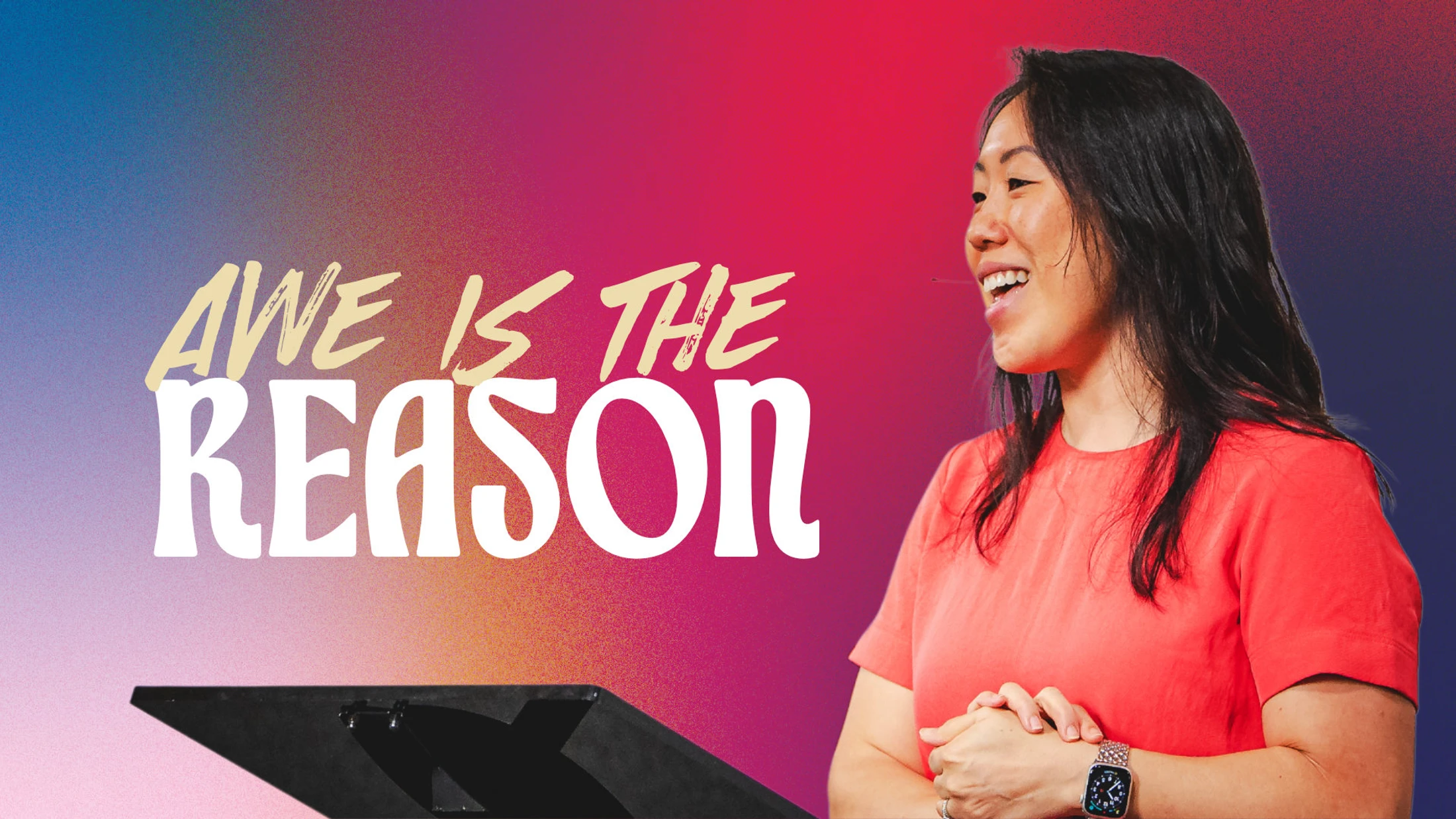
In this message, Tammy Eckhart takes us into Psalm 8 — one of the most breathtaking poems in all of Scripture — and invites us to slow down long enough to be amazed again. Moving like a camera lens from the vastness of God's glory to the intimacy of God's attention to a single human life, this psalm asks one of the greatest questions ever written: what are human beings that you are mindful of them?
The God who established the moon and the stars — whose glory is described as mere fingerwork — is mindful of you.
In this message you'll learn:
Whether you've lost your wonder somewhere along the way, feel too small for God to notice, or simply can't remember the last time your faith left you genuinely speechless — this message is an invitation to look up again.
Because awe has to go somewhere. And worship is where awe finds its voice.
📖 Scripture: Psalm 8 | Matthew 21
Uh, last week Pastor Rich introduced our new sermon series, The Reason Why We Sing, and this series over the next several weeks is gonna be focused on worship— what it is, why we do it, and why it's hard sometimes. So over the course of the next several weeks, we're gonna be, um, focusing on a different psalm as we go through the reasons for why we sing. Now, for those of you who don't know me, Um, I have been a member of this congregation for about 13 years, and I have to tell you, every summer is usually this mix of juggling work, shuttling kids back and forth from camp so said work can be done, and maybe some travel if I'm lucky. In other words, it's sort of like the normal school year without any childcare provided. But this has been a bit of an unusual summer for me. You see, I got a new hip. There it is to prove it. 7 weeks ago, I got a new hip. Usually, people who get their hip replaced are told to just Get up and start walking the next day. They're like, hey, we want you to— right, Celeste? Yeah. We want you to get up every hour. We want you to take a few steps. And so I was like, okay, I'm gonna attack this recovery, you know? I'm gonna do all of the things that the surgeon is gonna tell me to do so that I can get up and going in no time. But I found out something interesting. If you happen to be a young female, which if you're in your 40s, you are considered a young female for a hip replacement. So if you are a young female with hip dysplasia, then that's not the case. My surgeon wanted me to, well, not do much. I could like get up and use the bathroom, I could eat a meal, But mostly I just, like, sat and I laid in bed, and I did some, like, glute squeezes and some ankle pumps every now and then. That was, like, my activity level. At first, the slowing down honestly felt more like a threat rather than a gift. I am used to measuring a good day by how much I can get done. Like, I love getting things done. But eventually, over the course of, you know, this recovery time, I decided I wasn't going to fight it. I'm going to follow my doctor's orders. And I decided I was going to try to use the time to do things that I don't normally have the time to do, like read poetry. Okay. Any of you guys read poetry or enjoy poetry out there? Okay, like 2. Yeah. 3, some snaps. All right. Okay, so maybe most of us live our lives at a pace where reading poetry is like, what? When in the world would you do that? Like, I'm just trying to bathe every day. Right? I love my lists, as you might be able to imagine, and I love the getting things done, but poetry does not work Like that at all. Poetry forces us to slow down, and it invites us to pay attention. Some might say that poetry helps us to wake up. That's exactly what the Psalms do too. A series of the most poetic books in Scripture, the Psalms don't simply communicate truth, they teach us to feel Feel truth. And today we're going to look a bit more closely at Psalm 8, which is trying to slow us down long enough to help us to be amazed again. You know, here's the thing, our culture is incredibly informed. Like, how many pieces of news have you already read today? But we're not very easily awed. We, like, scroll past our celebrity weddings, political drama, sports highlights— there's been a lot of those— tragedy, and even breathtaking images from space, all within a span of just, like, a few seconds. We are constantly stimulated, but we are rarely astonished. And sometimes, to be honest, church can feel a bit like that too. We hear words like grace, glory, incarnation, resurrection, and we barely pause. We can become familiar with truths that should leave us speechless. We lose our wonder, we lose awe, and we lose our ability to To worship. So here's the big idea I want to share with you today. Worship begins when we see God's majesty, receive God's loving attention, and embrace the work that God entrusts to us. Worship begins when we see God's majesty, when we receive God's loving attention, and embrace the work that God entrusts to us. Let us read together from Psalm 8, and if you are able to stand, join me in standing in the reading of Psalm 8 together. O Lord, our Sovereign, how majestic is your name in all the earth! You have set your glory above the heavens. Out of the mouths of babes and infants you have founded a bulwark because of your foes, to silence the enemy and the avenger. When I look at your heavens, the work of your fingers, the moon and the stars that you have established, What are human beings that you are mindful of them, mortals that you care for them? Yet you have made them a little lower than God and crowned them with glory and honor. You have given them dominion over the works of your hands. You have put all things under their feet, all sheep and oxen, and also the beasts of the field, the birds of the air, and the fish of the sea, whatever passes along the paths of the seas. O Lord our Sovereign, how majestic is your name in all the earth! This is the word of the Lord. Thanks be to God. Please be seated. Reading through Psalm 8, these brief 9 verses, is a bit like moving through a camera lens. It begins with this vastness of God's glory, and then all of a sudden it zooms in on humanity, and then it widens out again to our place within God's creation before returning back to praise. The first few verses, verses Verses 1 to 3 invite us to look up. O Lord, our sovereign, how majestic is your name in all the earth! This is an invitation to lift up our eyes. The psalmist doesn't start with problems, he doesn't start with himself, he begins by gazing at God's glory. My friends, worship begins with seeing God's majesty. The Hebrew word for glory means something like divine splendor, majesty, or I love this, light and glory which God wears as King. Imagining God wearing light and glory. One of the old church fathers, Gregory of Nazianzus, he compares God's glory to the brightness of the sun. Mm-hmm. Have you tried to stare at the sun? Yeah. Don't, okay? Like, don't do that for long periods of time. You can't. Do it too long and you burn your retinas. Just as our weak eyes can't look directly upon the brightness of the sun, so too we are too weak to look up at God's full glory. What we see instead in creation are the shadows and reflections of God's majesty. In January, my husband and I had the opportunity to spend some time in Egypt, and while we were there, we saw some glorious sunrises. I don't think you can ever tire of a sunrise. You know, it happens every day, but we don't often pay attention to it. Maybe we're still asleep. I know that's what my kids are probably still doing right now. And to be honest, it took some effort to see the sunrise in Egypt. On one occasion, we woke up at 3 AM, and we watched the sunrise from a hot air balloon over the ancient city of Thebes. It was glorious. But the sunrise that remains the most vivid was on Mount Sinai. We woke up this time at 1:00 AM. We put on like all the layers of clothing we brought with us and we trekked up Mount Sinai. This was before I had my hip replaced. We saw the light of the sun peek above the clouds before the sun itself even showed its face. And immediately it began warming the freezing air around us. Honestly, we could have sat on that rock ledge for hours. That's the view. The ancient Egyptians worshipped the sun as divine, and as I watched that sun rise on the mountain, I understood how creation could evoke that kind of awe. It was breathtaking. It was powerful. It was otherworldly. So come to remember then that our sun, this sun, is only one star among hundreds of billions in the Milky Way, and the Milky Way just one galaxy among an unimaginably vast Number of galaxies, but that we don't even know the full extent of what's out there in the universe. Wow, doesn't that amaze you? It's mind-boggling. And Psalm 8 says that all of that is merely the work of God's fingers. What? What overwhelms us is simply described as fingerwork to God. Verse 4: What are human beings that you are mindful of them, mortals that you care for them? The universe is enormous, and what makes verse 4— that makes verse 4 one of the greatest questions ever asked. Here the psalmist invites us to look in, to look upon ourselves. The question being asked is not so much, what are humans? The question is more, why would this God who spins the universe care about Us. The God who established the moon and stars and the galaxies across the universe is mindful of you. God is mindful of the person who feels invisible in their family, the person whose body has failed them, the person who is carrying grief that no one can see, the child crying out for their parent, the teenager still trying to understand Who they are. The retiree wondering whether their most meaningful years are behind them. The majestic God that we see in verses 1 to 3 is mindful of you right here sitting in these seats. God is mindful of you. So worship Yes, begins with seeing God's majesty, but also worship begins with seeing ourselves through God's eyes. But here's my confession. When I consider God's majesty and all that's happening just on our little planet, I quite honestly find it a whole lot easier to believe about God aching for the world or even the ability to like meet these grand needs than I believe that God is attending to the Small details of my life, so small in comparison. And maybe at times some of you feel that too. But even here, the psalm gives a clue to those of us who are wrestling with that. The psalm gives us a clue about the kind of God who pays attention to small people and to small things. In verse 2, Out of the mouths of babes and infants, you have founded a bulwark because of your foes, to silence the enemy and the avenger. Interesting little verse that the psalmist throws in here, but we're invited to see something rather astonishing about God's power. God chooses the mouths of babes and infants To make his defense and to silence his enemies. Jesus actually references this verse in Matthew 21 when the praise from children are irritating the religious leaders in the temple, and Jesus quotes this verse to them. To expose the blindness of the powerful religious leaders. God's majesty is revealed through what the world considers small. This pattern reaches its fullest expression, we know, in Jesus, the eternal Son who enters the world as an infant, who triumphs on a cross, one of the greatest symbols of weakness in the ancient age, and who defeats death by passing through it. Power clothed in weakness. That's what this psalm invites us to see. That is how the God of all creation works. But that's not all. Continue reading in the psalm in verses 5 through 8. And we're invited to look around, to see that our lives matter more than we can imagine. After looking in to examine humanity, the psalmist looks around in these verses and says about us mere mortals, Yet you have made them a little lower than God and crowned them with glory and honor. You have given them dominion over the works of We see that God is not only mindful of human beings, God dignifies them and entrusts his world to them. Notice the order here. We don't earn dignity through what we do, as much as I would like that feeling. We receive dignity because of who God is. This is the language of Genesis 1 and 2. As God's image bearers, we have been made a little lower than God. We have been crowned with glory and honor to be God's partakers and caretakers, partners in creation. Dominion— we see this word here, and it doesn't mean domination as we might read it today. The world still belongs to God. Amen. We are not its owners, we are its stewards. We are called to exercise the kind of care that reflects God's own character. It's amazing that God would entrust people with the care of creation, and that's exactly what this psalmist is speechless over. It leaves him in awe. God entrusts with the work of people, with the work of building communities, with creating art, repairing roads and raising children, managing teams, tending gardens, caring for aging parents, pursuing justice and healing what is broken. You may not feel powerful, you may not feel particularly important, but wherever God has placed people, responsibilities, resources, or parts of creation within your care, you have been given sacred work. And even if no one else sees it, God does. The creator of the universe does. As we close towards the end of this psalm, this final verse invites us to look back up and to return to worship. We are taken right back to where we started. This psalm begins with worship. And it returns us to worship. We have seen that God is greater than we imagine, that we are more known and loved than we imagine, and that our lives matter more than we imagine. And so this psalm returns us to where it all began. O Lord, our Sovereign, how majestic is your name in all the earth! Now, even after reading through this psalm, you might say to yourself, yeah, but I just, I don't feel very worshipful all the time. Worship doesn't always come easily to me. I struggle with worship. Sometimes that may be because that we have lost our sense of awe. And Psalm 8 invites us to pause and to consider 3 questions. So here's 3 questions that I want to leave you with as we come to the end of Psalm 8. What has become bigger than God in your vision? We know that life is full of trials and tribulations. Sometimes a problem, a fear, a diagnosis, a conflict, or uncertainty just fills our entire field of view. Like that camera lens zooming out can't zoom out any further than the problems in front of us. The circumstances that we encounter feel like they are greater than God. While they haven't become greater than God, what has become greater is our vision. Our inability to see beyond. At other times, we happen to look for glory in the wrong places. We imagine that the next accomplishment or purchase, the next promotion, relationship, or experience is going to bring the significance that we seek. What has captured so much of your attention that it might be obscuring your view of God? Take note of that. Bring that to the Lord, because Psalm 8 invites us to look up again, to remember the one whose glory is above the heavens and whose fingers established the moon and stars. The second question I would have you consider is, where have you stopped paying attention? Our lives are full. We move from one responsibility, conversation, headline, and notification to the next. We take in enormous amounts of information, yet often cannot remember what we saw, heard, or did the day before. Have you ever encountered that when someone was like, how was your day? And you're like, I— what did I do? We have become so hurried, distracted, or Um, where have you become so hurried, distracted, or just familiar that you no longer notice the glory of God around you? Here's the thing. It was awesome to have the privilege to go to Egypt, to get in a hot air balloon, and to trek up Mount Sinai. But wonder does not require any of those things. Wonder might begin by simply stepping outside. Putting down your phone, turning off a podcast, listening to the birds, noticing that you are breathing, or just looking carefully into another person's face. This week, before you ask God for anything, spend 5 minutes simply paying attention. Maybe read Psalm 8 slowly. Maybe sit in silence. Maybe look at something that God has made and ask, God, show me your majesty. Finally, I think this psalmist invites us to consider a third question: whose God-given dignity have you failed to see? Psalm 8 tells us that human beings have been crowned with glory and honor. That includes you, but it also includes every person you encounter. Is there someone you've dismissed, overlooked, avoided, or treated as less important? Perhaps someone who frustrates you, disagrees with you, depends upon you, or is easy for others to ignore. We cannot praise the majestic name of God while treating God's image bearers with contempt. And boy, it doesn't require us looking far to see image bearers being treated with contempt all around us. Ask God to help you to see yourself and others Through his eyes, as people who are known and valued and entrusted with sacred purpose, however similar or dissimilar they are from you. Worship begins with seeing, seeing God's majesty, seeing ourselves as God sees us, and seeing the dignity that God has placed in every person. Because when we truly see the God who has made us, who knows us, who calls us, plain speech begins to feel too small. Awe has to go somewhere, and worship is where awe finds its voice. That, my friends, is the reason why we sing.